The Bitter Aftertaste: How Global Coffee Demand is Reshaping Vietnam’s Central Highlands and Threatening Global Ecological Stability

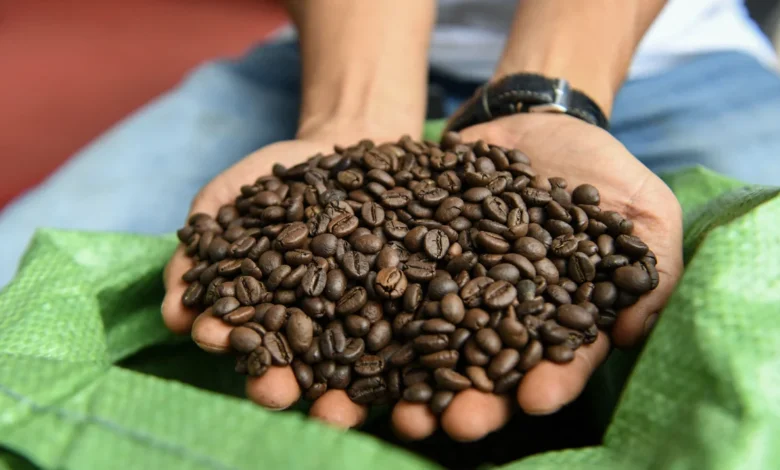
The Central Highlands of Vietnam were once defined by a landscape of triple-canopy jungles so dense that sunlight rarely reached the forest floor. During the mid-20th century, these woodlands were notorious among soldiers for their inhospitable terrain, teeming with leeches, mosquitoes, and venomous snakes. Yet, this same environment provided a sanctuary for some of the world’s most exotic wildlife, including tigers, elephants, and the elusive saola—a rare bovine known as the "Asian unicorn." Today, that primeval wilderness has largely vanished, replaced by an endless patchwork of coffee plantations that fuel the world’s morning caffeine fix.
As global consumption of coffee continues to rise, the environmental toll of its production has come under intense scrutiny. A comprehensive new report by the non-profit organization Coffee Watch highlights a staggering transformation: since 1990, approximately 500,000 acres of forest in Vietnam’s Central Highlands have been cleared to make way for coffee farms. This area, roughly the size of Luxembourg, represents a massive loss of biodiversity and a fundamental shift in the region’s ecological health. Vietnam now produces approximately one out of every five coffee beans consumed globally, making it the second-largest producer in the world behind Brazil. However, this economic success has come at a cost that scientists warn may soon become unsustainable.
The Rapid Expansion of the Vietnamese Coffee Industry
The rise of Vietnam as a coffee superpower was a calculated economic move that began in earnest following the "Doi Moi" reforms of the late 1980s. By prioritizing the cultivation of robusta beans—a hardier, more bitter variety often used in instant coffee and espresso blends—Vietnam captured nearly 40 percent of the global robusta market. This specialization allowed the nation to become a critical link in the global supply chain, providing the raw materials for multinational conglomerates and supermarket shelves worldwide.
The expansion was most aggressive in the provinces of Dak Lak, Dak Nong, and Gia Lai. Satellite imagery analyzed by Coffee Watch reveals that while the rate of deforestation has slowed in recent years, it is largely because there is very little primary forest left to clear. In these provinces, the coffee footprint has expanded fourteenfold over the last generation, while total forest cover has shrunk by a third. The ecological consequences are stark: there are no longer any wild tigers known to inhabit the region, and the elephant population has dwindled to a fraction of its former size. The saola, which was only discovered by scientists in 1992, is now feared to be extinct in the wild due to habitat loss and fragmentation.
The "Nutrient Treadmill" and the Parching of the Highlands
Beyond the loss of trees, the intensive nature of modern coffee farming is depleting the very resources required for its survival. To maintain high yields in a monoculture environment, farmers have become increasingly dependent on chemical fertilizers and pesticides. This has created what agronomists call a "nutrient treadmill." As the natural health of the soil is ravaged by chemicals and the lack of organic matter typically provided by a forest canopy, farmers must apply even greater quantities of synthetic inputs to achieve the same harvest.
Water scarcity is another burgeoning crisis. Coffee is a thirsty crop, and in the Central Highlands, intensive irrigation is rapidly lowering the water table. Farmers who once accessed water through shallow wells are now forced to drill as deep as 150 feet into the earth. The loss of natural forests compounds this issue; without the root systems and leaf litter of a jungle to retain moisture and recharge aquifers, the region has lost its natural buffer against drought.
The Coffee Watch report warns that the production system is effectively "eroding the ecological foundations on which it depends." This is not a distant threat; droughts have already begun to trigger bean shortages, contributing to record-high coffee prices in global markets over the past two years. Climate modeling suggests that by 2050, up to 50 percent of the current land used for coffee production in Vietnam may become unviable due to rising temperatures and shifting rainfall patterns.
A Comparative Analysis of Agricultural Deforestation
While the impact of coffee is significant, it is essential to view it within the broader context of global agriculture. According to data from the World Resources Institute, agriculture is the primary driver of global deforestation. Coffee ranks as the sixth-leading driver, responsible for approximately 1 percent of annual forest loss worldwide.
To put this in perspective, cattle ranching remains the most destructive agricultural force on the planet. Between 2000 and 2015, cattle were responsible for replacing an area of forest the size of California—more than 200 times the area lost to coffee in Vietnam during a similar period. Globally, pastures for livestock now cover an area roughly twice the size of South America.
The carbon footprint of these commodities also varies wildly. Drinking a daily cup of coffee contributes roughly the same amount of greenhouse gas emissions as driving a gasoline-powered car 100 miles over the course of a year. If milk is added to that coffee, the footprint nearly doubles, highlighting the outsized environmental impact of the dairy and beef industries. As environmental advocates often note, cattle are essentially "coal plants with tails" due to their methane emissions and the vast amount of land they require.
Regulatory Responses and the Push for Agroforestry
The growing awareness of "drinking the Earth" has led to new international pressures and regulatory frameworks. The European Union’s Deforestation Regulation (EUDR), which aims to prevent the import of commodities linked to deforestation, is expected to have a profound impact on the Vietnamese coffee trade. Under these rules, major coffee buyers will be required to prove that their supply chains do not involve land deforested after December 2020.
In response, some industry leaders and non-governmental organizations are advocating for a shift toward agroforestry. This practice involves growing coffee in the shade of native trees rather than in open-sun monocultures. Currently, about 20 percent of the world’s coffee is grown using some form of sustainable agroforestry. These methods, such as planting "doughnuts" or "zebra stripes" of indigenous trees around plantations, help to restore biodiversity, stabilize the soil, and protect coffee plants from extreme temperature fluctuations.
Furthermore, companies like Nestlé are investing in the development of climate-resilient coffee varieties. These new strains of robusta are designed to produce higher yields with less water and fewer chemical inputs. However, critics argue that technological fixes are insufficient without a fundamental shift in how the global north consumes resources.
The Role of Consumer Advocacy and Policy
Etelle Higonnet, the founder of Coffee Watch and a prominent environmental advocate, argues that the lack of public attention on coffee’s footprint is a major hurdle. "Most people are good people; they’d never dream of going to a café and ordering a latte plus a dead elephant," Higonnet stated. "But that’s basically what we’re doing. We’re raping and poisoning the planet with every cup we drink."
Higonnet, who was previously knighted by the French government for her work against child labor and deforestation in the cocoa and rubber industries, emphasizes that coffee production often hides behind its image as a "natural" product. She suggests that governments must move beyond voluntary corporate pledges and enact strict bans on imports grown on recently deforested land, while simultaneously providing financial support to help smallholder farmers transition to sustainable practices.
From a policy standpoint, experts suggest a dual-track approach:
- Supply Chain Transparency: Implementing blockchain or satellite-based tracking to ensure every bag of beans can be traced back to a specific, non-deforested plot of land.
- Dietary Shifts: While reducing coffee consumption is one path, the more significant environmental gain lies in reducing global beef consumption, which would free up vast tracts of land for reforestation and reduce the pressure on remaining wildlands.
Long-term Implications for the Global Market
The transformation of Vietnam’s Central Highlands serves as a cautionary tale for the global economy. The rapid industrialization of a landscape can produce short-term economic miracles, but when that growth ignores ecological limits, it creates a "fragile system" prone to collapse. If the Vietnamese coffee industry fails due to soil exhaustion or water depletion, the resulting shockwaves will be felt in every supermarket and café across the globe.
The real lesson of the vanishing Vietnamese jungles is that human consumption—whether eating or drinking—is inextricably linked to the health of the natural world. As the "Asian unicorn" fades into the realm of legend and the water tables of the Central Highlands continue to drop, the global community is faced with a choice: reform the way the world is fueled, or continue to consume the very earth that sustains it. The morning buzz, it seems, carries a price tag that is increasingly measured in more than just currency.
Related posts: