Hera mission captures the aftermath of the DART asteroid impact to unlock the secrets of planetary defense

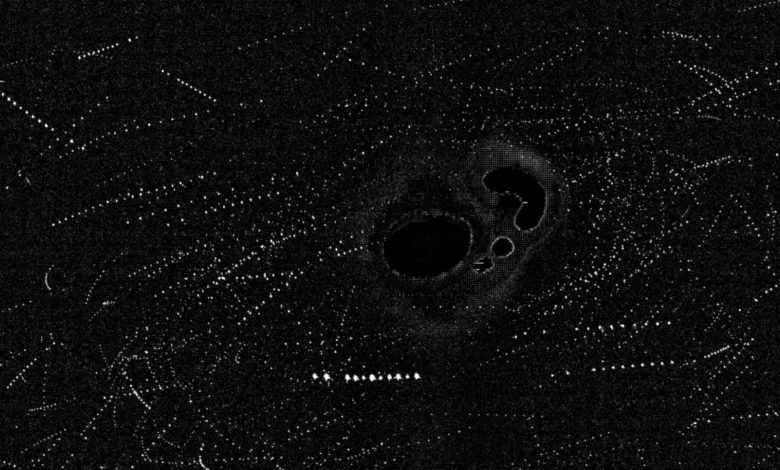
Four years after NASA executed a daring, high-stakes experiment to alter the trajectory of a celestial body, the international scientific community has entered a new phase of investigation. In September 2022, the Double Asteroid Redirection Test (DART) mission made history by intentionally crashing a spacecraft into Dimorphos, a small asteroid moon orbiting the larger asteroid Didymos. This collision, occurring 6.8 million miles from Earth, served as the first full-scale demonstration of kinetic impact technology—a method designed to deflect potentially hazardous asteroids before they can threaten our planet. Now, the European Space Agency’s (ESA) Hera spacecraft has arrived at the scene to provide the first close-up, high-resolution forensic analysis of the "wreckage" left behind, offering unprecedented insights into the physics of asteroid defense.
The arrival of Hera at the binary system 120 million miles from Earth marks the beginning of a six-month intensive observation campaign. While DART proved that humanity could successfully nudge an asteroid, the initial mission left researchers with more questions than answers regarding the structural composition of Dimorphos and the exact mechanics of the impact. The cratering, the formation of a debris cloud, and the unexpected shift in the asteroid’s rotation have necessitated this follow-up mission to validate models that will guide future planetary defense strategies.
A Chronology of the Impact and Aftermath
The timeline of this planetary defense milestone spans nearly half a decade of planning and execution. The DART mission was launched in November 2021, setting the stage for its dramatic finale. On September 26, 2022, at 7:14 PM EDT, the DART spacecraft, traveling at a velocity of approximately 13,700 mph, impacted the surface of Dimorphos. The event was monitored by the Italian Space Agency’s LICIACube, a small satellite deployed prior to the collision, which captured the immediate aftermath of the impact flash and the ejection of a massive plume of material.
Following the impact, ground-based telescopes and the Hubble Space Telescope observed that the orbit of Dimorphos around Didymos had been shortened by approximately 33 minutes. This shift was significantly larger than the initial conservative estimates, suggesting that the ejection of mass—the "momentum enhancement"—played a critical role in the deflection.
The Hera mission, having departed Earth in October 2024, completed its two-year cruise phase to reach the Didymos system. Upon its arrival, Hera began a phased approach, utilizing its suite of scientific instruments to map the surface of both asteroids. The preliminary images returned this month reveal that the impact was far more transformative than previously theorized, with the spacecraft identifying a crater of immense proportions relative to the asteroid’s size.
Forensic Analysis: The Crater and the Debris Cloud
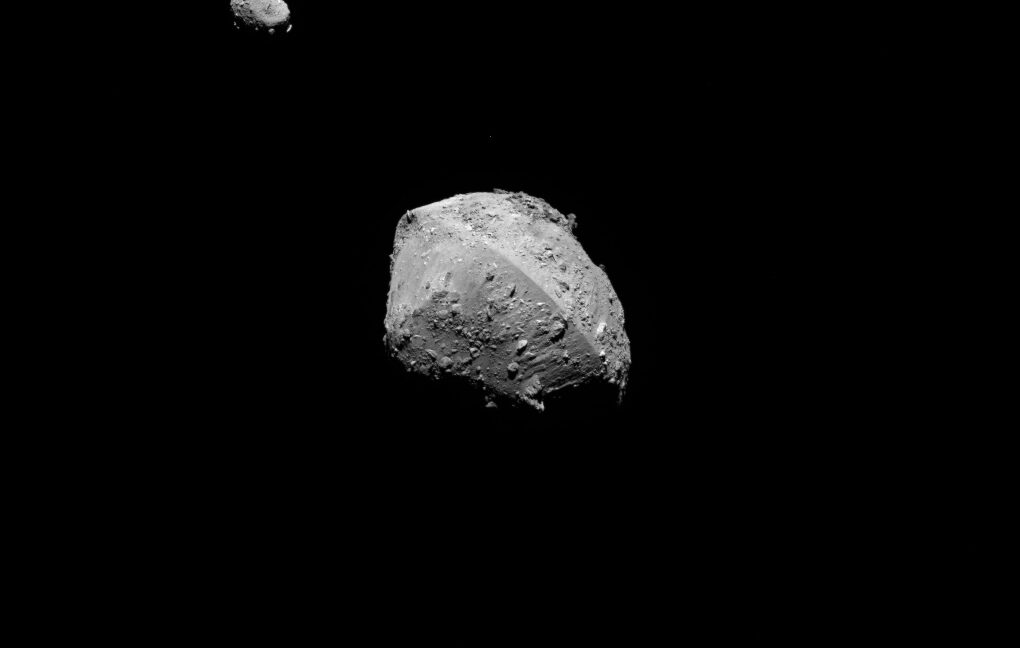
The images captured by Hera have provided scientists with a "crime scene" view of the event. The impact did not merely leave a superficial mark; it effectively reshaped the geography of Dimorphos. Patrick Michel, the Hera mission’s principal investigator from the Côte d’Azur Observatory, described the findings as a "transition between just cratering and global transformation." The scale of the damage suggests that Dimorphos—a 500-foot-wide body—reacted to the kinetic energy transfer with a level of structural displacement that challenges standard geological models.
Perhaps the most startling observation from the Hera mission is the abundance of boulders scattered in the vicinity of the asteroids. While Hubble images had previously hinted at a debris tail, Hera’s hyperspectral camera has unveiled a complex, chaotic swarm of hundreds of rock fragments. Some of these boulders range in size from the dimensions of a football to that of a washing machine.
Naomi Murdoch, a planetary scientist involved in the mission, noted that the density of this debris field was largely unexpected. Researchers are now tasked with determining whether these boulders are the direct result of the DART impact—pieces of the asteroid blasted into space—or if they are remnants from the ancient formation of the moon itself. This distinction is vital for understanding the internal cohesion of asteroids, which determines how they might fragment if a future, larger-scale deflection mission were required.
The Role of Sub-satellites and Internal Structure
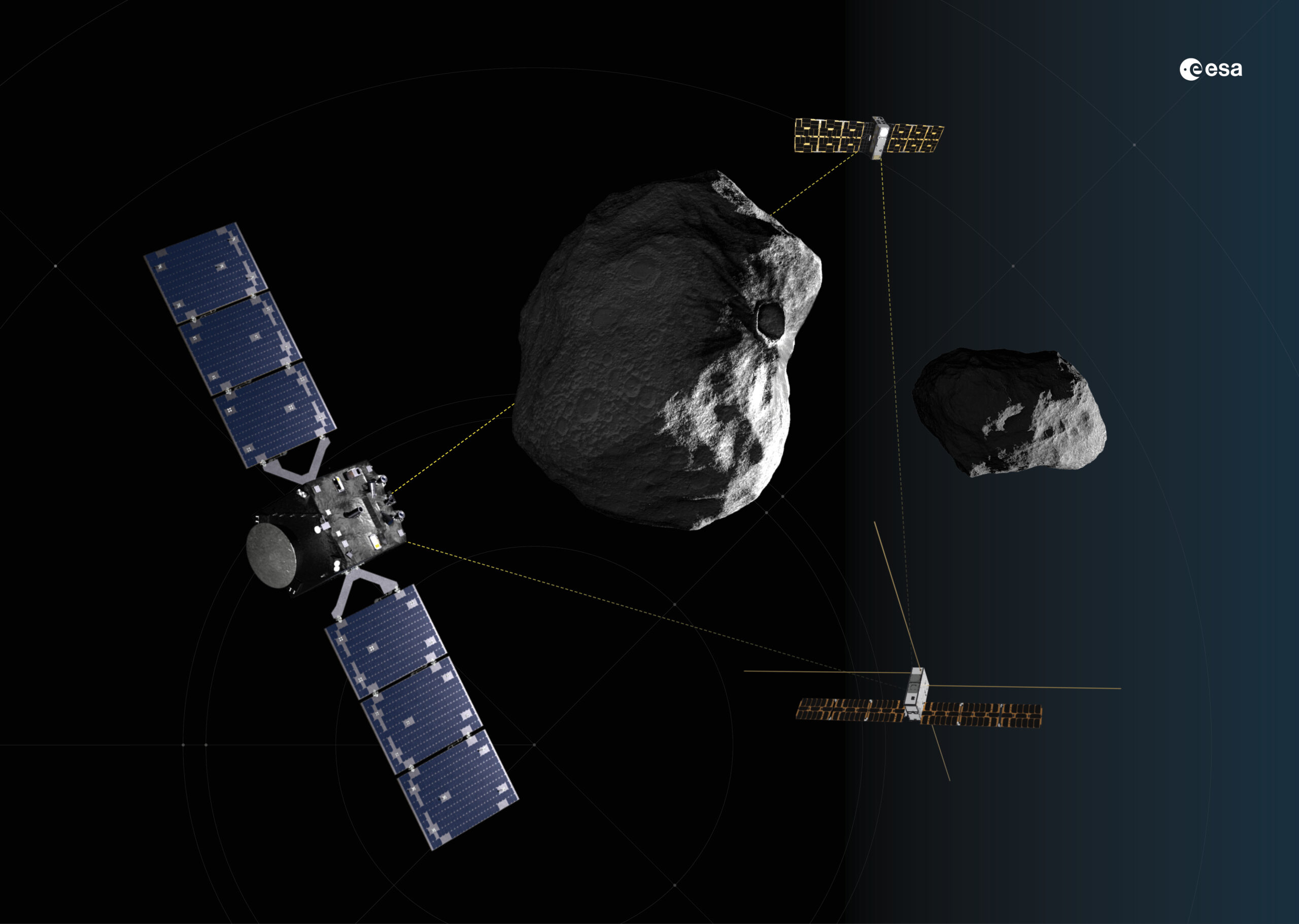
A key objective of the Hera mission involves the deployment of two CubeSats: Juventas and Milani. These miniature satellites are designed to perform maneuvers that the larger Hera mothership cannot, including attempting close-proximity operations and, potentially, landings on the surface of Dimorphos.
Juventas, in particular, carries a low-frequency radar instrument designed to probe the internal structure of the asteroid. By mapping the interior, scientists hope to learn whether Dimorphos is a solid, monolithic rock or a "rubble pile"—a loose collection of debris held together by weak gravity. The internal makeup of an asteroid is a primary variable in predicting how it will respond to a kinetic impact. A rubble pile may absorb energy differently than a solid body, potentially leading to greater deformation or even total disintegration.
Implications for Global Planetary Defense
The data harvested by Hera will serve as the foundation for the next generation of predictive computer models. Planetary defense is not a "one-size-fits-all" endeavor; the success of a deflection mission depends on variables such as the asteroid’s density, porosity, rotational state, and composition. By using the Didymos-Dimorphos system as a laboratory, the international space community is creating a standardized library of data that can be applied to any Near-Earth Object (NEO) discovered to be on a collision course with our planet.
"Once we understand, we have a breakthrough, which really solves planetary defense," Michel stated. This perspective is shared by the broader scientific community, which views the Hera-DART collaboration as a masterclass in interplanetary cooperation. The mission highlights the necessity of combining kinetic impact experiments with follow-up reconnaissance to ensure that when the time comes to protect Earth, the tools employed are based on empirical evidence rather than theoretical projection.
Technical Challenges and Future Outlook
The mission is not without its technical difficulties. Navigating the debris-filled environment of the Didymos system presents a risk to the spacecraft. The "tumbling" state of Dimorphos, noted by ESA mission scientist Michael Kueppers, complicates the navigation and data-gathering efforts. The asteroid’s rotation is no longer stable, a direct consequence of the energy imparted by the DART impact. Hera must operate with extreme precision to maintain a safe distance while capturing the high-fidelity data required to reconstruct the impact dynamics.
As the mission progresses over the next six months, the focus will shift from mapping to detailed composition analysis. The information gathered will be analyzed by researchers globally, contributing to the work of the International Asteroid Warning Network (IAWN) and the Space Mission Planning Advisory Group (SMPAG). These organizations are responsible for coordinating the international response to potential asteroid threats.
The successful arrival of Hera and the subsequent visual evidence of the DART impact confirm that the international space community has moved from the realm of speculative fiction to active planetary guardianship. While the risk of a significant asteroid impact remains statistically low, the ability to observe and understand the aftermath of a controlled collision is a capability that fundamentally alters the human relationship with the cosmos. By turning a destructive act into a scientific opportunity, the DART and Hera missions have provided a blueprint for securing the future of Earth against the threats of the solar system. The "mess" left behind by DART, once perceived as a simple crater, is now viewed as the most valuable dataset in the history of asteroid science—a key to unlocking the secrets of the stones that drift through our neighborhood.