Early Rollout of Nebraska Medicaid Work Requirements Serves as Cautionary Tale as Trump Administration Extends Federal Deadline


Nebraska’s pioneering yet tumultuous implementation of Medicaid work requirements has emerged as a critical focal point for health policy experts, state administrators, and federal lawmakers alike. Eight months before the nationwide mandate mandated under President Donald Trump’s sweeping 2025 federal budget law, the Cornhusker State became the first in the nation to enforce strict employment, education, or community engagement criteria for certain Medicaid enrollees. While state officials defend the policy as a mechanism to encourage community involvement and personal responsibility, health advocates, policy analysts, and affected beneficiaries point to alarming rates of procedural disenrollments, administrative bottlenecks, and communication failures.
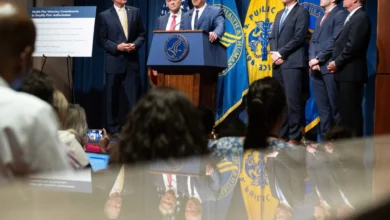
The early rollout in Nebraska offered a high-stakes preview of the bureaucratic challenges awaiting more than three dozen states scheduled to follow suit. However, responding to mounting pressure from states and congressional Democrats, the Trump administration announced a significant policy adjustment on November 13. The Centers for Medicare & Medicaid Services (CMS) introduced a "hold-harmless" period, granting states an extended timeline—moving the deadline from January to July 2027—before they are required to penalize or drop beneficiaries who fail to comply with work-reporting mandates. States now face a critical December 11 deadline to decide whether they will forge ahead with full enforcement on January 1 or utilize the federal grace period to shore up their administrative infrastructure.
Background Context and Chronological Evolution
The national debate surrounding Medicaid work requirements is rooted in longstanding philosophical divides over the scope and purpose of government safety-net programs. Proponents argue that tying public health insurance to employment or community engagement fosters self-sufficiency and economic mobility. Conversely, opponents and health policy analysts contend that low-income adults enrolled in Medicaid face persistent barriers to steady employment, including chronic illness, caregiving responsibilities, and unstable local job markets. Furthermore, historical data indicates that the vast majority of non-disabled, non-elderly adults on Medicaid are already working or face legitimate barriers preventing them from doing so, rendering administrative reporting mandates largely redundant.
The trajectory of the policy accelerated significantly under federal legislative initiatives, culminating in the 2025 budget law that mandated work requirements across expansion states. Nebraska seized the initiative early, launching its program on May 1. Under the state’s guidelines, adults who gained Medicaid eligibility through the Affordable Care Act’s expansion—or via special federal waivers—must demonstrate at least 80 hours per month of work, volunteering, or educational activity.
By August, Nebraska began officially stripping coverage from individuals who failed to verify compliance during their renewal periods. The early months of the program exposed severe friction points within the state’s administrative apparatus, prompting intense scrutiny from national policy organizations and setting off political shockwaves in Washington.
Data Analysis: The Toll of Procedural Denials
State data released regarding Nebraska’s early enforcement reveals a complex narrative of automated verification successes contrasted with staggering procedural losses. Interim state Medicaid director Jeremy Brunssen noted that the state successfully verified that approximately 8 out of 10 existing enrollees met the work requirements automatically, utilizing cross-references with various state and federal databases without requiring direct consumer intervention. For these individuals, the transition was seamless.
However, for those pulled into manual verification processes, the system encountered severe friction. According to state statistics, 7% of Nebraska Medicaid enrollees subject to the rules—representing 533 adults undergoing coverage renewal—were disenrolled due to non-compliance or failure to complete the process. Among new applicants, approximately 14%, or 557 individuals, were denied coverage outright due to the new requirements.
Most concerning to policy analysts and healthcare advocates is the revelation that 92% of cases in which existing enrollees lost coverage were attributed to procedural or paperwork failures rather than a substantive state determination that the individual was unemployed or ineligible. Enrollees frequently missed tight deadlines, struggled to decipher complex documentation requests, or failed to respond to state outreach letters, emails, and text messages.
Critics argue that these procedural disenrollments represent administrative failures rather than intentional non-compliance. Amy Behnke, CEO of the Health Center Association of Nebraska, labeled the high proportion of procedural losses a "red-flag warning," warning that vulnerable populations are losing vital health coverage simply because they cannot successfully navigate bureaucratic mazes.
Human Impact and Administrative Bottlenecks
The real-world consequences of these administrative hurdles are acutely felt by low-income residents trying to maintain basic healthcare access. Cheri Stollar, a 48-year-old mental health therapist from Lincoln, Nebraska, described receiving a renewal notice in November that demanded complex documentation with a response window of less than a week. Despite working full-time, Stollar found herself trapped in telephone hold queues for hours as she attempted to clarify which specific documents were required to protect her coverage, which pays for critical medications managing depression, sleep disorders, and an ulcer.
Similarly, Chalandria James, a 37-year-old community health worker and doula from Omaha, experienced weeks of debilitating uncertainty after submitting renewal paperwork in July without receiving a timely confirmation. Fearing she lacked active insurance, James canceled a vital blood pressure screening appointment. It required a multi-hour in-person visit to a state agency office in September to discover she was not only still covered but was formally exempt due to caring for a child under the age of 14.
These anecdotes align with broader systemic challenges identified by advocacy groups. Call centers operated by the Nebraska Department of Health and Human Services have experienced severe strain, with beneficiaries reporting wait times of up to two hours. Because the assistance lines operate exclusively during standard weekday business hours, employed enrollees find it extraordinarily difficult to connect with caseworkers.
Furthermore, community advocates like Sarah Maresh of Nebraska Appleseed have criticized the state for failing to launch an anticipated online public transparency dashboard, leaving external observers to rely on delayed and incomplete administrative reports.
State Defense and Exemption Frameworks
Despite mounting criticism, state officials maintain that Nebraska’s rollout is proceeding largely as anticipated and emphasize the built-in flexibilities designed to protect eligible residents. Director Brunssen defended the state’s communication efforts, noting that Nebraska leveraged letters, emails, text messages, and online portal alerts to ensure enrollees were aware of impending policy changes. Furthermore, the state capitalized on federal options allowing enrollees to self-attest their eligibility for exemptions simply by checking a box on an online form, thereby avoiding burdensome document-gathering processes—subject to potential perjury penalties for falsification.
Nebraska also implemented geographic exemptions, sparing residents living in counties experiencing high unemployment rates or those officially designated as federal weather disaster areas. State data indicates that of those evaluated, approximately 37% of enrollees actively met the work requirement, while 61% successfully qualified for an exemption. The most common exemption categories were medical frailty and caregiving responsibilities for young children or disabled relatives.
Brunssen remains steadfast in his support of the policy, arguing that community engagement is an intrinsic component of overall health and wellness. He noted that fewer than 25% of the total target population had undergone work-requirement evaluations by late autumn, suggesting that a complete assessment of the program’s long-term viability will not be possible until the statewide review cycle concludes the following summer.
Political Repercussions and Future Outlook
The decision by the Trump administration to offer a flexible hold-harmless period through July 2027 has fundamentally altered the political and legislative landscape surrounding Medicaid work requirements. Congressional Democrats, who vehemently opposed the requirements during recent electoral campaigns, seized upon the CMS announcement as a vindication of their warnings. Sen. Ron Wyden (D-Ore.) and Rep. Frank Pallone (D-N.J.) issued a joint statement accusing the administration of validating Democratic concerns that complex bureaucratic mandates jeopardize healthcare access for millions of Americans.
With significant electoral victories giving Democrats control of both chambers of Congress in the upcoming legislative session, top party leaders have signaled that halting or permanently dismantling federal Medicaid work requirements will remain a top legislative priority before full enforcement takes effect nationwide.
Meanwhile, health policy researchers continue to monitor Nebraska as a cautionary bellwether. Joan Alker, executive director of Georgetown University’s Center for Children and Families, asserted that the state’s experience demonstrates that work requirements fail to significantly boost employment rates—given that the vast majority of able-bodied enrollees are already working—while imposing severe, often insurmountable administrative hurdles on low-income individuals.
As the December 11 deadline approaches for states to determine their immediate implementation strategies, the lessons learned from Nebraska’s early rollout will heavily influence administrative planning nationwide. Whether other states choose to embrace the federal buffer to refine their technological infrastructure and customer service capacities or plunge forward into immediate enforcement will determine the healthcare stability of millions of low-income Americans in the years ahead.