The Astonishing Remnants of SNR G295.5+09.7: Inside the Cosmic Beauty of the Betta Fish Nebula

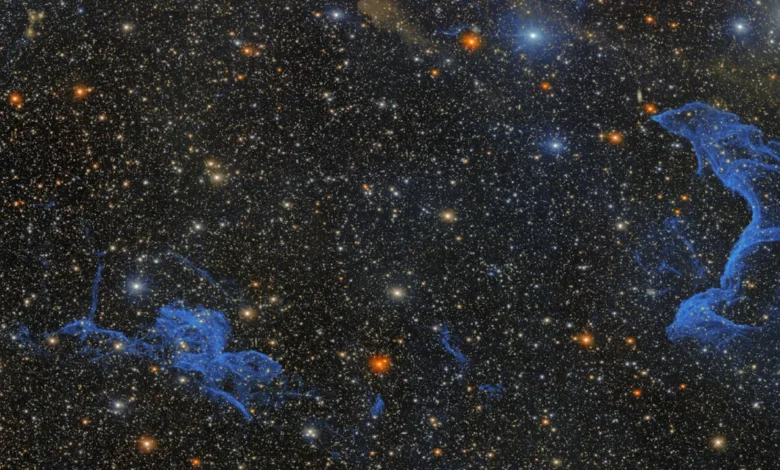
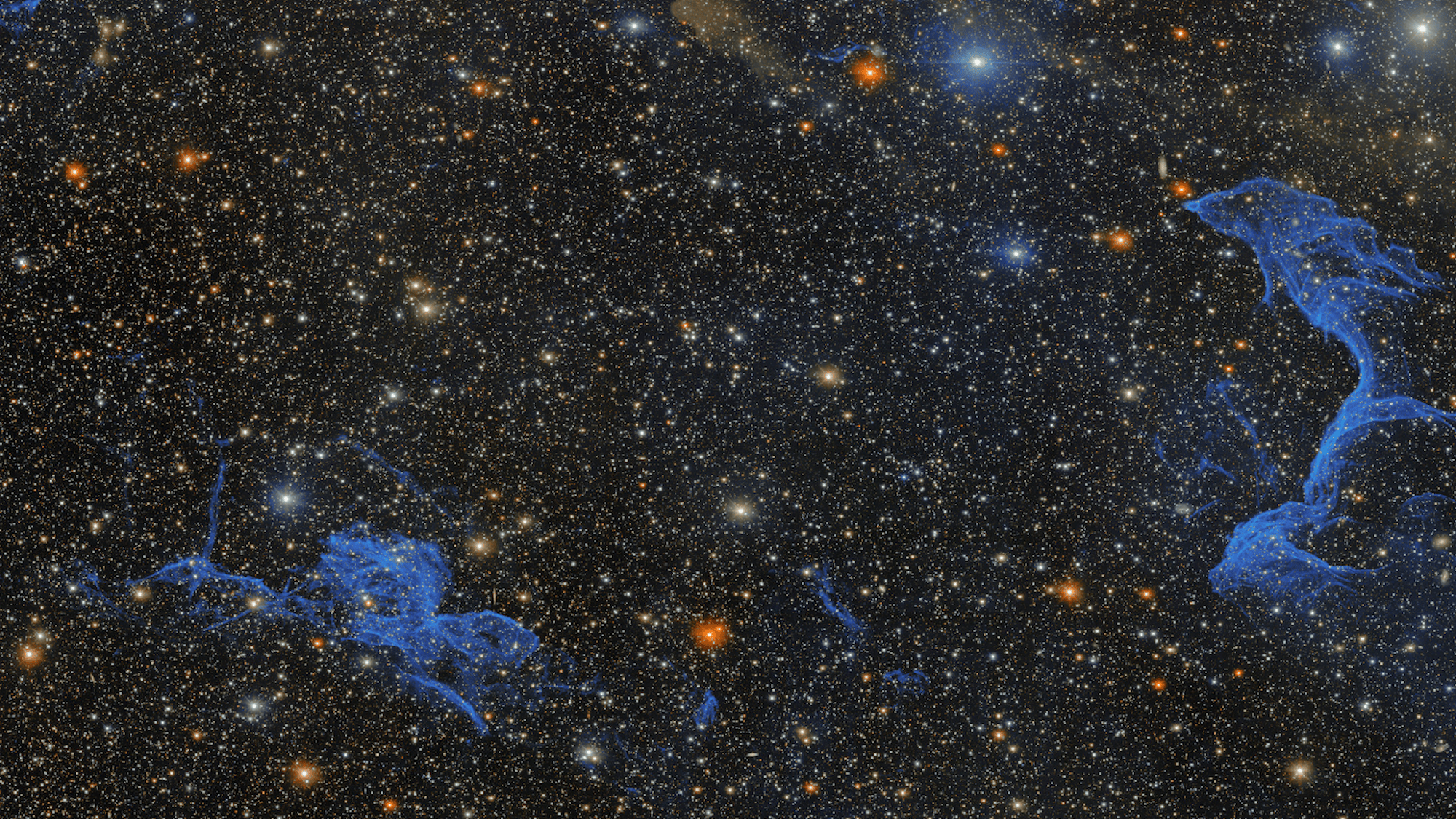
Ghostly blue and crimson clouds stretching across thousands of light-years of interstellar space mark the quiet yet violent aftermath of an ancient cosmic catastrophe. Located approximately 6,800 light-years from Earth in the southern constellation of Centaurus, the supernova remnant officially cataloged as SNR G295.5+09.7—more affectionately known to astronomers and stargazers as the Betta Fish Nebula or the Mermaid Nebula—continues to offer profound insights into the life cycles of massive stars. Recent high-resolution imaging captured by the powerful 570-megapixel Dark Energy Camera (DECam), mounted on the Víctor M. Blanco 4-meter Telescope at the Cerro Tololo Inter-American Observatory (CTIO) in Chile, has unveiled unprecedented details of this celestial tapestry, shedding new light on the mechanisms of stellar death and the creation of extreme cosmic objects.
Chronology and Origins of a Cosmic Explosion
The history written across the gas and dust of the Betta Fish Nebula dates back millennia. Astronomical models and analysis of the expansion rate of SNR G295.5+09.7 indicate that the progenitor star met its fiery end between 6,000 and 10,000 years ago. Light from this catastrophic explosion would have reached Earth long before the dawn of recorded human civilization, potentially appearing as a brilliant "new star" in the night sky visible to early human societies across the Southern Hemisphere.
When a star possessing a mass significantly greater than our sun exhausts the nuclear fuel sustaining its core against gravitational collapse, it can no longer support its own weight. The core implodes in a fraction of a second, rebounding violently to trigger a supernova explosion. This titanic event ejects the star’s outer envelopes of gas and heavy elements outward at thousands of kilometers per second. As these high-velocity stellar ejecta plow into the surrounding interstellar medium—the diffuse gas and dust permeating the space between star systems—they generate powerful shock waves. These shock waves compress, heat, and ionize the ambient gas, causing it to glow brightly across the electromagnetic spectrum. The intricate, filamentous blue wisps that give the Betta Fish Nebula its aquatic moniker are the visual manifestation of this ongoing, energetic collision.
Supporting Data and the Anatomy of a Neutron Star
While the sprawling nebula spans vast distances, the heart of the explosion remains remarkably compact. Deep within the glowing clouds of SNR G295.5+09.7 lies the dense, compact remnant of the original star: a neutron star.
Neutron stars represent some of the most extreme physics in the universe. The progenitor star that created the Betta Fish Nebula was originally many times more massive than the sun. Yet, through the gravitational crunch of the supernova, approximately 1.4 times the mass of our sun has been compressed into an extraordinarily small sphere measuring roughly 12 miles (19 kilometers) in diameter. To put this density into perspective, the neutron star at the center of SNR G295.5+09.7 is so small that it could easily fit within the geographical boundaries of a mid-sized city like Tucson, Arizona. A single teaspoon of material from this stellar corpse would weigh approximately one billion tons on Earth.
The survival of this neutron star was by no means guaranteed, highlighting the delicate balance of forces at play during stellar collapse. According to astrophysical models, had the initial mass distribution, angular momentum, and internal pressure of the collapsing core varied by even a small margin, the inward pull of gravity would have overwhelmed all opposing forces. In that alternate scenario, the core would have continued collapsing past the neutron degeneracy limit, ultimately pinching off spacetime to form a stellar-mass black hole. Had a black hole formed instead of a neutron star, the immense gravitational well would have locked away the matter and energy required to illuminate the surrounding gas, leaving the Centaurus constellation devoid of the luminous Betta Fish Nebula we observe today.
Official Responses and Astronomical Significance
The release of the new DECam imagery by the National Science Foundation’s National Optical-Infrared Astronomy Research Laboratory (NOIRLab) has generated considerable excitement within the astrophysical community. Researchers studying supernova remnants like SNR G295.5+09.7 rely on high-fidelity imaging to map the chemical composition, velocity distribution, and magnetic field configurations of post-explosion environments.
Dr. Emily R. Vance, an observational astronomer specializing in stellar evolution, noted the broader significance of capturing such remnants with modern survey instruments. "Supernova remnants are the primary cosmic factories responsible for seeding the interstellar medium with heavy elements—such as carbon, oxygen, iron, and silicon—that are essential for forming rocky planets and, ultimately, life," Vance explained. "By studying objects like the Betta Fish Nebula with instruments like DECam, we can trace how matter cycles through the galaxy over cosmic timescales, bridging the gap between theoretical models of nucleosynthesis and observational reality."

Furthermore, observations from facilities such as CTIO allow scientists to calculate the age and expansion dynamics of these remnants more precisely. Because different elements emit light at specific wavelengths when excited by shock waves, multi-filter imaging enables astronomers to parse the temperature and density variations across the nebula, providing a comprehensive three-dimensional picture of an event that occurred millennia ago.
Broader Impact and Astrophysical Implications
The study of SNR G295.5+09.7 extends far beyond cataloging the aesthetic wonders of the night sky. Supernovae act as cosmic accelerators and chemical catalysts, driving the evolution of galaxies. The shock waves propagating through the Betta Fish Nebula compress nearby molecular clouds, which can subsequently trigger a new generation of star formation. Thus, the death of an ancient star directly catalyzes the birth of future solar systems.
Moreover, neutron stars like the one hidden within this nebula serve as natural laboratories for testing fundamental physics under conditions of extreme density, magnetic fields, and gravitational forces that cannot be replicated in terrestrial laboratories. By observing the remnants left behind by core-collapse supernovae, astrophysicists refine their understanding of degenerate matter and the equations of state that govern the behavior of matter at subatomic levels.
As technological advancements continue to enhance the sensitivity of ground-based observatories and space telescopes alike, remnants such as SNR G295.5+09.7 will remain focal points of astronomical inquiry. The ghostly blue clouds of the Betta Fish Nebula stand as a testament to the dynamic and cyclical nature of the universe—a vivid reminder that the dissolution of an ancient star is not merely an end, but a vital transformation that enriches the cosmos for generations to come.