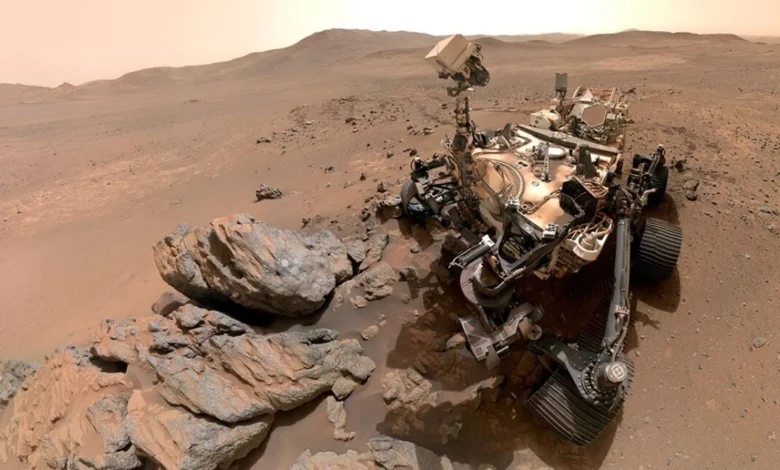
NASA’s long-standing robotic presence on the Red Planet is currently facing its most significant operational bottleneck in recent memory. Two of the agency’s four active Martian missions—the Perseverance rover and the Odyssey orbiter—have entered a state of suspended scientific activity following a series of critical hardware malfunctions. These developments, emerging throughout November 2026, underscore the inherent risks of deep-space exploration and the precarious nature of maintaining aging assets millions of miles from Earth. As mission control at the Jet Propulsion Laboratory (JPL) in Southern California works to diagnose these failures, the broader scientific community is once again reminded of the finite lifespans of our interplanetary scouts.
The Perseverance Radio Crisis
The Perseverance rover, a cornerstone of NASA’s Mars Sample Return program, encountered a severe communication failure on October 30. During a standard power-up sequence, one of the rover’s two primary ultra-high frequency (UHF) radios became completely unresponsive. This triggered an immediate, automated switch to the secondary, backup UHF radio. However, preliminary telemetry revealed that the backup unit was operating at only 50 percent of its intended power output, rendering it insufficient for high-rate data relay.
UHF radios are the primary "voice" of the rover, enabling it to beam large volumes of geological data, high-resolution imagery, and environmental measurements to orbiting satellites, which then forward the information to the Deep Space Network on Earth. With both systems currently disabled by mission controllers as a precautionary measure, Perseverance is forced to rely on its X-band radio. While this system allows for direct-to-Earth communication, its bandwidth is significantly lower, making the transmission of the rover’s massive data packets a slow, painstaking process.
NASA engineers have prioritized the restoration of the backup UHF radio. Should that prove successful, they will then shift their efforts toward investigating the primary radio failure. Despite the setback, mission managers remain cautiously optimistic, expressing hope that the rover will resume its standard scientific operations by the end of November. The timing is particularly sensitive, as Perseverance has recently surpassed a major milestone, having traveled more than 28 miles across the Jezero Crater, breaking the distance record previously held by the late Opportunity rover.
The Odyssey Orbiter’s Precarious Orbit
While the Perseverance situation is a significant hurdle, the technical crisis facing the Mars Odyssey orbiter is arguably more existential. Launched in 2001, Odyssey is the longest-lived mission in the history of Mars exploration. Its longevity has been a testament to robust engineering, but the spacecraft is now clearly feeling the strain of a quarter-century of operation in the harsh Martian environment.
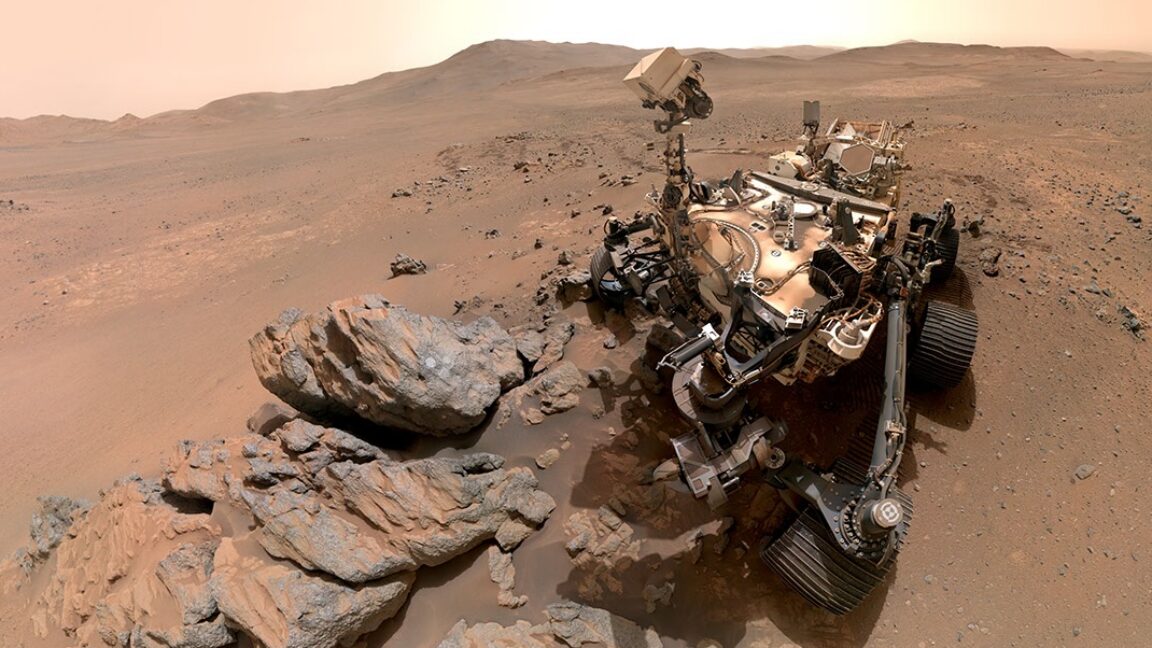
In early November, one of the orbiter’s four reaction wheels ceased functioning. Reaction wheels are spinning flywheels that provide the necessary torque to reorient a spacecraft in the vacuum of space. Odyssey requires at least three of these wheels to maintain stable, precise pointing for its solar arrays and scientific instruments. With one wheel lost in 2013 and this latest failure, the orbiter is left with only two operational wheels.
The engineering solution for this failure is to rely on hydrazine thrusters to manage the spacecraft’s orientation. While effective in the short term, this method is fuel-intensive. Before the recent failure, Odyssey was already running low on propellant. Project scientists had previously projected that, with extreme conservation, the orbiter could remain functional through 2028. However, the reliance on thrusters for attitude control has drastically accelerated the fuel consumption rate. NASA engineers estimate that if the third wheel cannot be revived, the spacecraft’s remaining fuel supply may only sustain its mission for one to two months. Troubleshooting efforts are ongoing, and the success of these recovery operations will determine whether the mission continues or concludes in the coming weeks.
A Legacy of Resilience and Aging Infrastructure
The current state of the Mars fleet highlights a broader challenge: the aging of the robotic infrastructure supporting planetary science. NASA’s Mars architecture is a complex, interconnected web of relay orbiters and surface rovers. Odyssey, alongside the Mars Reconnaissance Orbiter (MRO) and various international assets like the European Space Agency’s (ESA) ExoMars Trace Gas Orbiter and Mars Express, serves as the vital link for the Curiosity and Perseverance rovers.
The loss of any one of these relay nodes places an increased burden on the remaining assets. The volatility of this environment was punctuated last December by the sudden loss of the MAVEN orbiter. After 11 years of continuous service, MAVEN spun out of control following an apparent computer reboot caused by a radiation-induced single-event upset or a latent software issue. The spacecraft’s inertial measurement unit subsequently provided incorrect orientation data to the flight computer, leading to a catastrophic loss of control. The incident remains a sobering case study in the unpredictability of long-term deep-space missions.
Future Replacements and Regulatory Hurdles
Acknowledging the vulnerability of its aging fleet, NASA has moved to initiate a new generation of Mars telecommunications. In September, the agency awarded a $700 million contract to Blue Origin to develop the Mars Telecommunications Network (MTN). This initiative aims to deploy a dedicated high-bandwidth orbiter designed to facilitate seamless communication between Earth and the surface of Mars.
The project is currently under a cloud of uncertainty. Rocket Lab, a competitor for the contract, filed a formal protest with the Government Accountability Office (GAO) shortly after the announcement. This legal maneuver has effectively placed the MTN project in a state of suspended animation. A ruling from the GAO is expected in December, which will decide whether Blue Origin can proceed or if the procurement process must be reopened.

Beyond communications, NASA is also looking toward the 2028 window for the "SkyFall" mission, which proposes the deployment of three advanced helicopter drones. These autonomous flyers are intended to provide aerial geological and meteorological insights, potentially bypassing the need for traditional, slow-moving rover navigation in difficult terrain. Furthermore, there is a mounting, perennial discussion regarding the eventual replacement of the Mars Reconnaissance Orbiter’s high-resolution camera—a vital instrument for mapping landing sites for future human and robotic missions. While concept studies are underway, a lack of firm funding and scheduling means the agency will continue to rely on the aging MRO for critical site reconnaissance well into the next decade.
Analysis of Operational Implications
The simultaneous degradation of both surface and orbital assets serves as a stark reminder of the "single point of failure" risks inherent in interplanetary exploration. The scientific return from Mars is not merely dependent on the rovers themselves, but on the invisible infrastructure of orbiters that connect them to human oversight.
For the Perseverance mission, the data-rate bottleneck represents a temporary pause in scientific discovery, but it also highlights the lack of redundancy in current UHF relay capabilities. If a future orbiter were to fail while a rover was in the midst of a critical sample collection, the impact on the overall Mars Sample Return timeline could be severe. Similarly, the Odyssey crisis underlines the necessity of long-term planning for mission end-of-life scenarios.
As NASA navigates these challenges, the broader implications for the agency’s Mars program are clear: the transition from legacy systems to modern, high-bandwidth architecture is not just a technological upgrade—it is a functional requirement. Until the next generation of orbiters is safely in place, the agency must balance the high-risk, high-reward nature of its current missions against the increasing likelihood of further hardware fatigue. The next several weeks will be a critical period for NASA engineers as they strive to stabilize the current fleet, ensuring that the years of hard-won progress on the Martian surface are not compromised by the silent, inevitable passage of time and the harsh realities of space.
Related posts: