Microsoft President Brad Smith Addresses Global Infrastructure Vulnerabilities and Regulatory Scrutiny Following Widespread Tech Outages

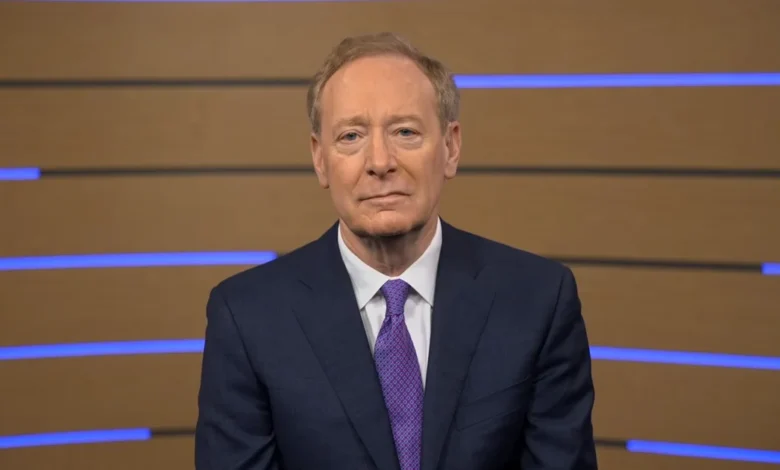
The recent global digital disruption that crippled corporate networks and halted critical communication services on November 12, 2026, has ignited an urgent debate regarding the resilience of modern information infrastructure. Microsoft President and Vice Chair Brad Smith addressed these concerns during an appearance on Face the Nation with Margaret Brennan on November 22, 2026. The interview sought to clarify the technical origins of the outage while navigating broader geopolitical and regulatory tensions surrounding data center sovereignty and corporate political influence.
Anatomy of a Systemic Failure
The mid-November outage, which persisted for roughly 24 hours, did not stem from a malicious cyberattack, according to Smith. Instead, the company characterized the event as a “perfect storm” caused by the interaction of a four-month-old software update with a more recent deployment, compounded by shifting network traffic patterns.
For many corporations, the fallout was immediate and severe. Email systems, cloud-based workflow tools, and internal communication platforms were rendered inaccessible, causing significant operational bottlenecks. This incident serves as a stark reminder of the fragile interdependencies within the global cloud ecosystem, where a single misconfiguration at a hyperscale provider can have cascading effects across multiple industries, including media, finance, and logistics.
The AI Ripple Effect and Infrastructure Upgrades
A central question following the outage was whether artificial intelligence—now deeply integrated into the backend management of cloud services—contributed to the instability. While Smith maintained that AI was not the direct catalyst for this specific incident, he acknowledged that the rapid adoption of AI has fundamentally changed the cybersecurity landscape, creating what he described as an "AI ripple effect."
The current state of global technology is defined by a race to identify and patch vulnerabilities. AI-driven tools now allow developers to scan code for weaknesses at unprecedented speeds; however, this capability is a double-edged sword. Bad actors are simultaneously utilizing the same technology to uncover and exploit those vulnerabilities. Consequently, companies are under immense pressure to deploy patches immediately. This accelerated cycle of development, testing, and deployment—often applied to legacy systems not built for such rapid iteration—increases the probability of unforeseen system conflicts. Smith noted that the world’s entire information infrastructure is currently undergoing a massive, high-stakes upgrade, a process that is unlikely to stabilize for several months.
Timeline of Response and Mitigation
In the aftermath of the outage, Microsoft has moved to address concerns regarding transparency and accountability. According to the company’s internal review:
- Initial Discovery: The incident was identified on November 12, with recovery protocols activated immediately.
- Transparency Reports: Within 10 days of the outage, Microsoft published two comprehensive reports detailing the minute-by-minute breakdown of the technical failure.
- Corrective Actions: The company has already implemented nine specific operational changes to its update protocols and is slated to execute 13 additional remedial steps to prevent a recurrence.
Smith emphasized that these measures are intended to fortify the company’s architecture against the complexities of modern, AI-integrated software environments. He advised both consumers and corporate IT departments to maintain rigorous patching schedules, noting that updated software remains the most effective defense against evolving cyber threats.
Data Center Sovereignty and the Foreign Investment Debate
The interview also touched upon growing tensions regarding the physical location of data centers. President of the United States has recently signaled a potential policy shift, proposing significant tax penalties on companies that build or maintain large-scale data centers abroad.
Smith offered a nuanced perspective on this proposal, drawing parallels to the domestic semiconductor manufacturing initiative. While he acknowledged the government’s interest in ensuring that advanced "frontier" AI models are trained within U.S. borders, he cautioned that global cloud infrastructure has inherent geographical requirements.
"You can’t support Helsinki from New Jersey any more than you can keep the lights on in Helsinki from an electricity power plant in New Jersey," Smith explained. Most data centers function to support latency-sensitive services such as streaming, gaming, and regional business applications. These facilities must be located in close proximity to the end-users they serve. Applying blanket taxation to overseas infrastructure could, according to industry experts, result in degraded service quality for global users and place American companies at a competitive disadvantage in international markets.
Geopolitical Scrutiny and Corporate Partnerships
Microsoft continues to face scrutiny from Capitol Hill regarding its service contracts with foreign entities. Specifically, the relationship between Microsoft’s cloud and AI services and ByteDance, the parent company of TikTok, has become a point of contention for lawmakers concerned about national security.
Critics argue that providing advanced AI tools to a company with ties to the Chinese Communist Party presents an unacceptable risk, especially given Microsoft’s extensive involvement in sensitive U.S. Pentagon contracts. Smith maintained that the services provided are standard commercial cloud offerings and that the company is prepared to work with congressional committees to provide full transparency regarding the nature of these partnerships. He underscored that Microsoft evaluates such relationships based on the specific technology being utilized and the regulatory environment of the jurisdictions involved.
Political Accountability and Future Regulatory Risks
The discussion concluded with a focus on Microsoft’s role in the political sphere, specifically its $10 million donation to the construction of a high-profile ballroom, which has become a focal point of debate in Washington. As the new Congress prepares to take office, there is widespread speculation regarding potential investigations into major tech firms.
Smith defended the company’s bipartisan approach to political engagement, stating that Microsoft seeks to "partner where we can and stand apart when we should." He pointed to instances where the company has taken legal action against administrations—including the current one—to protect the interests of a free press and the privacy of journalists.
The strategy, as outlined by Smith, is to maintain a consistent corporate philosophy regardless of which party holds the majority. However, as the regulatory environment becomes increasingly polarized, the challenge of balancing commercial interests with political demands will likely become more acute.
Implications for the Digital Future
The November 2026 outages and the subsequent discourse represent a critical juncture for the technology sector. The integration of AI into infrastructure management has provided significant efficiency gains but has also introduced new categories of risk. For policymakers and industry leaders, the path forward requires a delicate balance: fostering innovation while ensuring that the underlying systems that support the modern economy remain robust, transparent, and secure.
As the global digital landscape continues to evolve, the expectation from both the public and government regulators is clear: companies like Microsoft will be held to higher standards of operational reliability. Whether the industry can successfully manage this transition through self-regulation and increased transparency remains the defining challenge of the current tech era. The upcoming months of infrastructure upgrades will be closely monitored, as they may well dictate the stability of the global digital economy for the foreseeable future.
Related posts: