The End of the Cybertruck Era Signals a Strategic Shift Toward Compact Electric Vehicles

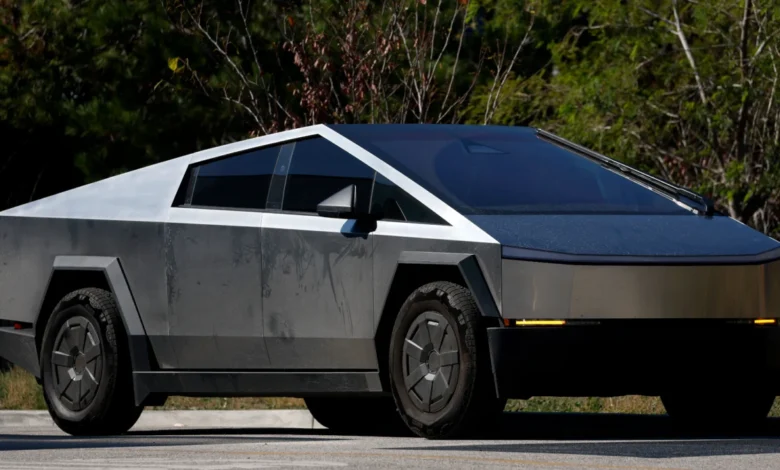
Tesla has officially confirmed that it will cease production of the Cybertruck at its Texas Gigafactory in 2027, marking a definitive conclusion to one of the most polarizing experiments in automotive history. This decision, announced in late 2026, reflects a broader recalibration within the electric vehicle (EV) sector as manufacturers pivot away from the "behemoth" battery designs that characterized the early 2020s and toward more efficient, accessible, and practical consumer models.
A Chronology of the Cybertruck’s Rise and Fall
The trajectory of the Cybertruck was marked by extreme volatility from its inception. When first unveiled in 2019, the vehicle promised to disrupt the pickup truck market with its stainless-steel exoskeleton and unconventional angular design. However, the path to mass production was fraught with delays, supply chain bottlenecks, and significant engineering challenges related to its unconventional material composition.
By the time deliveries began in late 2023, the automotive landscape had shifted significantly. High interest rates, cooling demand for high-end luxury EVs, and persistent quality control issues—culminating in multiple recalls, including concerns over the accelerator pedal assembly—began to weigh heavily on the vehicle’s reputation. Throughout 2025 and 2026, sales figures failed to meet the aggressive targets set by Tesla leadership. The eventual decision to sunset the model in 2027 follows a trend seen across the industry, as rivals like Ford similarly pulled back from large-format electric trucks to focus on hybrid technology and smaller, high-volume segments.
The Problem of Mass and Efficiency
At the core of the Cybertruck’s struggle is its massive physical footprint. The vehicle utilizes a 123-kilowatt-hour (kWh) battery pack, which alone weighs approximately 1,600 pounds—roughly 25 percent of the truck’s total curb weight. This engineering philosophy, while intended to provide high performance and towing capacity, created a cycle of inefficiency. A heavier vehicle requires a larger battery for adequate range, which in turn necessitates a more robust chassis and more powerful suspension components, further increasing the total mass.
This trend toward "supersizing" EVs reached a ceiling in the mid-2020s. Automakers have discovered that the market for six-figure, ultra-heavy trucks is limited. Furthermore, as data from the National Highway Traffic Safety Administration (NHTSA) and other research groups began to highlight, the increased weight of these vehicles poses significant safety risks to pedestrians and occupants of smaller vehicles in the event of a collision.
The Strategic Pivot: Toward Smaller, More Efficient EVs
The industry is currently undergoing a "downsizing" movement. As battery technology improves and cost-efficiency becomes the primary driver for mass-market adoption, the focus has shifted toward compact crossovers, sedans, and lighter trucks.
Ford’s upcoming "Fathom" project, slated for release in 2027, serves as a prime example of this transition. Designed to compete in the compact pickup segment, the Fathom is expected to be roughly the size of the internal combustion engine (ICE) Ford Maverick. By prioritizing weight reduction, Ford aims to minimize the size of the battery pack, thereby reducing manufacturing costs and increasing the vehicle’s overall energy efficiency. This is a departure from the F-150 Lightning, which used battery capacities ranging from 98 to 131 kWh—a range that proved difficult to scale profitably for the broader consumer market.
Similarly, startups like Slate are attracting investor and consumer attention by focusing on the "bare-bones" entry-level segment, with models starting below $25,000. These vehicles emphasize utility over excessive power, signaling a shift toward treating EVs as essential transportation rather than luxury status symbols. Rivian, too, has adjusted its roadmap; the introduction of the R2 and the teased R3 SUV represent a deliberate move to reach a wider demographic by stripping away the weight and complexity of their flagship R1 platforms.
Economic and Supply Chain Implications
The reliance on massive battery packs placed an immense strain on the global lithium-ion supply chain. With limited resources, the industry has faced a choice: use scarce battery cells to power a few heavy trucks or distribute those same cells to power a larger number of smaller, more efficient passenger vehicles.
Recent market data from Cox Automotive indicates that the average transaction price for a new EV remains high at approximately $55,800. For EVs to reach a tipping point of mass adoption, that price point must fall. Because the battery pack is the single most expensive component of an EV, reducing the kilowatt-hour capacity is the most effective lever available to manufacturers to lower consumer costs.
By migrating away from massive trucks, automakers are effectively "stretching" the available supply of critical minerals like nickel, cobalt, and lithium. This efficiency is vital in a regulatory environment that has become increasingly unpredictable regarding federal tax credits and environmental incentives.
The Political and Regulatory Landscape
The political climate surrounding EVs has been a source of significant uncertainty. Following the policy shifts in 2025, when federal EV incentives were substantially curtailed, consumer demand experienced a temporary cooling. The concurrent global geopolitical instability—most notably the conflict in the Middle East—led to fluctuations in oil prices, which historically tends to boost interest in electric alternatives.
However, the current administration’s skepticism toward "green" mandates has effectively removed the federal support that accelerated early EV adoption. Analysts suggest that the market is now operating on a more "organic" basis, where vehicles must justify their price tag through performance and value rather than relying on government subsidies. This shift heavily favors the new wave of smaller, more affordable EVs that are currently entering the development pipeline.
Future Outlook: Tesla’s Next Chapter
The decision to end Cybertruck production is not merely a retraction; it is a reallocation of resources. Tesla has indicated that the manufacturing capacity at the Texas Gigafactory will be pivoted toward the production of the "Cybercab."
The Cybercab represents a different philosophy entirely: a purpose-built autonomous vehicle with a significantly smaller 48-kWh battery pack. This shift illustrates the broader conclusion reached by industry leaders: the future of electrification lies in optimization. Whether through the rise of extended-range electric vehicles (EREVs) that utilize smaller batteries paired with auxiliary generators, or the development of lighter, more aerodynamic chassis, the era of the "heavy-metal" electric truck is rapidly drawing to a close.
As the industry moves toward 2028, the success of major automakers will likely be determined by their ability to provide the functionality consumers expect—commuting, grocery shopping, and family transport—without the weight, price, and complexity of the previous generation of oversized electric vehicles. The sunsetting of the Cybertruck is not just the end of a specific product line; it is the closing of a chapter on an era of excess, making room for a more pragmatic, efficient, and sustainable future for the automotive sector.