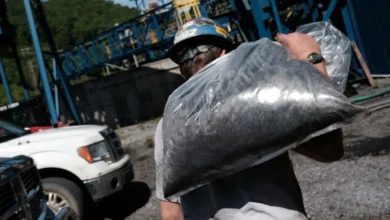
The U.S. Army Indefinitely Pauses Controversial Lead Azide Detonation in Iowa Amid Legal and Public Outcry

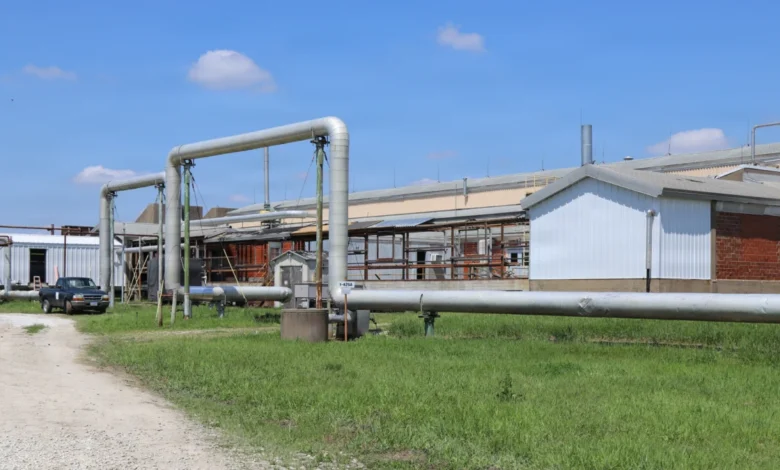
The United States Army has been forced to indefinitely suspend a planned detonation of approximately 11,000 pounds of lead azide at the Iowa Army Ammunition Plant in Middletown, following a rapid escalation of legal pressure and intense public backlash. The U.S. Eighth Circuit Court of Appeals issued an emergency stay on November 20, halting the operation that had sparked widespread alarm across the Midwest. The decision arrived just days after federal officials had attempted to move forward with the disposal of 68 barrels of the highly volatile chemical, which has reportedly degraded to a state where standard transport is considered too dangerous by military safety standards.
The incident, which center-staged the tensions between national security logistics and local environmental health, has evolved into a significant case study on the transparency of the Department of Defense regarding the management of toxic munitions. While the Army characterized the detonation as an essential preventive measure to mitigate an "imminent threat" of accidental explosion, the short notice provided to the public triggered an immediate intervention by the Iowa Environmental Council and the Sierra Club’s Iowa Chapter.
Chronology of the Planned Detonation
The timeline of the proposed operation reveals a significant gap between internal military planning and public awareness. According to reports, the Department of Defense has been aware of the deteriorating state of lead azide stockpiles at various facilities for decades. Concerns specifically regarding the Iowa site’s inventory date back as far as 2004, though it remains unclear if the specific cache scheduled for destruction this week was part of that initial warning.
On November 14, local residents were formally alerted to the upcoming event, providing them with roughly one week to prepare for potential evacuation or shelter-in-place protocols. However, the broader public, including many state-level officials and residents in the potential 100-mile path of the resulting dust plume, were not notified until November 17, when the Army issued a public statement.
By November 18, the situation had reached a fever pitch as state lawmakers, including Representative-elect Lindsay James and State Representative Gary Mohr, publicly questioned the safety protocols and the lack of oversight. On November 19, Acting Secretary of the Army Adam Telle attempted to de-escalate the situation by announcing a temporary postponement until November 23. This delay proved insufficient to quell the opposition, leading the Iowa Environmental Council and the Sierra Club to file for a federal injunction, which ultimately resulted in the indefinite stay granted by the Eighth Circuit Court of Appeals on November 20.
The Science of Lead Azide and Environmental Hazards
Lead azide is a primary explosive, often used as a detonator in munitions. It is notoriously unstable, especially as it ages and begins to crystallize, which significantly increases its sensitivity to heat, friction, or impact. The Army’s decision to detonate the material in situ was based on the technical assessment that transporting the substance off-site posed an unacceptable risk of an uncontrolled explosion.
However, the proposed method of disposal—open-air burning or detonation—creates a serious environmental concern. The process releases particulate lead into the atmosphere. Lead is a potent neurotoxin, particularly dangerous to developing children and pregnant women. Exposure can lead to irreversible cognitive impairment, behavioral disorders, and a range of physiological health issues.
The Army’s guidance to residents—which included suggestions to recirculate indoor air, minimize time spent outdoors, and clean "play surfaces" such as windowsills and children’s toys—was met with skepticism by local experts and community members. The potential fallout zone, covering vast stretches of Iowa and into northwest Illinois, encompasses agricultural land, raising further questions regarding the long-term impact of lead deposition on soil quality and crop safety.
Official Responses and the Trust Deficit
The official rhetoric from the military has often appeared at odds with the anxieties of the impacted population. Army spokesperson Justine Barati drew significant criticism for suggesting that any lead fallout on private property could simply be "hosed off." This dismissive framing, intended to reassure the public, instead highlighted a profound disconnect between military operational priorities and the lived reality of those residing near these industrial sites.
Senator-elect Josh Turek, among other legislators, articulated the broader frustration, noting the personal and intergenerational costs associated with toxic exposure. Turek, who has spoken publicly about being born with spina bifida due to his father’s exposure to Agent Orange, emphasized that the military’s history of "toxic legacy" is not merely a historical footnote but an ongoing reality.
For many Iowans, the incident served as a reminder of the "institutional betrayal" often cited by veterans and civilians alike when dealing with the Department of Defense. This term, coined by researchers, describes the psychological and social damage caused when an institution expected to protect a group fails to do so, or worse, prioritizes its own administrative convenience over the safety of those in its care.
A Broader Pattern of Toxic Legacies
The Iowa incident is not an isolated event but rather one of many recent instances where the Department of Defense has faced scrutiny over its environmental footprint. The military is one of the world’s largest institutional emitters of greenhouse gases and has a documented history of soil and groundwater contamination across the United States.
Historical cases serve as grim context for current concerns:
- Camp Lejeune, North Carolina: From the 1950s through the 1980s, an estimated one million people were exposed to contaminated drinking water at this Marine Corps base, leading to long-term health battles that continue to reach the courtrooms today.
- Hanford Site, Washington: As a key facility for the Manhattan Project, this site remains one of the most contaminated locations in the world, with ongoing radioactive waste cleanup costs that will persist for generations.
- Northwestern Alaska: The remnants of Cold War-era radar and communication sites continue to impact the health and subsistence living of Indigenous Yupik communities, who deal with residual chemical and metal contamination.
These cases share a common theme: the prioritization of national security objectives—often during wartime or geopolitical tension—at the expense of local environmental safety. As the military scales up its production of munitions to support ongoing global conflicts, the pressure on aging facilities like the Radford Army Ammunition Plant in Virginia or the Iowa site has intensified.
Implications for Future Munitions Management
The standoff in Middletown serves as a critical juncture for federal oversight. The intervention of the judicial system signals that the public and legal advocates are increasingly unwilling to accept the "national security exception" as a blanket justification for local environmental risk.
Experts in industrial safety argue that the Army must move toward more sustainable, "green" disposal methods that do not rely on open-air burning or detonation. While such methods may be more costly or time-consuming, the social and economic costs of long-term environmental remediation—and the loss of public trust—are significantly higher.
Moving forward, the Army faces a complex dilemma: it must manage a rapidly aging stockpile of munitions produced during previous eras of global conflict, while simultaneously operating under a more stringent regulatory and social environment. The indefinite pause of the Iowa detonation is a clear directive that the status quo of "detonate and hope for the best" is no longer acceptable to the American public.
The case will likely prompt a deeper investigation into the Department of Defense’s inventory management policies. It raises fundamental questions about whether the military has the infrastructure, funding, or political will to safely decommission the vast amounts of hazardous material generated over the last half-century. For the people of Middletown and beyond, the legal victory is only the first step in a much larger conversation about accountability, health, and the true cost of maintaining a global military-industrial complex in their own backyards.