First Look at Bong Joon Ho’s Sci-Fi Epic Mickey 17 Starring Robert Pattinson Sets Cinematic Expectations

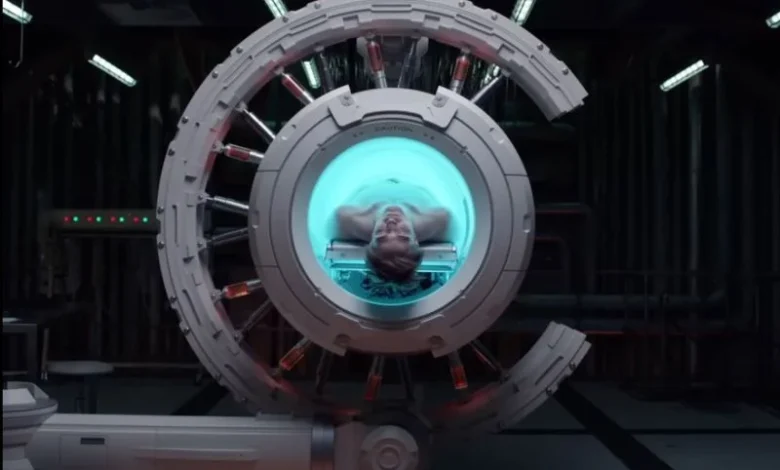
The cinematic landscape is bracing for the return of visionary South Korean filmmaker Bong Joon Ho, whose historic triumph at the 92nd Academy Awards permanently shifted the boundaries of international cinema. Four years after his darkly satirical masterpiece Parasite swept the global box office and conquered the Oscars, Bong is preparing to unveil his next major motion picture, Mickey 17. Scheduled to premiere in theaters on March 29, 2024, the sci-fi epic represents a massive stylistic departure from the tightly wound urban tension of his previous work, plunging audiences instead into a frozen, interstellar frontier. Adapted from Edward Ashton’s acclaimed speculative novel Mickey 7, the upcoming feature film brings together a powerhouse ensemble cast led by Robert Pattinson, signaling what industry analysts anticipate will be one of the most intellectually ambitious and visually arresting blockbusters of the year.
The Genesis and Literary Origins of Mickey 17
At the heart of the project is Edward Ashton’s philosophical science fiction novel, Mickey 7, which explores the harrowing realities of institutionalized disposability in deep space exploration. The narrative centers on Mickey Barnes, a "Expendable"—a disposable employee sent on high-risk, suicidal missions to colonize hostile environments. In the universe of the novel, whenever Mickey dies, a new clone is regenerated with most of his memories intact, allowing the colonial administration to safely test the lethal limits of the icy frontier world known as Niflheim.
While the source material provides a sturdy structural and thematic foundation, Bong Joon Ho is well known for radically subverting and enriching the texts he adapts, a creative trait demonstrated throughout his celebrated filmography, which includes Snowpiercer, Okja, and Memories of Murder. In Mickey 17, the titular number increments from the book’s seventh iteration to seventeen, teasing a substantially escalated timeline of existential exhaustion, technological cruelty, and psychological wear-and-tear for the protagonist. Bong not only directed the feature but also personally penned the screenplay, ensuring that his distinct blend of biting social satire, pitch-black humor, and profound empathy for the marginalized remains central to the narrative framework.
A Heavyweight Cast and Behind-the-Scenes Powerhouses
To bring this cosmic crucible to life, Warner Bros. and production powerhouse Plan B Entertainment have assembled an extraordinary roster of international talent. Robert Pattinson, whose career has evolved from mainstream teen idol to one of the most daring and critically respected character actors of his generation following stellar turns in The Lighthouse, Tenet, and The Batman, steps into the physically and psychologically demanding shoes of Mickey. Pattinson is joined by an enviable supporting cast featuring Academy Award nominee Steven Yeun, British Academy Film Award winner Naomi Ackie, two-time Oscar nominee Toni Collette, and Academy Award winner Mark Ruffalo.
Behind the camera, Bong has reunited with several key collaborators from his previous triumphs. Most notably, composer Jae-il Jung returns to score the film. Jung’s minimalist, anxiety-inducing compositions were instrumental in defining the atmospheric tension of Parasite, and industry insiders expect his musical direction for Mickey 17 to lean heavily into the eerie isolation of deep space and the surreal absurdity of cloned mortality. Furthermore, Brad Pitt’s Plan B Entertainment—which has a proven track record of backing uncompromising auteur-driven projects such as 12 Years a Slave, Moonlight, and Minari—serves as a primary producer, underscoring the studio’s confidence in Bong’s uncompromising vision.
The Oscar Legacy of Bong Joon Ho
To understand the immense anticipation surrounding Mickey 17, one must examine the unprecedented cultural watermark left by Parasite in February 2020. At the 92nd Academy Awards, the South Korean dark comedy-thriller achieved what no foreign-language film had accomplished in the 92-year history of the ceremony: it won the Academy Award for Best Picture. In addition to the top prize, Bong secured Oscars for Best Director, Best Original Screenplay, and Best International Feature Film.
The victory was not merely a commercial and critical milestone for Asian cinema; it fundamentally democratized the global film market, proving that culturally specific narratives dealing with universal themes of economic disparity and class warfare could resonate universally with Western audiences and voting bodies alike. Consequently, Mickey 17 arrives with the heavy burden of heightened expectations. It serves as Bong’s first English-language film since Okja in 2017 and his grand return to the dystopian canvas he previously explored in Snowpiercer (2013). However, while Snowpiercer functioned as a linear allegory of class structure compressed within a single train moving across a frozen earth, Mickey 17 promises a more deeply existential, philosophical meditation on identity, soul, and the commodification of human life in the stars.
Thematic Implications and Socio-Political Commentary
Science fiction has long served as a mirror for contemporary societal anxieties, and Bong Joon Ho’s filmography suggests that Mickey 17 will be no exception. By exploring the concept of the "Expendable," the narrative directly engages with modern labor exploitation, the disposable nature of the working class within late-stage capitalism, and the ethical dilemmas posed by rapid advancements in biotechnology and cloning.
In the world of Niflheim, human lives are valued purely by their utility to the corporate expedition, echoing real-world debates regarding worker safety, corporate accountability, and the dehumanizing effects of mass industrialization. As Mickey 17 navigates a scenario where he encounters a duplicate of himself—Mickey 18—the film ventures into themes of bodily autonomy and self-determination. The horror of the narrative is not merely the physical violence of dying repeatedly on an inhospitable alien planet, but the psychological terror of bureaucratic indifference, where a person’s existence is tracked on a corporate ledger rather than defined by a singular, sacred life.
Chronology of Production and Release Trajectory
The journey of Mickey 17 from concept to screen has been closely watched by cinephiles worldwide. Warner Bros. first signaled its confidence in the project by greenlighting the feature well in advance, setting up a rigorous production schedule designed to accommodate the complex visual effects required to depict both the frozen world of Niflheim and the technical wizardry of actors interacting with multiple digital and physical iterations of themselves.
Following principal photography, the film entered an extensive post-production phase, during which Bong Joon Ho meticulously oversaw the editing and sound design. Initial promotional materials, including first-look teasers and character design reveals, have steadily built momentum across digital platforms. The decision to slate the film for a late-March theatrical release rather than the traditional late-year awards corridor suggests Warner Bros. views the project as a major global event capable of dominating the spring box office while retaining enough intellectual weight to remain part of the cultural conversation for months to come.
Broader Impact on the Global Entertainment Industry
The release of Mickey 17 in March 2024 underscores a broader structural shift in Hollywood: the growing commercial viability of auteur-driven, high-budget original science fiction. In an era dominated by established intellectual properties, cinematic universes, and pre-sold sequels, a major studio investing heavily in an original, R-rated (implied by the source material’s mature themes) philosophical sci-fi film directed by an international visionary is a notable rarity.
Furthermore, the project highlights the continued dismantling of traditional geographic boundaries within the global film industry. With a South Korean director at the helm, a British lead actor, American and international backing, and a multinational crew, Mickey 17 exemplifies the modern co-production model necessary to finance ambitious, high-concept cinema on a global scale. As audiences increasingly embrace cross-cultural storytelling—paved the way by phenomena like Parasite, Squid Game, and Everything Everywhere All at Once—Bong’s latest venture is positioned to perform strongly not only in North American markets but across European and Asian box offices.
Conclusion and Outlook
As the cinematic world counts down to March 29, 2024, Mickey 17 stands as a testament to the creative freedom afforded to Bong Joon Ho in the wake of his historic Oscar sweep. Fusing high-concept science fiction with sharp satirical commentary, existential philosophy, and a stellar ensemble cast, the film promises to challenge mainstream audiences while delivering the immaculate framing and narrative tension that have become Bong’s signature. Whether Mickey 17 and his subsequent iterations will find salvation on the frozen wastes of Niflheim remains to be seen, but the journey promises to be one of the most provocative cinematic experiences of the decade.