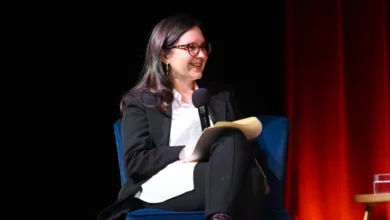
Tallinn Black Nights Film Festival concludes with a historic celebration of global cinematic talent and regional artistic evolution


The 2026 edition of the Tallinn Black Nights Film Festival, widely known as PÖFF, reached its dramatic conclusion this past Friday at the Alexela Concert Hall in Estonia. The ceremony served as a definitive showcase for the festival’s evolving curatorial direction under new Artistic Director Trinn Tramberg. By balancing the inclusion of seasoned industry veterans with a daring commitment to emerging voices, the festival solidified its reputation as one of the most vital discovery hubs on the international circuit. This year, the festival’s 30th anniversary celebrations provided a grand backdrop for a competition that prioritized thematic depth and regional cultural significance, particularly across Latin American and European co-productions.
The Grand Prix and the Triumph of Psychological Cinema
The pinnacle of the evening was the presentation of the Grand Prix, a €20,000 award sponsored by the City of Tallinn. The international jury, presided over by the distinguished screenwriter and director Sir Christopher Hampton, bestowed the honor upon On Top of the Cliff, the sophomore feature from Peruvian-born director Enrica Perez. The film, a complex psychological thriller set within the restrictive confines of a 1950s Catholic girls’ boarding school in Lima, was recognized for its technical and narrative precision.
Beyond the top prize, the film earned a Best Actress nod for lead newcomer Bianca Bucelli. The jury’s citation noted the film’s "hermetic universe," highlighting its mastery across all production departments—from cinematography and sound design to the nuance of its script. The win underscores a growing trend in festival circuits where high-concept, genre-adjacent psychological dramas are increasingly favored over traditional period pieces. Represented by sales agent Reason8, On Top of the Cliff is a significant co-production involving Peru, Mexico, and Switzerland, reflecting the festival’s ongoing emphasis on cross-continental collaboration.
Emerging Talent and the First Feature Competition
In the First Feature category, the festival underscored its reputation for identifying future auteurs. The top honor was awarded to When She Hears the Bells, directed by Chabname Zariab. Featuring an intense performance by Golshifteh Farahani, the film serves as a harrowing, female-driven narrative of resistance against the Taliban. The jury, led by producer Ivana MacKinnon, praised the debut for its ambitious scale and its emotional resonance, describing it as a "vital story that will stay with us for a long time."
The category also saw a split Jury Special Award, given to Polish director Sonia Orlewicz-Zakrzewska’s Exotic—a film that delves into the pole-dancing community with surprising sensitivity—and Lithuanian director Danielius Minkevicius’s Oblivion. These selections demonstrate the jury’s desire to reward films that bridge the gap between niche subcultures and universal emotional truths.
A Landmark Year for the Baltic States
The 2026 edition of PÖFF was particularly significant as it marked the festival’s 30th anniversary, an occasion used to place the Baltic states of Estonia, Latvia, and Lithuania at the center of the cinematic conversation. The "Baltic Blast" was not merely thematic but structural, as numerous industry events and awards centered on the region’s growing production capacity.
The Baltic Film Competition saw high-profile wins for films that had already garnered international attention at earlier festivals. Lithuania’s How to Divorce During the War, directed by Andrius Blaževičius, took home the Best Film award. The film, which has also been positioned as Lithuania’s Oscar hopeful, reflects the region’s ability to tackle contemporary geopolitical trauma through intimate storytelling. Meanwhile, Latvian director Linda Olte was awarded Best Directing for The Child, and the Cannes-selected project Vesna earned a nod for its Baltic co-producers, Stasys Baltakis and Helena Pokorny.

Industry Impact and Co-Production Market Trends
The industry section of the festival, which serves as a catalyst for future production, saw significant financial and developmental support directed toward collaborative projects. The Eurimages Co-Production Development Award, worth €20,000, went to the Lithuanian project Wild Love, directed by Jonas Trukanas. Jurors praised the project for its "audacity to go beyond genre conventions" and its commitment to uniting the region behind shared values.
The industry awards also highlighted a trend toward trans-national financing. The inclusion of works-in-progress from regions as diverse as Japan, the U.K., and Kyrgyzstan indicates that Tallinn has successfully positioned itself as a global nexus for film development rather than a purely regional event. The financial support provided by Eurimages and other festival partners acts as a vital bridge for independent filmmakers attempting to navigate the high costs of European and international distribution.
Solidarity and the Free World Award
A defining characteristic of the 2026 festival was its vocal and active support for Ukrainian cinema. The festival’s commitment to the country was reflected in both the closing ceremony and the establishment of new accolades. In a poignant moment, the head of the Ukraine Film Agency, Andrii Osipov, presented festival founder Tiina Lokk with the Order of Princess Olga, Third Class, in recognition of her tireless advocacy for Ukrainian filmmakers.
Furthermore, the festival introduced the inaugural Free World Award, granted to Halkawt Mustafa’s No Paradise If You Are Killed by a Woman. This award signals the festival’s intention to use its platform to highlight narratives that address themes of human rights, freedom, and the struggle against oppression. Additionally, the Council of Europe’s Eurimages Special Co-production Award was given to Victoria Zadorska’s My 19-Year-Old Granny, providing tangible financial support to a production team operating under the constraints of an ongoing conflict.
Analysis: The Evolution of PÖFF
The 2026 iteration of the Tallinn Black Nights Film Festival suggests a deliberate pivot toward a more curated, "director-first" philosophy. Artistic Director Trinn Tramberg’s strategy of mixing emerging directors with established names—such as the recognition of Belgian helmer Patrice Toy and Danish doc filmmaker Naieb Khaja—has created a balanced environment where legacy and innovation coexist.
The success of the "Rebels with a Cause" section, which honored Dylan Stephen Levers’s Pop Pop, further cements the festival’s identity as a space for non-conformist filmmaking. By prioritizing "urgent and vital" work, the festival maintains its cultural relevance in a landscape increasingly dominated by commercial streaming algorithms. The emphasis on craft—evidenced by specific awards for cinematography, original score, and production design—serves to reinforce the festival’s status as a champion of the cinematic arts in their most traditional, high-quality sense.
Conclusion and Looking Forward
As the curtain falls on the 30th-anniversary celebration, the Tallinn Black Nights Film Festival leaves behind a clear mandate: the future of European and international cinema lies in the hands of those willing to traverse the boundaries of genre, geography, and political ideology. By fostering a robust co-production ecosystem and maintaining a steadfast commitment to social and political engagement, the festival has secured its position as a pillar of the film festival calendar.
The winners of the 2026 edition—from the grand, sweeping narrative of On Top of the Cliff to the raw, urgent energy of Pop Pop—provide a roadmap for what audiences can expect in the coming year. As these films transition from the festival circuit to broader commercial and art-house distribution, they carry with them the stamp of a festival that has not only survived three decades but has emerged more influential and focused than ever before. With its eyes set on the next decade, PÖFF has proven that even in an era of digital fragmentation, the communal experience of the film festival remains an essential component of global culture.