Trillion Valuation in Blockbuster IPO While Facing Mounting Scrutiny Over Its Massive Fossil Fuel Footprint
Artificial intelligence powerhouse Anthropic made financial history on Wednesday, vaulting into the upper echelon of the world’s most valuable corporations with a staggering $1.5 trillion valuation following its highly anticipated initial public offering. Long heralded within the tech sector and mainstream media as one of the "good guys" of artificial intelligence, the enterprise was originally built by principled defectors who split from OpenAI over profound disagreements regarding corporate ethics, commercial safety, and alignment protocols. Yet, even as the company fiercely champions its dedication to human safety and the prevention of catastrophic technological outcomes, a glaring contradiction has emerged at the heart of its business model: its substantial, growing, and largely opaque contribution to global climate change.
The timing of the public offering placed this paradox under an unforgiving international spotlight. Just days before shares hit the public market, environmental advocacy organizations and industry watchdogs mobilized to condemn the company’s infrastructure expansion. Greenpeace USA publicly rebuked the firm, issuing a scathing statement accusing Anthropic of inviting everyday investors to participate in driving the planet directly into a climate furnace. This friction points to a broader structural crisis within the tech sector. As the global demand for energy-intensive artificial intelligence training and inference skyrockets, data centers are pushing regional power grids to their absolute limits and triggering a massive, unexpected resurgence in the construction of fossil-fuel-burning power plants across the United States and international markets.
The High Energy Cost of Superintelligence
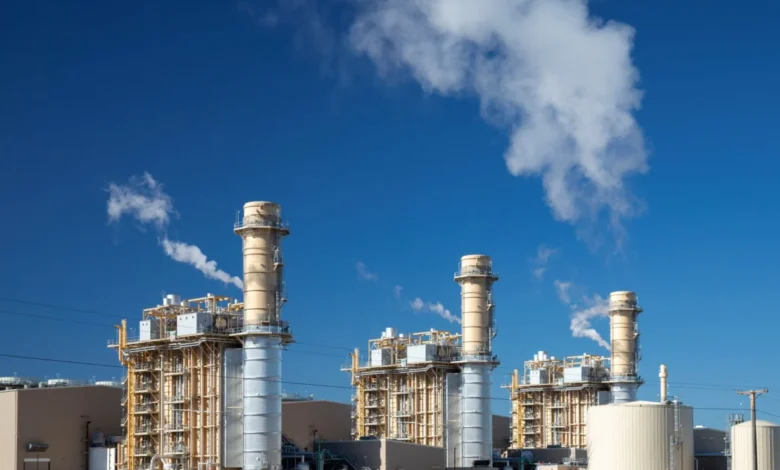
Recent independent environmental audits have revealed the staggering ecological scale of modern artificial intelligence infrastructure. The nation’s largest data center complexes now consume electricity and emit volumes of carbon dioxide comparable to entire sovereign nations, such as Bolivia or Denmark. Anthropic’s rapid operational expansion is deeply intertwined with this fossil fuel dependency. In September, the company reportedly finalized a landmark $3.4 billion infrastructure procurement agreement with Texas-based OnePWR Solutions. Under the terms of the deal, Anthropic secured a massive influx of power generated by gas-fired engines to run its bleeding-edge computing facilities—representing what energy analysts believe is the single largest purchase of its kind ever executed by an artificial intelligence laboratory.
This aggressive pivot toward natural gas has alarmed climate scientists and policy experts alike. Charlie Cray, a senior strategist at Greenpeace USA, noted that the move sends an unmistakably clear signal regarding the company’s long-term operational priorities. By locking in long-term fossil fuel commitments at a critical historical juncture, Anthropic is actively expanding carbon-heavy infrastructure precisely when international scientific bodies, including the United Nations Environment Programme, warn that humanity is dangerously close to permanently overshooting the critical global warming threshold of 1.5 degrees Celsius.
Cray and other environmental advocates argue that Anthropic’s celebrated reputation for ethical leadership and caution should naturally extend to the ecological domain. Given its self-conception as a responsible industry steward, critics contend that the enterprise should be actively pioneering sustainable computing methodologies rather than falling back on legacy fossil fuels to power its technological ambitions.
A Divergence Between Safety and Sustainability
Anthropic’s cultural identity has long been defined by its heavy emphasis on AI safety, research transparency, and "alignment"—the technical discipline of ensuring that advanced artificial intelligence systems operate in strict accordance with human values and ethics. The company’s corporate ethos is encapsulated in its foundational mission to train its flagship conversational model, Claude, to be helpful, harmless, and honest.
This philosophical stance has previously translated into high-stakes institutional friction. Earlier in the year, Anthropic made international headlines when it engaged in a tense standoff with the United States Department of Defense, ultimately refusing to grant the military unrestricted operational access to its models for autonomous weapon systems and mass domestic surveillance initiatives. Furthermore, during the summer months, chief executive officer Dario Amodei emerged as a prominent voice calling for robust federal regulation of the artificial intelligence sector and advocating for a controlled slowdown in the relentless pace of foundational model development.
However, a critical examination of Anthropic’s operational footprint reveals a profound disconnect between its internal philosophical alignment regarding existential risks and its material alignment with ecological preservation. While executive leadership actively cautions society against the theoretical perils of runaway machine intelligence, the company’s day-to-day capital allocation heavily supports the expansion of the very carbon-intensive energy systems that threaten the stability of the planetary biosphere which enabled human civilization to emerge and flourish over millennia.

Regulatory Disclosures and Financial Vulnerabilities
A comprehensive review of Anthropic’s extensive IPO filings reveals that corporate leadership has chosen to address climate change primarily through the lens of financial risk management rather than moral or environmental accountability. Within hundreds of pages of regulatory documentation submitted to the Securities and Exchange Commission, the maker of Claude addressed global warming sparingly, framing rising global temperatures as an external threat to its corporate balance sheet and operational continuity rather than an existential crisis driven in part by its own computational demands.
Among the disclosed operational vulnerabilities, Anthropic explicitly warned investors that escalating ambient temperatures and extreme weather events could significantly increase the capital and operational expenditures required to cool its high-density server equipment. The company noted that prolonged heatwaves directly escalate both power consumption and water utilization rates at critical third-party data center facilities. Additionally, the filing cautioned that climate-amplified natural disasters—including catastrophic wildfires, severe hurricanes, and widespread flooding—pose a continuous threat to the physical infrastructure underpinning its cloud computing capabilities.
Paradoxically, the company also acknowledged that shifting environmental regulations and public sustainability mandates present material risks to its resource-intensive business model. Anthropic noted in its disclosures that a segment of the institutional investor base might actively withhold capital if corporate sustainability metrics are perceived as inadequate or non-compliant. Conversely, management cautioned that achieving aggressive net-zero targets would be exceptionally costly and difficult to implement. Navigating a complex, fragmented landscape of emerging climate and sustainability disclosure legislation across California, the European Union, and the United Kingdom, the company warned, will require significant investments of time, legal expertise, and financial resources.
Transparency Deficits and Industry Peer Comparisons
Beyond financial liabilities, the market debut has brought the company’s acute transparency deficit regarding greenhouse gas emissions under intense scrutiny. A comprehensive analytical report published by ESG advisory firm Integrum ESG evaluated Anthropic alongside fourteen peer organizations operating across the artificial intelligence supply chain. The study revealed a striking industry-wide trend: every single evaluated competitor, with the sole exception of Anthropic and SpaceX, publicly discloses its direct operational greenhouse gas emissions (Scope 1) and indirect emissions tied to purchased electricity consumption (Scope 2).
This lack of standardized reporting has prevented independent researchers and investors from accurately quantifying the true carbon footprint of the newly minted multi-trillion-dollar enterprise. "The entire sector needs to be scrutinized closely as to what choices they make and how much transparency is in their reporting—which in this case, is not a lot," Cray observed, emphasizing the urgent need for verifiable corporate metrics across the generative AI ecosystem.
In response to localized community backlash and mounting regulatory pressure, Anthropic has attempted to implement targeted mitigation strategies. The company has publicly pledged to directly cover any localized electricity price increases resulting from the immense power draw of its data centers, ensuring that everyday ratepayers do not shoulder the financial burden of powering advanced AI. Furthermore, management has committed to deploying advanced, water-efficient cooling technologies and joined major global corporations in backing the nascent carbon dioxide removal industry through targeted financial investments. Representatives for Anthropic declined to provide immediate comment when approached regarding their energy procurement strategies and environmental disclosures.
Broader Implications for the Future of Artificial Intelligence
The tense convergence of multi-trillion-dollar market valuations and ecological degradation highlights a profound ideological schism within the contemporary artificial intelligence movement. While public discourse and internal corporate debates remain overwhelmingly dominated by apocalyptic anxieties surrounding human extinction and self-improving superintelligence, the immediate, compounding realities of climate change continue to accelerate unchecked.
Internal dissent within Anthropic has frequently centered on the velocity of technological scaling. In September, high-profile researcher Jacob Coxon resigned from the organization, publicly accusing leadership of racing recklessly toward self-improving artificial general intelligence and "gambling with our lives." Shortly thereafter, Evan Hubinger, the former head of Anthropic’s alignment division, publicly estimated a greater than 10 percent probability that advanced AI systems could trigger human extinction within the coming decade.
Yet, environmental policy experts argue that even if humanity successfully navigates the theoretical risks of an artificial intelligence catastrophe, society will still be forced to contend with the immediate, irreversible physical realities of a rapidly warming planet. Sustainability advocates maintain that ethical artificial intelligence development cannot be successfully divorced from the physical infrastructure required to sustain it.
Industry observers suggest a clear path forward for companies seeking genuine alignment between ethical rhetoric and corporate action. Analysts argue that Anthropic possesses the financial capital and technological leverage necessary to set a new corporate standard. By establishing a transparent emissions baseline, committing to strict, science-based reduction targets, and pledging a firm timeline to phase out reliance on natural gas in favor of dedicated renewable energy grids, the newly public giant could demonstrate that technological innovation and ecological stewardship are not mutually exclusive. Without such decisive commitments, however, the company’s aspiration to serve as the ethical moral compass of the artificial intelligence revolution will remain profoundly compromised by the smoke rising from its natural gas-powered data centers.