Mapping the Earths Subsurface Circulatory System Scientists Reveal the Massive Scale of Global Fungal Networks

In a landmark study published in the journal Science on June 11, an international team of researchers has unveiled the first comprehensive global map of arbuscular mycorrhizal fungal networks, revealing an underground infrastructure of staggering proportions. According to the data, these hidden webs of ultrathin threads, known as hyphae, span an estimated 110 quadrillion kilometers across the planet. To put this distance into perspective, if these fungal filaments were laid end-to-end in a single continuous line, they would stretch nearly a billion times the distance between the Earth and the sun.
This research, led by the Society for the Protection of Underground Networks (SPUN), represents a paradigm shift in our understanding of terrestrial ecosystems. For the first time, scientists have moved beyond the knowledge that these systems exist to a granular understanding of their density, distribution, and historical presence. These fungal communities are not merely passive residents of the soil; they are the primary architects of the "Wood Wide Web," forming intimate symbiotic relationships with approximately 80 percent of all plant species on Earth. In this biological trade, fungi provide plants with essential nutrients such as phosphorus and nitrogen, receiving carbon in return—a process that sequesters roughly 1 billion tons of carbon underground every year.
The Invisible Engine of Carbon Sequestration
The role of arbuscular mycorrhizal fungi in the global carbon cycle cannot be overstated. Previous research has established that these networks act as a massive carbon sink. Without the sequestering capabilities of these underground webs, the 1 billion tons of carbon they store annually would remain in the atmosphere, significantly accelerating the pace of global warming.
Justin Stewart, an evolutionary ecologist at SPUN and the study’s lead author, emphasizes that these networks function as living pipes. Because hyphae are significantly thinner than the finest human hair and far more expansive than plant roots, they can penetrate microscopic soil pores to access nutrient deposits that are otherwise unreachable by flora. This efficiency creates a biological "win-win": plants achieve superior growth and resilience, while carbon is drawn down into the soil where it can remain stabilized for long periods under optimal conditions.
The study’s findings regarding the total biomass of these networks are equally profound. By utilizing advanced laboratory techniques and machine learning, the team estimated that the total mass of living arbuscular mycorrhizal networks is approximately five times the weight of the entire human population. This figure, however, is considered a conservative estimate of the total fungal influence on soil, as the study focused exclusively on living networks and did not account for "necromass"—the dead fungal structures that continue to store carbon and influence soil chemistry long after the organisms have ceased to be active.
Methodology: From Soil Samples to Machine Learning
The mapping of 110 quadrillion kilometers of fungi required an unprecedented synthesis of data and technology. The research team began with an exhaustive literature review, aggregating data from 16,000 soil core samples collected from diverse ecosystems worldwide. Each of these samples was geolocated, providing a baseline for the length of fungal threads within specific volumes of soil.
To bridge the gaps between these physical samples, the researchers employed machine learning algorithms to create predictive models of fungal density across the globe. This allowed the team to identify "hotspots" of underground activity and highlight regions where data remains sparse, such as the deserts of the American Southwest and parts of the Global South.
A critical component of the study involved a collaboration with AMOLF, a renowned biophysics research institute in Amsterdam. Researchers there utilized a specialized robotic system equipped with high-resolution cameras to monitor fungal networks as they grew in real-time within controlled laboratory environments. This allowed the team to precisely measure the width of individual hyphae, providing the necessary data to convert network length into total biomass.
A Chronology of Soil Science and Discovery
The journey toward this global map has been decades in the making. While the existence of mycorrhizal fungi has been known to botanists since the late 19th century, they were long relegated to the periphery of ecological study, which favored the more visible "above-ground" biodiversity of forests and grasslands.
- 1885: The term "mycorrhiza" was first coined by German botanist Albert Bernhard Frank, describing the symbiotic association between fungi and plant roots.
- 1960s-1980s: Researchers began to recognize that these fungi were not rare exceptions but were present in the vast majority of terrestrial plants.
- 2000s: The concept of the "Wood Wide Web" gained mainstream scientific traction, suggesting that fungi facilitate communication and resource sharing between trees.
- 2021: SPUN was founded with the explicit mission to map the world’s fungal networks and advocate for their protection.
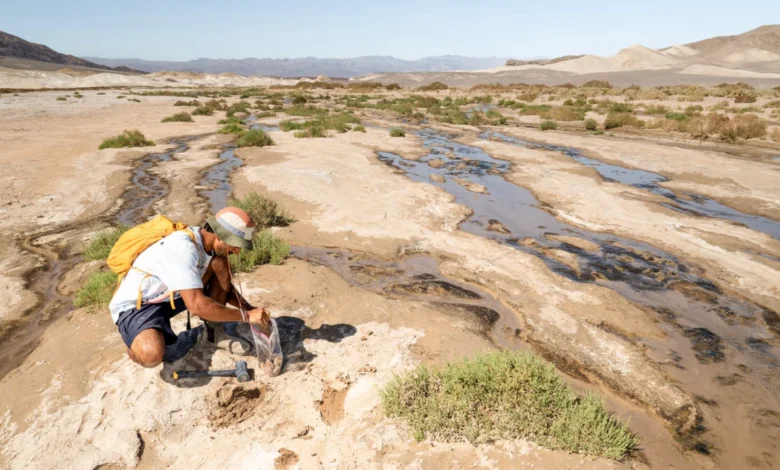
- 2024-2025: SPUN researchers conducted expeditions to remote regions, including the Mojave Desert and high-altitude grasslands, to collect the soil samples that would form the backbone of the current study.
- 2026: The publication of the global map in Science marks the culmination of these efforts, providing a definitive structural blueprint of the Earth’s fungal infrastructure.
Grasslands: The Most Vital and Vulnerable Frontier
One of the most significant findings of the report is the critical importance of wild grasslands. These ecosystems hold an estimated 40 percent of the world’s total arbuscular mycorrhizal biomass. Despite their role as massive carbon reservoirs, grasslands remain among the least protected ecosystems on the planet.
The data reveals a troubling trend: grasslands are being converted into agricultural land at four times the rate of forests. This conversion has devastating effects on underground networks. The study found that fungal network densities in croplands are approximately 50 percent lower than those in wild, undisturbed ecosystems. Tilling, the application of chemical fertilizers, and the removal of diverse plant species disrupt the delicate hyphal structures, leading to a massive release of stored carbon and a decline in soil fertility.
James Bever, a professor of ecology and evolutionary biology at the University of Kansas, noted that the study provides a necessary "reality check" for conservationists. While reforestation efforts often receive the bulk of environmental funding and media attention, the preservation of existing grassland soil structures may be just as vital, if not more so, for long-term climate stability.
Policy Implications and the Road to COP31
The timing of the study is strategic, as the SPUN team prepares to present their findings to international policymakers at the upcoming United Nations Climate Change Conference (COP31). The goal is to elevate soil biodiversity to the same level of priority as atmospheric carbon reduction and forest conservation.
Currently, 90 percent of the world’s fungal communities lack any form of legal protection. Most international conservation treaties focus on "charismatic megafauna" or visible vegetation, ignoring the microbial life that sustains these higher organisms. The SPUN researchers argue that without a "toolbox" for soil restoration and a legal framework to protect fungal hotspots, global climate targets may be unreachable.
Corentin Bisot, a biophysicist at AMOLF and co-author of the study, points out that while we now know where the fungi are, we are still in the early stages of understanding how to actively restore them. Current agricultural practices often treat soil as a sterile medium for chemicals rather than a living biological system. Shifting this perspective will require a massive overhaul of global farming subsidies and land-management policies.
Analysis: The Future of Soil Governance
The mapping of the global fungal network represents the beginning of a new era in environmental science—one that looks downward to solve the problems of the atmosphere. The implications of this study suggest that the "nature-based solutions" often touted by corporations and governments must be expanded to include the protection of the pedosphere (the soil layer).
However, challenges remain. The predictive nature of the current map means that there are still vast "white spaces" where more physical sampling is required. Furthermore, the loss of fungal diversity could have cascading effects on food security. As mycorrhizal networks decline, plants become more dependent on synthetic fertilizers, creating a feedback loop of soil degradation and chemical dependency.
The SPUN study serves as both a scientific achievement and a warning. By quantifying the 110 quadrillion kilometers of life beneath our feet, researchers have provided a baseline for what the world stands to lose. As the international community gathers for COP31, the focus will increasingly turn to whether the world’s governments are willing to protect an infrastructure they cannot see, but upon which all terrestrial life depends.
The research team concludes that this map is merely the "Version 1.0" of a living atlas. Much like the early, distorted maps of the New World, this global fungal map will be refined and corrected as more data flows in from the field. Yet, even in its current form, it makes one fact undeniably clear: the health of the planet’s atmosphere is inextricably linked to the integrity of the microscopic threads weaving through the dirt beneath our feet.
Related posts: