Breaking Into Entertainment Law Requires Nimble Strategy, Networking and Non-Traditional Paths


Entering the realm of entertainment law is widely recognized as one of the most competitive and challenging endeavors within the legal profession. Spanning a complex and dynamic ecosystem that includes music, film, television, streaming services, video games, and digital media, the field demands multifaceted expertise. Practitioners must navigate a labyrinth of legal disciplines, ranging from intellectual property and complex contract negotiations to labor and employment, finance, and high-stakes litigation.
For those looking to build a career in this sector, achieving success requires more than a juris doctor and a solid understanding of coursework. Industry veterans consistently emphasize the critical value of relentless networking, unwavering persistence, and an openness to unexpected, non-traditional career trajectories. Whether operating out of traditional media capitals like New York City and Los Angeles or forging paths in emerging regional markets, attorneys must remain nimble as the modern entertainment landscape undergoes rapid transformation.
To better understand the realities of this specialized niche, the ABA Journal sat down with six prominent entertainment lawyers to examine their unique journeys and gather actionable advice for the next generation of legal professionals.
From Failed Rock Dreams to Rights Management: The Jonathan Faber Story
Long before he was handling high-profile intellectual property and licensing matters, Jonathan Faber was attempting to break into the music industry from the other side of the microphone. In the late 1980s and early 1990s, Faber served as the lead guitarist for Surrender Dorothy, an Ohio-based hard rock band with aspirations of national stardom. The group even secured meetings with major record labels before the sudden explosion of Nirvana and the grunge movement irrevocably transformed the American rock music landscape.
Realizing his performing days were numbered, Faber pivoted. After earning a bachelor’s degree in English from Wittenberg University in 1994, he set his sights on the West Coast. His journey began at the Denver Publishing Institute, a book publishing program at the University of Denver. There, a guest lecturer provided him with a vital industry contact: a rising executive at Atlantic Records.
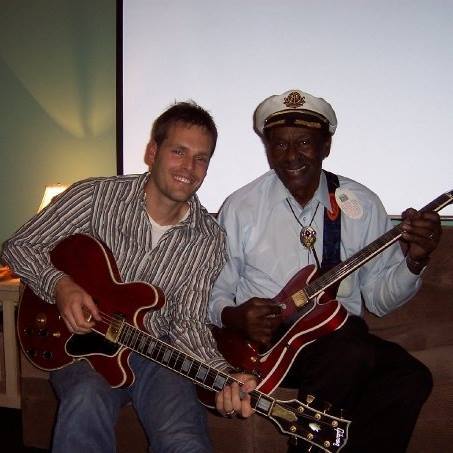
Armed with a name scribbled on a Post-it note, Faber headed to Los Angeles. The executive offered him an unpaid internship, delivering a reality check that it would be up to Faber to carve out his own future. During his time at Atlantic Records, Faber observed that many of the most influential executives and power brokers held law degrees. Taking note, he enrolled in the Indiana University School of Law-Indianapolis (now the IU Robert H. McKinney School of Law).
While pursuing his legal education, Faber secured another pivotal internship with CMG Worldwide, an Indianapolis-based agency managing the rights and licensing of iconic historical personalities such as James Dean and Marilyn Monroe. Rather than returning to Los Angeles upon graduating in 1999, Faber remained with CMG Worldwide, eventually rising to become its president in 2003.
Faber aggressively built his industry credibility by authoring articles for trade publications, teaching Continuing Legal Education (CLE) courses, serving as an expert witness in celebrity and brand litigation, and developing a specialized right of publicity course at IU McKinney. In 2006, he founded the Luminary Group, a rights representation firm in Indianapolis where he serves as managing partner and general counsel, representing the estates of legends like Babe Ruth, Vince Lombardi, and Jesse Owens. He also practices intellectual property and licensing at McNeelyLaw, with a client roster that includes high-profile musicians and entertainers such as Nikki Sixx, 50 Cent, and Drake.
The Tour Bus Classroom: Sophia Sofferman’s Unconventional Rise
For Sophia Sofferman, the trajectory toward becoming a founding partner of NTSS Law in 2025 was anything. After working as a news producer in Albany, New York, she enrolled in Pace University’s Elisabeth Haub School of Law with the clear intention of pursuing a career in civil rights.
Upon earning her degree in 2014, Sofferman accepted a legal fellowship with the Westchester County Human Rights Commission. During a scheduled two-week break from her fellowship, a colleague asked if she would assist legendary Eagles guitarist Joe Walsh with some production work. That short-term favor permanently altered her career path.
What began as a two-week stint extended well beyond her fellowship. Sofferman transitioned into a full-fledged production coordinator and backstage manager, living on tour buses on and off for two years. She managed operations during Walsh’s 2015 solo tour, followed by tours with Bad Company in 2016 and Tom Petty and the Heartbreakers in 2017.

This boots-on-the-ground experience provided an education no law school textbook could replicate. Sofferman gained a granular understanding of the massive operational infrastructure underlying major live productions and the complex life cycles of legacy artists. She carried these insights directly into her legal career, serving as legal counsel for Rimas Entertainment—the long-time music label behind global superstar Bad Bunny—and later as an associate in Pryor Cashman’s Media and Entertainment group in Miami.
Now representing recording artists, songwriters, and entertainment companies in transactions and litigation, Sofferman also shares her expertise as a regular guest lecturer at the University of Miami School of Law, where she earned an LLM in entertainment, arts, and sports law. As a member of the Governing Committee for the ABA Forum on the Entertainment and Sports Industries, she advises students to embrace opportunities that make their resumes stand out.
Navigating Pandemics and Geographic Barriers: Leah Stevenson’s Ascent
Leah Stevenson’s path to becoming senior counsel at the Los Angeles-based entertainment law firm MGL highlights the power of creative persistence in the face of unprecedented disruptions. While completing her undergraduate studies at the University of Miami, Stevenson interned at the marketing agency responsible for Jazz in the Gardens, a prominent annual music festival celebrating jazz, R&B, and hip-hop.
Although she always intended to attend law school, that undergraduate internship crystallized her ambition to become an entertainment attorney. Recognizing that attending law school in Miami presented fewer immediate local internship opportunities compared to traditional hubs like Los Angeles, New York, or Nashville, Stevenson leaned heavily on career development resources. Working closely with Marcy Cox, then the assistant dean of career development at the University of Miami School of Law, Stevenson crafted a targeted "dream list" of companies and law firms operating in the entertainment space.
This proactive strategy yielded a series of high-profile legal internships with the Adrienne Arsht Center for the Performing Arts, BBC Worldwide, and the Akerman law firm, where she assisted with entertainment litigation. She graduated in 2019 with a diverse resume demonstrating an undeniable commitment to the industry.
However, her plans to relocate to Los Angeles were upended by the onset of the COVID-19 pandemic, forcing her to shelter with family in Houston. Compounding these challenges, she failed the California bar exam on her first attempt. Upon passing on her second try, she faced a severe deficit of local contacts in the Southern California legal market.

Undeterred, Stevenson engaged in extensive cold outreach. Her persistence secured her an initial local mentorship, followed by a role as a contract entertainment litigation attorney in Beverly Hills, and later a position at a labor and employment firm. By 2021, she successfully transitioned to MGL, where she now manages corporate governance and intellectual property matters for clients across the music, film, television, and digital media sectors.
The Value of Relationships: Steve Weizenecker’s Evolution
Steve Weizenecker’s entry into entertainment law began in the late 1980s while he was a political science major at Emory University. Tasked with managing rock-and-roll bands such as Question of Balance, Weizenecker relied on natural business acumen honed by his parents—a physician father and a registered nurse mother who ran the medical office.
On the road handling contract negotiations, performance fees, and tour logistics, Weizenecker spent his nights working until 3:00 or 4:00 AM. Observing the attorneys working behind the scenes, he realized that a legal career offered a more sustainable professional lifestyle than tour management.
While attending Cooley Law School, Weizenecker seized a practical learning opportunity by taking an entertainment law course taught by an adjunct professor who operated a talent-buying agency. Handling contracts and administrative tasks for the professor provided him with hands-on immersion in the business.
Graduating in 1995, Weizenecker returned to Atlanta, where establishing an entertainment law practice proved grueling. Initially taking a position at a labor and employment firm to secure financial stability, he pursued entertainment matters during his off-hours, meticulously building and maintaining his professional network. His early peers and colleagues eventually rose through the ranks of the industry, bringing Weizenecker along as their trusted counsel.
After holding positions as of counsel at Greenberg Traurig and partner at Lewis Brisbois Bisgaard & Smith, Weizenecker joined Barnes & Thornburg as a partner in 2013. Today, he advises major industry players—including Pinewood Studios, Viacom, and Legendary Pictures—on complex financing structures and tax incentives for film, television, and video games. As the current chair of the ABA Forum on the Entertainment and Sports Industries, he strongly encourages aspiring lawyers to actively participate in the forum’s mentorship programs and industry events.

Embracing In-House Evolution: Rina Yano’s Studio Journey
For Rina Yano, the decision to pivot into the corporate in-house space in 2001 set the stage for a quarter-century career across major entertainment studios. A graduate of the Washington University in St. Louis School of Law who initially practiced general corporate law, Yano recognized a wealth of in-house opportunities within the Los Angeles studio system.
Eager to break into the sector, she accepted the position of director of business and legal affairs at Sony Pictures Entertainment, a move that required accepting a significant pay cut. Viewing the studio as a premier stepping stone, she reasoned that the prestige of having Sony Pictures on her resume would unlock future opportunities.
Over the next 25 years, Yano accumulated extensive institutional experience across the entertainment landscape. She served as counsel for Warner Bros., senior counsel for The Wonderful Company—where she negotiated television and digital commercial agreements for consumer brands like Wonderful Pistachios—and senior vice president for business and legal affairs at Westbrook, the entertainment venture co-owned by Will Smith and Jada Pinkett Smith.
Navigating the volatile nature of the industry, Yano experienced firsthand how rapidly external events can impact corporate legal careers. Following Will Smith’s highly publicized Oscars incident in 2022, she navigated subsequent shifts, later working with faith-driven film and television studio the Wonder Project before experiencing a subsequent corporate layoff.
In July, Yano assumed the role of head of business and legal affairs for Tokyo Broadcasting System International, the Japanese media corporation owning the format license for American Ninja Warrior. Reflecting on her longevity, Yano warns that the traditional model of remaining at a single studio for decades is rapidly becoming obsolete. To survive and thrive in a shifting media economy, modern entertainment lawyers must cultivate diverse skill sets, remain highly adaptable, and maintain active networks through academic conferences and professional newsletters.
Merging Symphony Management and Copyright Law: Ari Solotoff’s Courageous Pivot
Ari Solotoff’s path to leading the entertainment, media, and arts practice at Drummond Woodsum began in the classical music world. Growing up in New York, he played the oboe in ensembles and attended the pre-college program at The Juilliard School. While studying classical languages at the University of California at Berkeley, he performed with the San Francisco Symphony Youth Orchestra and completed a public relations internship that sparked a deep interest in arts management.

Following his graduation in 2002, Solotoff secured a competitive yearlong fellowship with the League of American Orchestras, working with the Pittsburgh Symphony Orchestra and other regional institutions. By age 23, he became the executive director of the Pensacola Symphony Orchestra, subsequently leading the Portland Symphony Orchestra in Maine and serving as executive vice president of the Philadelphia Orchestra.
During his tenure helping guide the Philadelphia Orchestra through complex Chapter 11 bankruptcy proceedings, Solotoff worked closely with restructuring and corporate attorneys. Inspired by their strategic guidance, he recognized that formal legal training would significantly enhance his effectiveness as an arts executive.
After earning his J.D. from the University of Maine School of Law in 2015, Solotoff joined Bernstein Shur in Portland. Leveraging his pre-existing relationships within the nonprofit arts sector, he built a distinctive legal practice, representing clients such as the Crewe Foundation—co-founded by legendary songwriter Bob Crewe to support the arts and LGBTQ+ rights in Maine.
In 2020, Solotoff established his own boutique firm before joining Drummond Woodsum, where he currently leads its entertainment, media, and arts practice. His diverse client roster now features Rock & Roll Hall of Fame producers, Pulitzer Prize-winning musicians and literary authors, and top-tier podcast creators. Serving also as chair of the Theater and Performing Arts Committee for the ABA Forum on the Entertainment and Sports Industries, Solotoff acknowledges that returning to law school mid-career required immense courage, but maintains it was the definitive catalyst for his professional fulfillment.
Broader Industry Impact and Strategic Implications
The collective experiences of these six attorneys illustrate a broader structural shift within entertainment law. As the digital economy blurs traditional boundaries between music, film, gaming, and interactive media, the demand for static, single-discipline legal counsel is steadily declining. Modern practitioners must navigate complex regulatory frameworks, cross-border digital rights management, and shifting financing models influenced by streaming economics and global tax incentives.
For aspiring legal professionals aiming to enter this competitive vertical, the consensus among industry leaders points toward a unified strategy:
- Cultivate Adaptability: Traditional career ladders are giving way to agile portfolios where lawyers must master multiple practice areas—from labor negotiations to intellectual property enforcement.
- Leverage Non-Traditional Experience: Unique backgrounds, whether rooted in tour management, arts administration, or corporate restructuring, provide operational insights that distinguish candidates in a crowded applicant pool.
- Prioritize Relational Networking: Because a significant portion of entertainment business relies on trusted interpersonal relationships, active engagement with professional organizations, law school conferences, and targeted mentorship programs remains essential for long-term career viability.