Independent Horology: A New Era of Mechanical Artistry and Craftsmanship

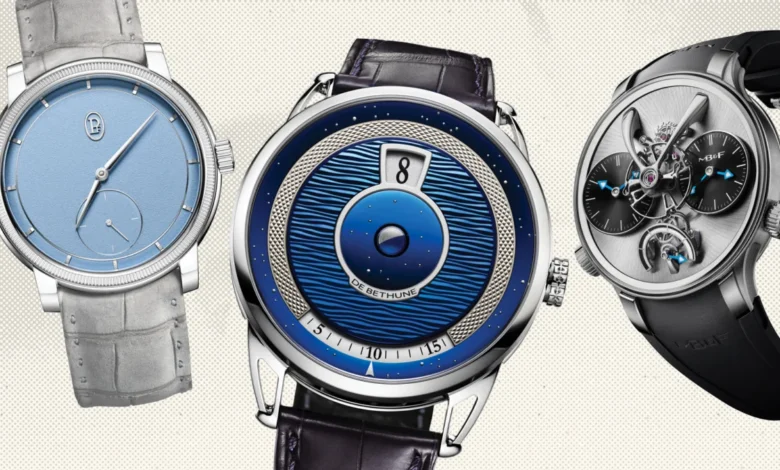
The landscape of high-end horology has undergone a seismic shift over the past two decades, moving away from the dominance of legacy conglomerates toward a vibrant ecosystem of independent artisans. Today, the collector’s market increasingly prizes technical audacity, unconventional displays, and small-batch production over the mass-market luxury that defined the late 20th century. This evolution is best captured by the vanguard of independent watchmakers—houses like De Bethune, Urwerk, Biver, Czapek & Cie, Parmigiani Fleurier, MB&F, Ressence, and H. Moser & Cie—each of which has redefined the boundaries of mechanical engineering.

The Rise of the Independent Artisan: A Historical Perspective
The contemporary independent watchmaking movement traces its intellectual roots to the late 1990s and early 2000s, a period marked by a desire to return to the human-centric roots of watchmaking. While the Swiss industry was recovering from the Quartz Crisis through consolidation, a handful of visionaries sought to re-establish the concept of the watch as an object of art rather than a mere utility.
De Bethune, founded in 2002 by Denis Flageollet and David Zanetta, serves as a primary example of this shift. By focusing on celestial mechanics—such as their proprietary spherical moon-phase complications—and material innovation like blued titanium, they have created a distinct visual language. Their DB25 Digitale, which elegantly separates the hour and minute displays, represents a modern interpretation of the digital aesthetic, moving away from binary screens toward mechanical disc rotation that maintains the soul of traditional horology.

Architectural Timekeeping: The Philosophy of Urwerk and MB&F
For brands like Urwerk and MB&F, the watch is an architectural project. Founded in 1997, Urwerk drew inspiration from the ancient Sumerian city of Ur, connecting the modern measurement of time back to the cradle of civilization. Their UR-300 Time Quantum is emblematic of this philosophy, utilizing a T-shape metal frame that discards the traditional dial for a more sculptural, rotating display of hours and minutes.
Similarly, Maximilian Büsser’s MB&F (Maximilian Büsser & Friends), established in 2005, operates as a "concept laboratory." By partnering with independent master watchmakers, Büsser facilitates the creation of pieces like the LM1 EVO. This watch, limited to a run of 33, serves as a case study in technical transparency, suspending a massive flying balance wheel above the movement to emphasize the kinetic energy of the device. These watches are not merely worn; they are observed as complex machines in motion.

The Intersection of Heritage and Modernity
While some independents push the future, others, such as Czapek & Cie and H. Moser & Cie, focus on the re-contextualization of history. Czapek & Cie, named for the 19th-century partner of Patek Philippe, was revived in 2015 to honor a legacy of fine finishing. Their Antarctique Tourbillon Victory Green, a limited series of ten pieces produced on-demand, highlights a growing trend in the industry: the bespoke production model. By producing only when a client commits, the brand avoids the waste associated with traditional manufacturing while heightening the exclusivity of the piece.
H. Moser & Cie similarly bridges the gap between the past and present. Heinrich Moser’s original firm, founded in 1828, saw its modern rebirth as a challenge to the standard Swiss watch industry. Their Heritage Centre Seconds Espresso Fumée draws directly from the transition period of the early 20th century, when the wristwatch began to displace the pocket watch as the standard for timekeeping. This aesthetic homage is not a replica but a synthesis of historic design language and modern movement stability.

The 2026 GPHG and the Validation of Excellence
The industry’s health is perhaps best validated by events such as the Grand Prix d’Horlogerie de Genève (GPHG). In November 2026, the industry gathered for the awards—often referred to as the "Oscars of watchmaking"—to recognize the pinnacle of the craft. Parmigiani Fleurier’s success at this year’s event, specifically the Chronograph Prize for the Tonda PF Chronographe Mystérieux, underscores the market’s continued appreciation for technical complexity.
Michel Parmigiani, a master restorer by trade, founded his brand in 1996 in Fleurier. His victory serves as an institutional acknowledgment that, in an era of digital saturation, the market remains deeply invested in the mastery of traditional chronograph functions. The Toric Petite Seconde, debuting alongside these accolades, confirms that while technical complexity is praised, refined, minimalist aesthetics remain a cornerstone of collector demand.

Industry Trends: Materials and Manufacturing
A common thread across these houses is the experimentation with advanced materials. Biver, the eponymous brand launched by industry legend Jean-Claude Biver in 2023, exemplifies this focus on materiality. The 38mm Biver AB blends brushed and polished steel with 18-karat gold dials treated in dark gray, creating a textural contrast that feels both contemporary and timeless.
Ressence, based in Antwerp, takes a different approach to the physical composition of the watch. Under the guidance of industrial designer Benoît Mintiens, the brand has moved away from traditional watch case construction toward oil-filled displays. The Type 10 DN, weighing just 82 grams, utilizes two independent sections, allowing for a seamless display of time through rotating discs. This design choice highlights a broader shift in the market toward "wearability," where the physical comfort and weight of the watch are considered as critical as its internal mechanics.

The Economic Implications of Independent Growth
The growth of these independent brands represents a significant departure from the equity-backed, high-volume production models of the late 20th century. By maintaining lower production numbers, these firms insulate themselves from the boom-and-bust cycles that impact larger luxury conglomerates. The reliance on boutique retail partners—such as The 1916 Company in Manhattan Beach, Urwerk USA in Beverly Hills, Material Good in New York, and Feldmar in Los Angeles—creates a localized, high-touch sales environment.
This retail model is essential to the brand-collector relationship. Unlike mass-market luxury, where the purchasing experience is often homogenized, these independent brands rely on regional experts who can articulate the technical nuances of a tourbillon or the specific metallurgical processes of a titanium case.

Conclusion: A Future Defined by Autonomy
As we move toward the close of 2026, the trajectory for independent watchmaking remains positive. The collective output of these brands—ranging from the oil-filled displays of Ressence to the celestial complications of De Bethune—demonstrates that the mechanical watch is no longer just a tool for measuring time. It is a vessel for artistic expression, an engineering challenge, and a testament to human ingenuity.
The industry is currently in a state of balance, where the respect for historical tradition (as seen in Moser and Czapek) coexists with the drive for technological disruption (as seen in Urwerk and MB&F). For the collector, this creates a market that is not only robust but intellectually stimulating. As these brands continue to refine their craft, the divide between the watch as a commodity and the watch as a piece of fine art will likely continue to widen, ensuring that the legacy of the independent watchmaker remains secure in the decades to come. The future of horology, it seems, lies not in the hands of the conglomerate, but in the hands of the individual artisan.