The United States House of Representatives moved decisively on Tuesday to shield Defense Secretary Pete Hegseth from an impeachment inquiry, effectively halting a resolution led by Representative Thomas Massie. In a floor vote of 211 to 204, lawmakers voted to refer the resolution to the House Judiciary Committee, a parliamentary maneuver that effectively kills the measure. The vote highlighted a rare moment of bipartisan alignment, as Massie stood as the sole Republican joining Democrats in opposition to the referral, ultimately failing to secure the momentum needed to advance the articles of impeachment.
The resolution had sought to hold the Defense Secretary accountable for several high-profile foreign policy and military controversies that emerged during the second term of the Trump administration. These include the escalation of hostilities in the war with Iran, naval engagements in the Caribbean, a military strike on an Iranian school, and the capture of former Venezuelan President Nicolás Maduro.
A Day of Legislative Upheaval
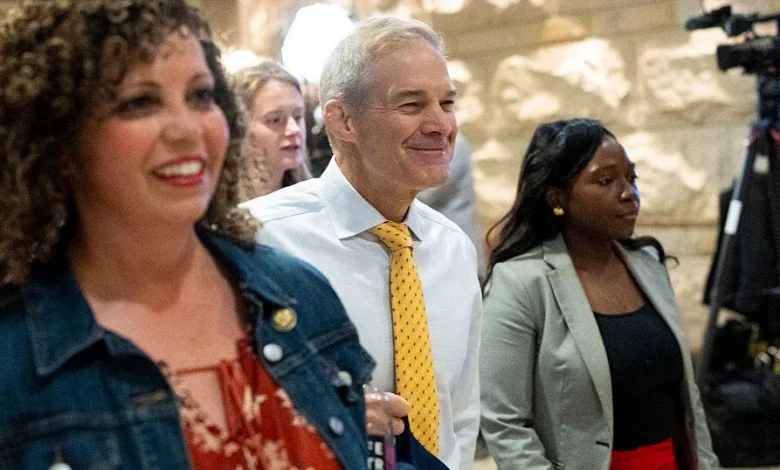
The impeachment vote was just one component of a chaotic and consequential Tuesday on Capitol Hill, as both chambers of Congress grappled with the fallout of a difficult midterm election cycle. For House Republicans, the day was defined by a major leadership transition. Representative Jim Jordan of Ohio, a staunch conservative and prominent ally of President Trump, secured the position of House Minority Leader, defeating current Majority Leader Steve Scalise in a 106-to-73 vote.
This leadership change follows the announcement by outgoing Speaker Mike Johnson that he would not seek to retain his position as the top leader of the conference in the minority. Johnson’s departure and the elevation of Jordan signify a strategic pivot for House Republicans, who are currently reeling from the loss of more than 40 seats in the latest midterm elections. Representative Tom Emmer of Minnesota was reelected as the GOP whip, solidifying his role as Jordan’s second-in-command after fending off a challenge from Representative August Pfluger.
Senate Leadership and Internal Tensions
While the House navigated an impeachment drama and leadership elections, the Senate was marked by a tense effort to delay its own leadership votes. Senator Ron Johnson of Wisconsin had spearheaded a movement to push back the selection of party leaders, arguing that the Republican conference needed time to conduct a “soul-searching” analysis of their performance in the midterms.
Despite these efforts, the Senate Republican conference moved forward with their planned schedule. Senate Majority Leader John Thune was reelected by acclamation, signaling a consolidation of the status quo despite vocal opposition from some members. Senator Josh Hawley of Missouri, among the most vocal critics of the current leadership, had earlier expressed frustration that the conference was moving toward a vote without addressing the scale of the party’s electoral losses, which he described as the worst since the Watergate era.
The Senate also saw a notable transition in its membership. Outgoing Senator Joni Ernst held a productive introductory meeting with Senator-elect Josh Turek of Iowa, who captured her seat in the recent election. This meeting underscored the shifting demographics of the chamber as veteran lawmakers make way for a new generation of political figures.
The Impeachment Controversy
The attempt to impeach Secretary Hegseth had been characterized by supporters of the administration as a "political spectacle." Ahead of the House vote, Hegseth issued a defiant statement, dismissing the effort as a "personal manifesto driven by ego and resentment." The eight articles of impeachment presented by Massie touched on complex areas of executive authority and military conduct.
The House Democratic leadership, represented by caucus chair Pete Aguilar, took a hands-off approach to the proceedings, opting not to "whip" the vote. This allowed individual members to vote according to their districts’ interests, rather than enforcing a party-line strategy. Even as leadership figures such as Hakeem Jeffries indicated their support for the impeachment, the lack of an organized Democratic push ensured that the burden of the "impeachment gambit" remained squarely on the shoulders of the GOP internal divide.
Implications of the Shift in House Leadership
The election of Jim Jordan as Minority Leader marks a return to a more aggressive, populist posture for the House GOP. In his brief acceptance remarks, Jordan signaled that the caucus would prioritize a "fight for American families," emphasizing that the party would offer "more freedom" in direct opposition to the Democratic agenda.
Observers note that this shift creates a complex environment for the remainder of the 119th Congress and the transition into the 120th. With Speaker Mike Johnson signaling his intention to finish the current term before stepping back, the GOP faces the dual challenge of governing in the minority while managing an internal identity crisis. Representative Tim Burchett of Tennessee captured the mood of the disaffected wing of the party, stating that Republicans must admit to their past mistakes—specifically regarding cost-of-living issues and corporate accountability—if they hope to reclaim the majority.
The Legislative Calendar
Senate Majority Leader John Thune has emphasized the need to "finish this legislative session strong," focusing on the confirmation of judicial and executive branch nominees and the passage of government funding bills. The GOP leadership in the Senate is clearly aiming for stability, hoping that by moving past the leadership elections quickly, they can avoid the protracted infighting that some feared would cripple their productivity.
In the House, however, the path forward remains less certain. With new leadership in place and the impeachment of the Defense Secretary shelved for now, the focus will likely shift to the "check and balance" role that some members, like the retiring Representative Don Bacon, have argued is vital. Bacon, who opposed the impeachment of Hegseth, nonetheless warned that the GOP leadership must not act as a "rubber stamp" for the executive branch, echoing concerns about the party’s direction regarding trade policy and tariffs.
Context and Historical Perspective
The current legislative atmosphere is defined by the stark reality of the midterm results. The loss of a significant number of seats has prompted a reevaluation of the "traditional conservative values" that the party aims to project. As Mississippi Senator Cindy Hyde-Smith remains locked in a tight race that is still being counted, the uncertainty surrounding the final tally of the legislative body adds to the sense of flux in Washington.
The decision to kill the impeachment resolution through a referral to the Judiciary Committee is a standard procedure intended to cool political tensions, yet it serves as a pressure release valve for a conference that is clearly divided. Whether this maneuver will be sufficient to unify the House GOP remains to be seen, particularly as the party prepares to transition from the majority to the minority.
Summary of Key Developments
- Impeachment: The House voted 211–204 to refer the impeachment resolution against Defense Secretary Pete Hegseth to the Judiciary Committee, effectively terminating the effort.
- House Leadership: Representative Jim Jordan was elected as the new House Minority Leader, succeeding Speaker Mike Johnson, who will not seek the role in the next Congress.
- Senate Stability: Despite calls from Senator Ron Johnson and others to delay leadership elections following the midterms, the Senate reelected John Thune as Majority Leader by acclamation.
- Strategic Pivot: Both chambers are now focusing on the final legislative agenda of the current Congress, with a heavy emphasis on judicial nominations and government funding, while internal debates over the future of the Republican platform continue to dominate discussions behind closed doors.
As the 119th Congress winds down, the legislative branch finds itself in a state of recalibration. The events of the last 48 hours demonstrate the intense pressures of post-election politics, where the urgency of maintaining institutional stability often clashes with the desire for ideological purification. With the new leadership team in the House now set and the Senate affirming its current trajectory, the coming weeks will likely serve as a barometer for how these two chambers will function in the face of a shifting political landscape.
Related posts: