Why did Republicans lose the midterm elections? GOP soul-searching begins after blowout.

The aftermath of the vote has triggered a blame game within the party, as high-profile figures and prospective 2028 presidential contenders attempt to diagnose the failures of the current cycle. At the center of this discourse is an ongoing debate regarding the efficacy of the administration’s foreign policy, the failure to address the nation’s economic anxieties, and an over-reliance on cultural wedge issues that appeared to alienate, rather than energize, the broader electorate.
The Chronology of a Political Shift
The trajectory toward this midterm outcome began to take shape early in the year as the nation navigated the complexities of the ongoing war in Iran. While the White House consistently framed the conflict as a necessary geopolitical intervention, the domestic fallout—manifested in volatile energy markets and inflationary pressure—began to erode the political capital of the Republican Party. By mid-summer 2026, polling data indicated a narrowing path for GOP candidates in suburban districts, a trend that accelerated as the cost of living became the primary driver of voter sentiment.
By the time Election Day arrived on November 3, 2026, the political environment had crystallized around three core issues: the economic burden of the conflict in Iran, the perception of government corruption, and a growing fatigue regarding the party’s focus on culture war rhetoric. The resulting electoral map revealed a dramatic contraction of Republican influence, particularly in states like Texas, where the party lost significant ground in statewide races, signaling a potential long-term erosion of their traditional base.
Economic Disconnect and the K-Shaped Recovery
Central to the Republican defeat was a persistent disconnect between the party’s messaging and the lived experiences of the average voter. CBS News exit polling revealed that the cost of living was the primary concern for a vast majority of the electorate. While national indicators suggested economic growth—often cited by the success of high-net-worth individuals like Elon Musk, who saw his net worth eclipse the trillion-dollar mark during this period—the working and middle classes reported a starkly different reality.
This "K-shaped" economic divide, characterized by rapid wealth concentration at the top while ordinary families faced skyrocketing utility bills and stagnant wages, became the defining narrative of the election. Senator Ted Cruz of Texas, in a post-election assessment, characterized the party’s performance as a "Watergate-level repudiation." Cruz argued that Republican candidates failed to articulate a coherent vision for addressing the economic pain felt by their constituents. "The economic disconnect is yawning," Cruz noted. "Elected Republicans did not do enough to address the very real pain of voters who saw their electricity bills climb while the ultra-wealthy saw their fortunes reach record highs."
The Iran War: A Geopolitical Albatross
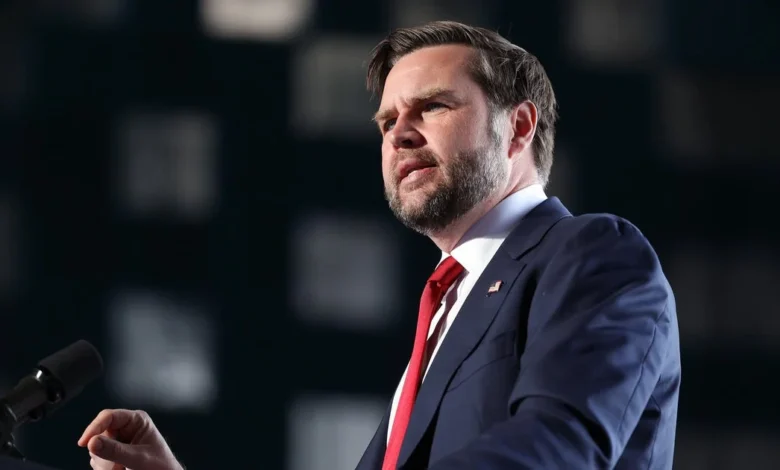
The administration’s involvement in Iran emerged as the most polarizing aspect of the GOP platform. Vice President JD Vance was among the first in the party’s upper echelons to acknowledge the political cost of the conflict. In a candid social media assessment, Vance argued that the war’s impact on energy prices made the party’s legislative goals impossible to achieve. "The reason we lost is the war," Vance stated. "If you’d like to argue it was worth it—that losing the Senate for the next six years was a worthwhile cost—then do so. But any honest conversation about where we go from here must start there."
President Trump, while maintaining that the intervention was a strategic necessity, conceded to reporters that the war’s inflationary impact on gas and diesel prices significantly hampered Republican electoral prospects. Conversely, former Vice President Mike Pence offered a divergent critique, arguing that the party’s failure stemmed from a lack of decisiveness. According to Pence, the "unfinished war" became an albatross because the administration opted for a policy of partial engagement rather than total military victory, ultimately failing to satisfy either the anti-war base or the interventionist faction of the party.
The Failure of Cultural Messaging
Beyond the economic and geopolitical factors, a significant portion of the internal GOP debate has focused on the party’s strategic pivot toward culture war issues. Outgoing Florida Governor Ron DeSantis provided a pointed critique of the party’s advertising strategy, specifically regarding the $180 million spent on ads targeting transgender issues. DeSantis, who has historically championed conservative social policies, argued that the campaign failed to recognize that the political climate had shifted since 2024.
"We were fighting yesterday’s battles," DeSantis said at a press conference. He noted that while transgender issues were a potent mobilizer in previous cycles, the 2026 electorate was significantly more concerned with the lack of legislative productivity and the daily struggles of inflation. The strategy of relying on "fear-based" cultural attacks, he suggested, was ultimately neutralized by moderate voters who viewed the focus as a distraction from tangible economic governance.
Corruption and the Crisis of Trust
The issue of government corruption also proved fatal for many Republican candidates. Data indicates that approximately nine in 10 voters cited corruption as a primary factor in their decision-making. Senator John Cornyn, in a blistering op-ed for the Wall Street Journal, argued that the party had lost its moral authority. He criticized the "parade of unsavory headlines" originating from Washington and emphasized that voters would not trust the GOP to oversee government efficiency if the party could not police its own ranks.
Cornyn’s critique extended to the administration’s focus on what he described as "sideshows," such as the controversy over swimming-pool liners at the Reflecting Pool, which he claimed highlighted a disconnection from the public’s immediate needs. He argued that the party’s shift toward aggressive immigration enforcement and arbitrary "Liberation Day" tariffs—which raised consumer costs without fostering long-term industrial reshoring—represented a fundamental misreading of the mandate voters had provided in 2024.
Implications and Future Outlook
The 2026 midterms represent a crossroads for the Republican Party. With the loss of the Senate majority and a weakened position in the House, the party faces a two-year window of legislative impotence. The shift in power suggests that the next two years will be defined by oversight investigations led by Democrats and a significant challenge for the GOP to reorganize its platform before the 2028 presidential cycle.
For the party to regain its footing, analysts suggest a necessary return to core fiscal conservatism and a re-evaluation of its foreign policy stance. However, the path forward is complicated by the existing tensions between the populist base, which remains loyal to the Trump administration’s policies, and the more traditionalist wing of the party, which is calling for a return to moderate, economy-focused messaging.
As the party looks toward 2028, the "soul-searching" mentioned by party officials is expected to intensify. The results have effectively rendered states like Texas battlegrounds, forcing the GOP to invest resources in defending previously safe seats. Whether the party can reconcile its internal ideological divides or whether this loss signifies a more permanent shift in American politics remains the central question for the remainder of the decade. The 2026 election cycle will be remembered not only for the magnitude of the Democratic victory but as the moment when the Republican Party was forced to confront the limits of its current political strategy in an increasingly volatile global and domestic landscape.
Related posts: