Wells Fargo Active Cash Card Named Best Credit Card for 2026 Due to Reliable 2% Cash Rewards and Everyday Value


The landscape of personal finance and consumer credit card offerings continues to shift dynamically, driven by consumer demand for simplicity, value, and robust protection mechanisms against economic uncertainty. In evaluations of top-tier consumer financial products, the Wells Fargo Active Cash® Card has emerged as a dominant force in the no-annual-fee category, capturing prestigious industry accolades such as the Best Credit Card for 2026 title. This designation underscores a broader consumer trend favoring straightforward, flat-rate cash rewards structures over complex tiered rewards systems that require constant monitoring, category tracking, and activation hoops.
Background Context of the Flat-Rate Rewards Evolution
For years, credit card issuers competed fiercely by introducing rotating quarterly categories, requiring cardholders to track spending caps, register for bonuses, and juggle multiple cards to maximize returns. While these products can yield lucrative returns for hyper-engaged consumers willing to navigate intricate rules, market research indicates that a significant portion of consumers prefer simplicity and predictability.
In response to this consumer preference, financial institutions began refining flat-rate cash rewards products. The objective was to offer a competitive, frictionless return on every single transaction, regardless of the merchant category or seasonal spending shifts. The Wells Fargo Active Cash® Card was engineered precisely to address this gap in the market, delivering a consistent, unlimited 2% cash rewards rate on all everyday purchases. This strategic positioning has resonated heavily with cardholders seeking high baseline value without the administrative burden of managing multiple reward ecosystems.
Core Product Specifications and Financial Analysis

A comprehensive examination of the Wells Fargo Active Cash® Card reveals a robust financial instrument tailored for individuals with good to excellent credit histories, typically defined as a credit score ranging from 670 to 850. Below is an exhaustive breakdown of the card’s key financial parameters:
- Rewards Structure: Unlimited 2% cash rewards on all qualifying purchases, with no earning caps and no categories to activate.
- Annual Fee: $0.
- Welcome Offer: A $100 cash rewards bonus issued after spending $500 in qualifying purchases within the first three months of account opening.
- Introductory APR: 0% introductory APR for 12 months from account opening on both new purchases and qualifying balance transfers.
-
Standard Variable
APR: 18.74%, 24.74%, or 28.74% variable APR, depending on creditworthiness and market index fluctuations upon expiration of the introductory period.
- Additional Perks: Built-in cell phone protection providing coverage of up to $600 against damage or theft (subject to a $25 deductible) when the monthly cellular bill is paid using the card.
Detailed Breakdown of Top Advantages
Industry analysts point to several distinct pillars that justify the card’s high ranking among consumer financial products:
- Uncapped Flat-Rate Returns: Earning a reliable 2% back on everything from utility bills to morning coffee eliminates optimization fatigue. Unlike cards that cap rewards at certain spending thresholds or restrict high earnings to specific merchants, the Active Cash card treats every dollar spent with equal weight.
- Sign-Up Bonus Availability: Finding a 2% flat-rate cash back card that also includes a welcome bonus is remarkably uncommon in the current credit market. Most cards offering a 2% baseline return omit introductory sign-up incentives entirely. The $100 bonus attached to a modest $500 spending requirement in the first three months provides immediate, tangible value.
- Extended Interest-Free Window: The inclusion of a 12-month 0% intro APR on purchases and balance transfers equips cardholders with a powerful tool for financial management. Whether funding a large planned purchase or consolidating higher-interest debt via a balance transfer, consumers gain a full year of breathing room free from interest accrual.
- Comprehensive Consumer Protections: Beyond cash back, the inclusion of cellular telephone protection adds concrete monetary value. Given that modern smartphones frequently retail in excess of $800 to $1,000, having supplemental insurance attached to a no-annual-fee card mitigates the risk of accidental damage or theft.
Comparative Market Analysis
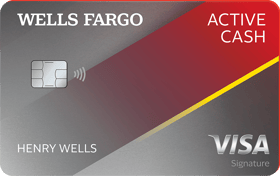
To fully understand the competitive positioning of the Wells Fargo Active Cash® Card, it is instructive to examine peer products within the broader cash-back landscape.
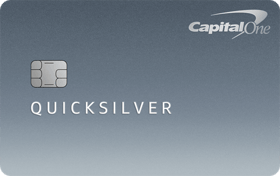
The Capital One Quicksilver Cash Rewards Credit Card represents a major alternative in the flat-rate rewards space. It typically offers a 1.5% cash back rate on all purchases alongside an introductory cash back bonus and a competitive 0% intro APR period. While the Quicksilver card is an exceptional product—particularly noted for its travel booking perks through Capital One Travel—its baseline earning rate of 1.5% falls short of the 2% offered by Wells Fargo.
Another prominent competitor is the Citi Double Cash® Card. The Citi Double Cash structures its 2% rewards uniquely: users earn 1% at the time of purchase and an additional 1% as they pay off those purchases. This mechanism incentivizes prompt payment behavior. However, the Active Cash card provides its 2% rewards immediately upon transaction posting, appealing to consumers who prefer instantaneous earnings calculation without tracking payment milestones. Additionally, the Active Cash card includes an explicit upfront welcome offer, whereas the Citi Double Cash relies more heavily on its ongoing rewards structure and long-term balance transfer terms.
Implications for Consumer Financial Health
Financial advisors and industry experts consistently emphasize that rewards credit cards should be utilized strictly as tools to optimize planned spending rather than justifications for increased consumption. The cardinal rule of credit card rewards remains absolute: carrying a balance that incurs the standard variable APR (ranging from 18.74% to 28.74% in this product’s case) rapidly negates any cash back earned.
Consequently, financial educators advocate for disciplined budgeting practices. When used responsibly—specifically by cardholders who pay their statement balance in full each month—products like the Wells Fargo Active Cash® Card effectively function as a permanent discount on all household expenditures. Furthermore, transitioning from traditional debit cards to a secured, reward-yielding credit card enhances consumer protection frameworks, as federal credit card regulations offer significantly stronger fraud liability limits compared to standard debit instruments.
Broader Economic Implications and Industry Outlook
The prominence of products like the Wells Fargo Active Cash® Card reflects broader shifts in consumer banking. As macroeconomic pressures influence household budgets, consumers increasingly scrutinize recurring expenses, eliminating cards that charge annual fees unless the rewards overwhelmingly offset the cost. Products that combine a $0 annual fee with uncompromised, high-yield flat-rate rewards are positioned to capture a growing share of wallet space among discerning consumers.
Moreover, issuers are under continuous pressure to differentiate their offerings in a saturated market. By bundling ancillary benefits such as mobile phone protection and extended introductory financing windows with a lucrative cash-back framework, major financial institutions are setting a new standard for what consumers should expect from everyday financial tools.
Conclusion and Application Guidance
For individuals evaluating their current wallet composition, upgrading to a product with a competitive flat-rate structure can yield measurable financial returns over time. Prospective applicants should review their credit scores to ensure alignment with the recommended Good to Excellent threshold (670–850) before submitting an application. By maintaining disciplined payment habits and capitalizing on introductory incentives, consumers can successfully harness the features of modern rewards cards to optimize their personal financial strategies.
Related posts: