The rapid unraveling of Pierre Sage: From French Cup glory to the brink of a Premier League exit

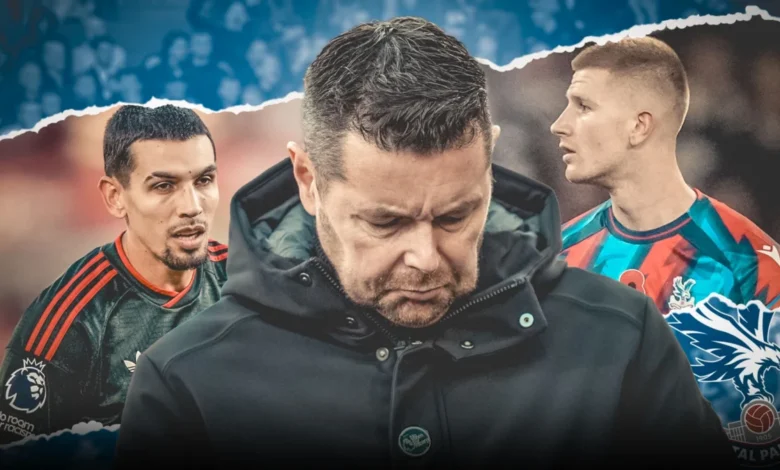
As Pierre Sage stood on the pitch last May, clutching the Coupe de France trophy, he turned to his coaching staff with a mixture of disbelief and reverence, asking, "Do you realise where we are?" At that moment, Sage was the toast of French football. Having taken the reins at RC Lens, he had navigated a historic season, securing the club’s first-ever French Cup title while simultaneously guiding them to a second-place finish in Ligue 1—the team’s most successful league campaign in over two decades. With only 56 professional matches on his resume prior to that tenure, he had cemented his status as the sport’s most compelling rising star almost overnight.
Less than six months later, the 47-year-old manager finds himself in a drastically different reality. Having traded the familiarity of the Stade Bollaert-Delelis for the high-pressure environment of the Premier League and Crystal Palace, Sage is now the second-favorite to be the next managerial casualty in England’s top flight. The Eagles, once a side known for their grit and tactical stability, are currently languishing in the relegation zone, possessing the most porous defense in the division.
A precipitous decline at Selhurst Park
The narrative of Crystal Palace’s season has been one of sudden and alarming collapse. Only six months removed from their own era of relative prosperity and tactical identity, the club has plummeted down the table. Should they succumb to Liverpool this coming Sunday, they risk ending the weekend at the very bottom of the Premier League standings.
The statistics underlying this decline are stark. Palace has failed to score in their last three league fixtures, while simultaneously shipping nine goals. This defensive fragility has placed Sage’s position in immediate jeopardy, even before he has reached the milestone of managing ten league games in England. The speed of this downturn has stunned observers who expected the tactical sophistication that defined his time at Lens to translate, at least partially, to his new surroundings.
The anatomy of a struggling squad
Following the recent defeat to Tottenham Hotspur, Sage did not attempt to mask the reality of the situation, labeling his team’s current predicament as "a disaster." However, an objective analysis suggests that the issues at Selhurst Park extend far beyond the technical area. The squad underwent a period of significant turnover during the summer, losing key personnel who provided both stability and attacking impetus.
The departures of defenders Daniel Munoz and Maxence Lacroix left a void that the club has struggled to fill. These were not merely squad players; they were structural pillars of the previous setup. Their replacements have, thus far, been unable to replicate that quality. Furthermore, the absence of Ismaila Sarr, who provided 21 goals last season, has deprived the team of its most reliable offensive outlet. The knock-on effects are visible in the form of Adam Wharton, who has struggled to recapture the rhythm that made him one of the most promising young midfielders in the country just three months ago.
The disciplinary situation has further hampered recovery efforts. The loss of striker Jean-Philippe Mateta to a red card—just 13 minutes into his second start since August—means he will be sidelined for the next three matches. This is a luxury a struggling side cannot afford, as it limits tactical flexibility and places additional pressure on an already depleted front line.
Chronology of a misaligned project
The seeds of the current crisis may have been sown long before Sage’s arrival. In January, the sale of Marc Guehi to Manchester City left a gaping hole in the center of the defense. Without a direct replacement, the team conceded 26 goals in the final 16 matches of the previous campaign, a trend that has only accelerated under the current management.
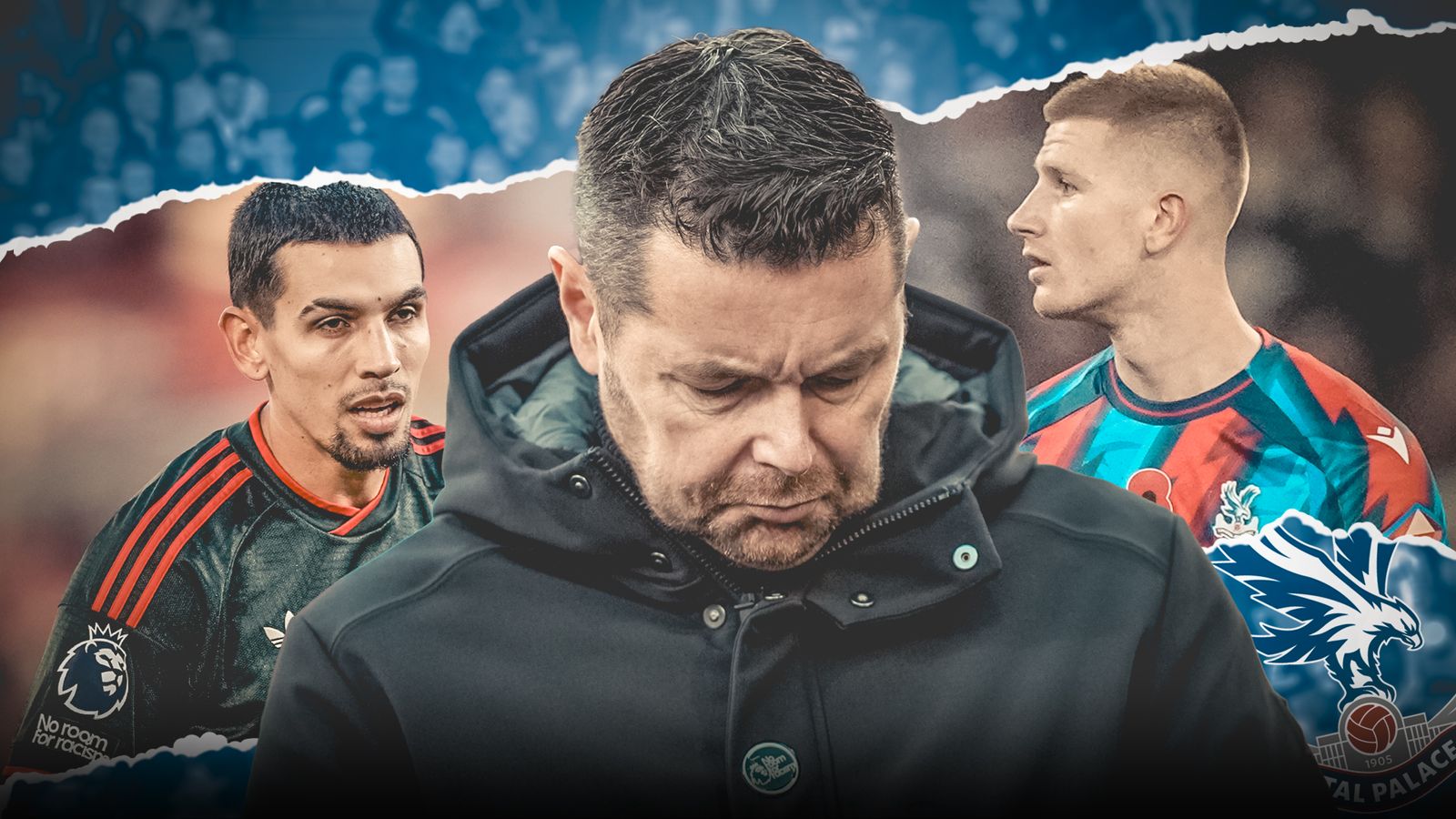
This transition period was meant to be the defining test for Director of Football Matt Hobbs. Replacing a core group of players—including Guehi, Eberechi Eze, Michael Olise, Munoz, and Lacroix—within a two-year window required a level of recruitment precision that has not materialized. While clubs like Brighton & Hove Albion have successfully navigated similar departures by identifying undervalued talent, Palace’s recent arrivals have struggled to adapt to the physical and tactical demands of the Premier League.
Axel Disasi, brought in on loan to stabilize the backline, has managed to win only 54 percent of his aerial duels, a figure that highlights the team’s vulnerability on set-pieces. Palace has already conceded five goals from dead-ball situations, a statistic that reflects both a lack of concentration and a lack of physical dominance in the box.
Philosophical friction and tactical mismatch
Perhaps the most significant challenge facing Pierre Sage is the fundamental friction between his coaching philosophy and the reality of his current squad. Sage’s success at Lens was built upon a high-pressing, possession-heavy 3-4-2-1 system. He famously remarked following a loss to Newcastle that "the best way of defending is to have the ball, because then you cannot concede."
However, he inherited a Crystal Palace team that thrived on low-possession, counter-attacking football. Throughout the 2025/26 season, Palace recorded 42 percent possession or less in 19 games, a defensive posture that actually yielded 11 victories. Under Sage, the team has struggled to control the ball, winning the possession battle only twice in his tenure.
The contrast in intensity is equally jarring. His Lens team excelled at high turnovers—winning the ball in the opposition’s half to create immediate scoring chances. Conversely, Sage’s Palace currently ranks at the bottom of the Premier League for high turnovers resulting in shots. The players are being asked to implement a system that demands a high line and aggressive pressing, yet they are currently constructed to sit deep and absorb pressure.
Broader implications for the club
The situation at Selhurst Park raises valid questions regarding the club’s due diligence in the managerial appointment process. Was Sage a "good fit" for the squad, or was he a "good coach" recruited without sufficient regard for the existing tactical identity?
If the current form persists and the board decides to move in a different direction, the blame will likely be shared between the dugout and the boardroom. The lack of reinforcements following high-profile exits has created a "perfect storm" of personnel shortages and tactical confusion. For a young, ambitious manager like Sage, the reality of the Premier League is proving to be a harsh lesson in the importance of institutional alignment.
As it stands, Crystal Palace is a club at a crossroads. The fans, while understandably frustrated by the results, have shown a degree of patience, seemingly aware that the rot runs deeper than the head coach. They recognize that if Sage were to depart, the underlying issues—the porous defense, the lack of a consistent goalscoring threat, and the gaps left by the departures of their most influential players—would remain for his successor to solve.
For the moment, Pierre Sage remains at the helm, but his future is tethered to the results of the coming weeks. Whether this period is remembered as a failed experiment or a necessary, albeit painful, transition depends on whether he can adapt his tactical ideals to the players at his disposal, or whether the club’s recruitment strategy can finally provide him with the tools to execute his vision. Regardless of the outcome, the transition from the heights of the Coupe de France to the basement of the Premier League serves as a poignant reminder of the volatility inherent in modern football management.