Federal Judge Rejects Trump Administration Bid to Segregate California Mail Ballots Amid Claims of Noncitizen Voting

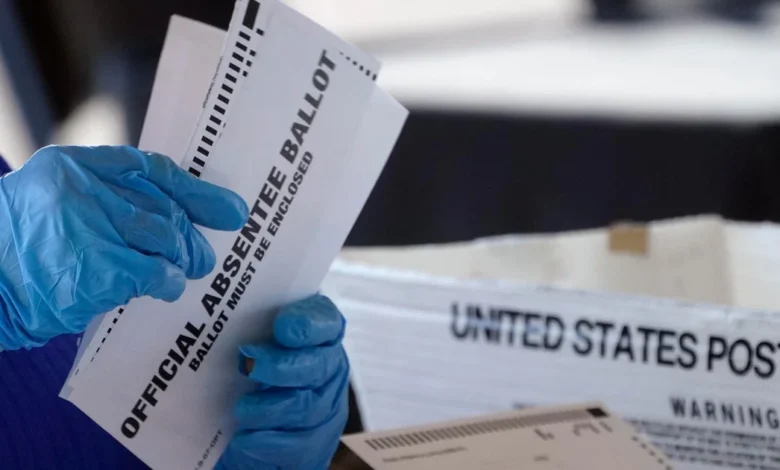
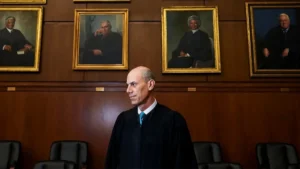
A federal judge on Wednesday delivered a significant legal blow to the Trump administration’s attempt to exert greater oversight over California’s electoral processes, rejecting a request to force the state to isolate mail-in ballots from approximately 20,000 individuals the administration alleges are not United States citizens. U.S. District Judge David Carter’s 26-page ruling provides a sharp rebuke to the Department of Justice (DOJ), emphasizing that the federal government lacks the constitutional authority to disrupt state-run election procedures on the eve of the November 3 midterm elections.
The ruling is the latest development in a high-stakes legal strategy employed by the administration, which has sought to intervene in election administration across several states. In his decision, Judge Carter characterized the DOJ’s request as an unprecedented intrusion into the sovereignty of state and local governments, warning that granting such a request would invite systemic chaos and potentially disenfranchise thousands of eligible voters.
The Legal Conflict and Judge Carter’s Ruling
The dispute centers on a list compiled by federal authorities identifying roughly 20,000 registered voters in California whom the administration claims are ineligible to vote due to their citizenship status. The DOJ had demanded that California officials set these ballots aside and refrain from tabulating them until citizenship could be definitively verified.
In his decision, Judge Carter rejected the methodology used by the government to compile this list, labeling it "vague" and stating that the court could not conclude the process was credible. The judge underscored that the public interest is best served by protecting the voting rights of those who have already satisfied California’s registration requirements. He noted that the administration’s demand to "segregate" these ballots would represent a "monumental change" to election procedures currently in motion, posing a significant risk of administrative disruption and voter disenfranchisement.
"Never before in American history has the federal government, on the eve of an election, sought to coerce a state and local government to abandon their own Constitutional elections procedures and bend to the will of the Executive Branch," Carter wrote. He further argued that if such a precedent were set, political actors could potentially leverage similar tactics to cause widespread disruption for strategic political purposes.
Chronology of the Dispute
The confrontation began earlier this month when the DOJ issued letters to California Secretary of State Shirley Weber and the Los Angeles County registrar-recorder, Dean Logan. The letters alleged that thousands of noncitizens were registered to vote and had received mail-in ballots, giving state officials only 48 hours to review the provided list and isolate the ballots.
When California officials questioned the accuracy of the data and refused to comply with the unilateral demand to segregate ballots, the Justice Department filed a lawsuit seeking a temporary restraining order. Before the case reached Judge Carter, the administration attempted to secure relief through the U.S. Court of Appeals for the 9th Circuit. However, the appellate court dismissed the appeal on Monday in a 2-1 decision, noting that the DOJ had failed to allow the district court adequate time to weigh the merits of the case.
Following the dismissal, the matter returned to Judge Carter’s courtroom, where he held a hearing that highlighted his skepticism toward the government’s approach. During these proceedings, Carter suggested that if the DOJ possessed evidence of criminal activity, the appropriate remedy would be the prosecution of individuals post-election, rather than the mass segregation of ballots that could affect thousands of lawful voters.
Challenges to Data Accuracy
The credibility of the DOJ’s list became a central point of contention in court filings. Lawyers for Los Angeles County presented evidence suggesting the list was deeply flawed. According to their analysis of a sample group of 200 individuals flagged by the government:
- More than 50% of the entries corresponded to voter registrations that were either inactive or already canceled, meaning no ballot had been issued.
- Of the individuals who reported their birthplace, over 38% indicated they were born in the United States, contradicting the federal list.
While an official from U.S. Citizenship and Immigration Services (USCIS) later filed a declaration attempting to defend the accuracy of the agency’s records, they acknowledged "minor data discrepancies" in the lists provided to California. This admission bolstered the arguments of state attorneys, who contended that the federal government was relying on outdated or unreliable third-party data to cast doubt on the legitimacy of a massive, established voter roll.
Broader Implications for Election Integrity
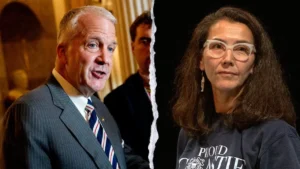
The California lawsuit is part of a wider pattern of litigation initiated by the Trump administration in the weeks leading up to the midterms. In Washington state, federal prosecutors similarly demanded that officials sequester ballots from hundreds of individuals suspected of being noncitizens. Meanwhile, in Alaska, the administration filed suit seeking to prevent the certification of Senate results should the Republican incumbent, Senator Dan Sullivan, face defeat.
These actions reflect an ongoing effort by the executive branch to position itself as the primary arbiter of election integrity, often in direct opposition to the decentralized model of American elections, where states hold the primary authority to manage voter rolls and vote counting.
Legal experts and civil rights advocates argue that these lawsuits serve a dual purpose: they attempt to create a legal framework for federal oversight of state elections while simultaneously fostering public skepticism toward the finality and accuracy of vote counts. By questioning the eligibility of thousands of voters in high-profile, populous states like California, the administration has fueled a broader national conversation regarding voter fraud, despite evidence that illegal voting by noncitizens remains statistically rare.
The Stance of Election Officials
State and county officials have remained steadfast in their opposition to the DOJ’s interventions. In California, which boasts more than 23 million registered voters, election officials have denounced the lawsuit as a "reckless political stunt." Anne Bellows, representing the California Attorney General’s office, stated that the logistical burden of manually identifying and segregating specific ballots would be impossible for local clerks, especially given that millions of ballots have already been processed in the current election cycle.
Los Angeles County officials emphasized that in a jurisdiction of its size, the administrative requirement to audit these ballots by hand would jeopardize the entire processing timeline. As of late October, more than 550,000 ballots had already been processed in Los Angeles County alone, and over 3.5 million mail ballots had been returned statewide.
Conclusion and Outlook
Judge Carter’s ruling reinforces the constitutional division of power between the states and the federal government regarding election administration. By refusing to grant the injunction, the court has prioritized the established administrative processes of California and the fundamental right to vote over the contested claims of the federal government.
As the nation approaches the midterm elections, this case serves as a definitive marker of the current tension between executive-led efforts to tighten federal control over election systems and the traditional, state-based structure of American democracy. While the Justice Department may seek further avenues of appeal, the immediate impact of the ruling ensures that California’s current election procedures will proceed without the disruption of sequestering thousands of ballots, leaving the focus on the upcoming vote count and the resolution of the electoral process through established legal channels.
Related posts: