Navigating the Public Service Loan Forgiveness Program Becomes Increasingly Treacherous for Lawyers and Public Servants

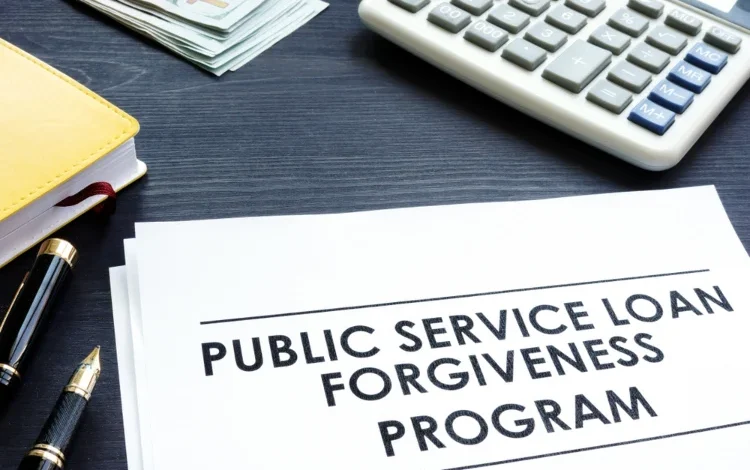
For attorneys, legal aid providers, public defenders, and thousands of other professionals dedicated to public service, the path to federal student loan forgiveness has historically been viewed as a covenant between the government and those who choose lower-paying public-sector careers over lucrative private-sector alternatives. Established by Congress with bipartisan support in 2007 and actively championed by the American Bar Association (ABA), the Public Service Loan Forgiveness (PSLF) program promised total discharge of remaining federal direct loan balances after a borrower completed 120 months of qualifying, timely repayments while working full-time for a qualifying public service or non-profit employer.
However, nearly two decades after its inception, the program is encountering a turbulent operational and political landscape. Borrowers navigating the system today face a daunting matrix of sudden policy shifts, severe bureaucratic bottlenecks, unannounced rule changes, and profound administrative instability. As the Department of Education undergoes sweeping internal transformations—including a dramatic 40 percent reduction in staffing within the Federal Student Aid (FSA) office—stakeholders and legal advocates warn that the very viability of the program is being jeopardized by administrative attrition.
The challenges confronting public service workers extend far beyond simple bureaucratic red tape. From unexplained tracking discrepancies and retroactive payment count adjustments to the sudden repeal of grace periods and a massive backlog in the buyback application queue, the modern administration of the PSLF program has generated widespread anxiety. Compounding these administrative hurdles are recent high-stakes legal battles over employer eligibility rules that have threatened to politicize a framework historically shielded from partisan crosswinds.
A Chronology of Growing Operational Hurdles
The modern operational crisis within the PSLF program did not happen overnight; rather, it represents the cumulative effect of shifting federal priorities, staffing reductions, and abrupt regulatory adjustments.
The trouble began to crystallize visibly for many borrowers in mid-2024 and extended into subsequent years, characterized by a series of cascading administrative errors. Most notably, a substantial cohort of public service workers reported that they stopped receiving credit for qualifying loan repayments made beginning in June. Despite fulfilling their monthly financial obligations, these payments failed to register in official tracking portals, leaving borrowers unable to advance toward the critical 120-payment threshold. To date, the Department of Education has provided little transparency or formal explanation regarding these missing data points, leaving affected individuals in a state of professional limbo.
Compounding the tracking failures, the Department of Education confirmed in August that it had systematically reduced the qualifying payment counts for numerous borrowers. While the agency initially characterized these downward adjustments as a technical "data issue," it subsequently clarified that the changes were intentional corrections. According to the department, these adjustments were designed to rectify coding errors from the Biden administration that had previously resulted in inaccurate, inflated payment counts for certain accounts. While some of these reversals accurately targeted payments made under repayment plans historically ineligible for PSLF, the lack of individualized communication and transparent justification led many borrowers to fear their legitimate credits were being erased erroneously.
Operational restrictions deepened further in July, when the department quietly eliminated a widely utilized 15-day grace period. Previously, payments made within 15 days of a borrower’s monthly due date were generally counted as timely for PSLF purposes, providing a vital buffer for administrative processing lags or unexpected personal financial timing issues. Under the unannounced policy reversal, effective July 1, any payment must be executed strictly on or before the designated due date to qualify, tightening the margin for compliance to razor-thin tolerances.
The PSLF Buyback Program Bottleneck and Policy Restrictions
For borrowers who experienced periods of deferment or forbearance—such as economic hardship periods or administrative pauses where standard payments could not be made—the PSLF Buyback program has served as a crucial bridge. Established to help public servants retroactively secure credit for months that otherwise would have been excluded, the buyback mechanism allows qualified individuals to pay what they would have owed during those sidelined months, effectively turning non-qualifying time into qualifying service.
Yet, this program is currently buckling under the weight of severe application backlogs and new restrictive guidance. As of April, Department of Education data revealed an estimated application backlog ranging between 70,000 and 90,000 pending buyback requests. Because the agency has failed to release updated statistics since that time, the true scope of the current backlog remains opaque. However, independent reports from borrower advocacy groups indicate that processing times frequently stretch to two years or more.
This prolonged delay carries profound professional and financial consequences. Forcing a public defender or legal aid attorney to wait years for a buyback decision means they must remain in qualifying employment and continue servicing debt long past the theoretical completion of their 120-month obligation. For many, this administrative drag functionally neutralizes the utility of the buyback program.
Adding to the confusion, updated Department of Education guidance has officially restricted the buyback framework. Under the revised rules, borrowers are barred from buying back credit for months spent under two new repayment plans: the Repayment Assistance Plan and the Tiered Standard Repayment Plan. These specific repayment structures were codified into federal law via legislation signed by President Donald Trump in 2025, creating an immediate collision between new legislative debt-management options and preexisting loan forgiveness pathways.
Legal Battles and the Fight Against Politicization
Beyond administrative and processing hurdles, the PSLF program has recently navigated perilous legal and political waters concerning who qualifies as an eligible public service employee.
The controversy centers on proposed Department of Education rules designed to narrow program eligibility by excluding employees of organizations engaged in activities deemed by the executive branch to have a "substantially illegal purpose." Critics and legal scholars viewed this subjective standard as an attempt to introduce political and ideological litmus tests into a program designed strictly around occupational service to the community.
The proposed rules triggered swift resistance from the legal community. Federal judges in Massachusetts and Washington, D.C., subsequently issued rulings staying and ultimately vacating the department’s proposed eligibility restrictions. Although the Department of Education initially appealed these adverse decisions in August, the Department of Justice officially dropped its appeal on October 21, effectively bringing a definitive legal end to the controversial regulatory push.
Throughout the dispute, the American Bar Association stood at the forefront of the opposition. In formal letters addressed to Secretary of Education Linda McMahon, successive ABA Presidents Bill Bay and Michelle Behnke forcefully challenged the department’s statutory authority to impose such limitations. The ABA House of Delegates further codified this institutional stance by adopting Resolution 505 during its midyear meeting. The resolution explicitly condemns any effort to politicize the PSLF program, arguing that perceived ideological interference severely undermines public trust and discourages participation.
"Any perception that benefits are awarded based on political affiliation or ideology undermines the legitimacy of programs such as PSLF, discourages participation, and decreases the requisite public confidence they require to be successful," the report accompanying Resolution 505 emphasizes.
Broader Implications for the Legal Profession and Public Service Infrastructure
The systemic friction currently plaguing the Public Service Loan Forgiveness program carries profound implications for the delivery of civil and criminal justice in the United States. The ABA and allied organizations within the PSLF Coalition—a collaborative network of more than 100 non-profit and public service entities—have long maintained that the program is an indispensable pillar of the nation’s legal infrastructure.
Without the promise of loan forgiveness, highly qualified law school graduates face severe economic disincentives against entering public service careers. The average law school debt often exceeds six figures, making it mathematically impossible for graduates to service standard commercial loans on the modest salaries typically offered by public defender offices, legal aid clinics, and non-profit advocacy organizations serving low-income communities, senior citizens, and military veterans.
By eroding the predictability and reliability of the PSLF program, current administrative backlogs and policy shifts risk triggering a talent drain from the public sector. When public defenders are overburdened by unmanageable caseloads and legal aid organizations struggle to recruit staff due to fears that federal loan commitments will not be honored, vulnerable populations bear the brunt of the systemic failure.
Furthermore, structural inefficiencies within the Department of Education—exacerbated by a 40 percent reduction in Federal Student Aid staffing—highlight a troubling disconnect between statutory promises made by Congress and the administrative capacity of the executive branch to execute them. When processing delays stretch across years, the fundamental bargain of public service employment is disrupted, trapping workers in career holding patterns.
Looking Ahead: Advocacy and Reform
In response to these compounding crises, the legal community and its institutional representatives are mobilizing to press for comprehensive administrative reforms. The ABA’s advocacy strategy encompasses direct lobbying across multiple congressional sessions and executive administrations, expansive grassroots campaigns, and active public engagement via digital advocacy channels.
A central tenet of the ABA’s ongoing legislative agenda, underscored by Resolution 505, is a call to eliminate the requirement that applicants remain in qualifying employment at the exact moment their loan discharge is finally processed and approved. Under current rules, borrowers who have completed their 120 qualifying payments are nonetheless trapped in their positions—unable to accept promotions, transition to the private sector, or alter their career paths—while awaiting bureaucratic processing of their final paperwork. The ABA argues that once the statutory service and payment obligations are fulfilled, borrowers should owe no further professional servitude to the government beyond filing the application for the benefits they have legitimately earned.
As federal agencies grapple with internal restructuring, massive application backlogs, and shifting regulatory interpretations, the future of the Public Service Loan Forgiveness program remains a focal point of intense legal and political scrutiny. For the thousands of attorneys and public servants who rely on the program to balance the scales of justice, the restoration of administrative competence and institutional predictability is not merely a matter of financial relief—it is a test of the federal government’s commitment to those who serve the public good.
Related posts: