The Epidemiologist at the Crossroads: Abdul El-Sayed and the Future of American Public Health Policy

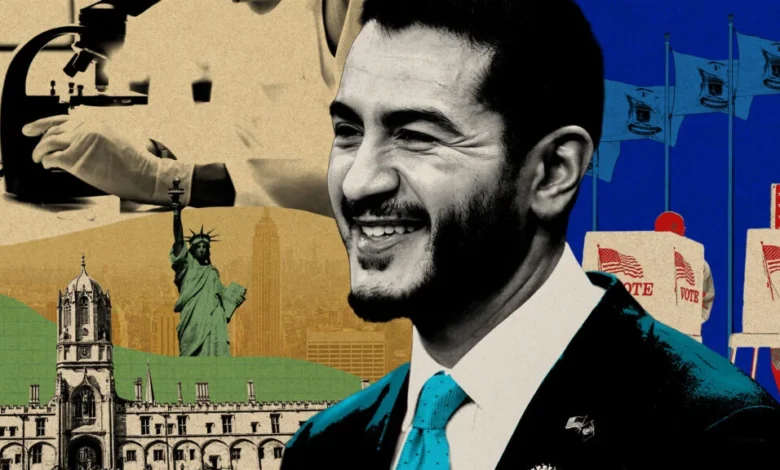
With only six days remaining in a bruising and increasingly contentious campaign for the United States Senate, the public perception of Abdul El-Sayed has become dominated by viral social media clips, sharp ideological clashes, and the high-decibel rhetoric typical of modern American elections. Yet, beneath the veneer of TikTok-friendly advocacy for Medicare for All and the firestorm of national headlines regarding his stance on Middle Eastern foreign policy, there lies a career defined by the rigorous application of systems science to public health—a background that, if he prevails in Michigan, would fundamentally alter the intellectual composition of the upper chamber of Congress.
While the campaign trail has been defined by the labels placed upon him by political opponents—most notably the vitriol of Vice President JD Vance and the inflammatory, xenophobic characterizations offered by former President Donald Trump—El-Sayed’s professional trajectory suggests a candidate whose legislative focus would be grounded in data-driven governance. To understand the stakes of this election, one must look past the partisan warfare and examine the intersection of medicine, public policy, and the shifting demographic landscape of the American electorate.
A Career Built on Systems Science
Long before he was a Senate candidate, El-Sayed was a scholar of complexity. His academic work, including the seminal text "Systems Science and Population Health," provides a framework for understanding health not merely as the absence of disease, but as the result of interconnected social, environmental, and economic variables. This approach—often referred to as the "social determinants of health"—argues that health outcomes are dictated by the zip code one lives in, the quality of air one breathes, and the stability of one’s economic environment.
His tenure in Detroit, where he served as the city’s health director, served as a practical laboratory for these theories. Tasked with rebuilding a municipal health system that had been decimated by years of fiscal crisis, El-Sayed implemented initiatives focused on maternal mortality and pediatric lead poisoning. His research during this period highlighted the stark disparities in health outcomes between affluent and impoverished neighborhoods, providing a blueprint for how a senator might approach healthcare reform: not by simply adjusting reimbursement rates, but by addressing the systemic failures that create sickness in the first place.
Chronology of a Rising Political Figure
The rise of Abdul El-Sayed from public health official to statewide candidate is marked by a series of pivotal moments that reflect the changing nature of the Democratic Party:
- 2015–2017: Serving as the Executive Director of the Detroit Health Department, El-Sayed focuses on urban public health, gaining recognition for his innovative data-driven interventions.
- 2018: El-Sayed launches a grassroots campaign for Governor of Michigan. Despite losing in the primary, his candidacy brings the "Medicare for All" debate into the mainstream of Michigan politics.
- 2019–2023: El-Sayed transitions into a role as a public commentator and public health advocate, gaining national prominence for his critiques of the American healthcare system and his advocacy for evidence-based policy.
- 2024: El-Sayed enters the race for the U.S. Senate in Michigan, positioning himself as a candidate who combines progressive economic policy with scientific expertise.
- The Final Week: As the election nears, his campaign faces intense scrutiny, characterized by personal attacks from high-ranking Republican officials, forcing a focus on his identity as much as his policy platform.
The Statistical Reality: Why His Background Matters
Should El-Sayed be elected, his arrival in the Senate would mark a significant departure from historical trends. The Senate has long been dominated by lawyers, career politicians, and business professionals. The presence of an epidemiologist—a scientist trained to track disease, analyze population data, and model the impact of policy interventions—is rare.
According to historical records from the Senate Historical Office, the last time a holder of a medical degree represented the Democratic Party in the Senate was in 1969. In the decades since, the chamber has seen few members with advanced training in public health. This lack of specialized scientific expertise has often been cited by policy analysts as a reason for the difficulty in passing comprehensive healthcare reform. If El-Sayed were to join the Senate, he would be the first person with his specific clinical and scientific background to do so, potentially changing the way the Senate approaches everything from pandemic preparedness to the regulation of pharmaceuticals.

Furthermore, his election would be a milestone in American representation. As the first Muslim senator, El-Sayed’s victory would be a significant marker of progress in a nation that has struggled with religious and cultural polarization.
Official Responses and the Partisan Divide
The discourse surrounding El-Sayed has been emblematic of the current political environment. Supporters, including Senator Bernie Sanders, have framed El-Sayed as the natural successor to the movement for universal healthcare. Sanders has frequently championed El-Sayed as a "standard-bearer" for the future, suggesting that his ability to synthesize complex public health data with a clear moral argument makes him a unique asset to the Democratic caucus.
Conversely, the Republican establishment has treated his candidacy with intense hostility. The characterization by Vice President JD Vance, who labeled El-Sayed a "little weasel" in a recent campaign appearance, underscores a strategy of personal delegitimization. This approach was mirrored by former President Donald Trump, who utilized hyperbolic language to link El-Sayed’s identity to national security threats. These attacks, while widely criticized by civil rights organizations for their reliance on Islamophobic tropes, have served to polarize the electorate, effectively overshadowing the nuanced policy debates that El-Sayed’s supporters hoped to center.
Implications for Future Legislative Policy
The implications of an El-Sayed victory extend far beyond the borders of Michigan. As the Senate prepares for upcoming debates on the future of the Affordable Care Act and the potential for a public option or single-payer system, the presence of a senator who has literally written the book on public health systems science would be transformative.
- Legislative Drafting: Most healthcare legislation is drafted by staffers with legal backgrounds. A senator with an epidemiology degree could directly influence the drafting process, ensuring that bills are scientifically sound and account for population-level health impacts.
- Committee Influence: If placed on the Senate Committee on Health, Education, Labor, and Pensions (HELP), El-Sayed would be in a position to challenge testimony from pharmaceutical industry lobbyists and medical insurance executives with the authority of his own clinical and research experience.
- Shifting the Narrative: By framing issues like climate change, housing, and labor rights as "public health issues," El-Sayed has the potential to expand the vocabulary of the Senate. If he successfully links environmental policy to asthma rates or economic policy to life expectancy, he may force colleagues to grapple with the interconnectedness of their legislative agendas.
The Broader Context: Public Health in a Post-Pandemic World
The COVID-19 pandemic exposed deep fissures in the American public health infrastructure, revealing that the nation lacked the centralized coordination and data-sharing capabilities that a robust systems-science approach would prioritize. The election of a professional epidemiologist at this juncture could signify a shift toward a more proactive, rather than reactive, approach to national health.
As the campaign draws to a close, the voters of Michigan are left with a clear choice between two very different visions of the future. On one hand, the Republican platform focuses on the perceived threats posed by outsiders and the dismantling of the current healthcare establishment. On the other, the El-Sayed campaign offers a vision of technocratic progressivism, rooted in the belief that government, when guided by science and empathy, can be a force for social good.
Regardless of the outcome in six days, the campaign of Abdul El-Sayed has already served as a barometer for the American political climate. It has tested whether the electorate is willing to prioritize scientific expertise in the halls of power, or if the current era of hyper-partisanship has rendered such credentials secondary to the needs of the culture war. Whether he secures his seat or returns to academia, the arguments he has raised regarding the systemic nature of public health will likely remain central to the national conversation for years to come. The Senate, a body that has historically been slow to adapt to changing social realities, may find itself at a crossroads, forced to decide whether it will continue to rely on the political machinery of the past or embrace the data-driven expertise required for the future.
Related posts: