The Crossroads of Coverage: How Medicaid Work Rules and Hardship Waivers Are Fueling a High-Stakes California Congressional Battle


As the political landscape heats up across the United States, few legislative measures have sparked as much intense debate and electoral friction as the overhaul of federal entitlement programs enacted under the Republican-led budget reconciliation packages. At the center of this legislative storm is U.S. Representative David Valadao (R-Calif.), whose defense of a sweeping bill designed to slash billions in federal spending on health care programs has thrust him into the national spotlight. Valadao has repeatedly pointed to his role in advocating for and securing a specific hardship provision—an exemption aimed at protecting residents living in economically distressed communities from strict new federal work mandates.
However, this political messaging has triggered a fierce backlash in Valadao’s deeply competitive California Central Valley district, where approximately 60 percent of the population relies on Medi-Cal, the state’s iteration of the joint federal-state Medicaid program. While Valadao’s campaign highlights these localized waivers as a pragmatic safety valve for struggling workers, critics, policy experts, and his Democratic opponent argue that the congressman is attempting to mitigate a crisis of his own making. As the January implementation date for the new work mandates approaches, the intersection of federal legislation, local economics, and fierce electoral politics highlights a growing chasm over the future of healthcare access for low-income Americans.
The Genesis of the Legislation and the National Landscape
The debate stems from the passage of the high-profile legislative package signed into law by President Donald Trump last summer. Billed by its proponents as a necessary step toward fiscal responsibility and encouraging labor force participation among able-bodied adults, the law establishes strict new eligibility criteria for federal safety-net programs.
Starting in January, nondisabled adults enrolled in Medicaid across 43 states and the District of Columbia will be required to participate in work, volunteer activities, or educational pursuits for a minimum of 80 hours per month to maintain their health coverage. Proponents of the policy argue that tying welfare programs to work encourages economic self-sufficiency and ensures that taxpayer-funded resources are targeted efficiently toward individuals facing structural barriers or severe disabilities.
Yet, recognizing that labor markets vary wildly across the country, lawmakers built specific carve-outs into the statutory framework. Among these is a short-term hardship exception designed for enrollees residing in counties where the local unemployment rate reaches or exceeds 8 percent, or alternatively, stands at least 1.5 times the national unemployment average—whichever benchmark is lower. For Valadao and his supporters, this provision is the linchpin of their defense. Because the agricultural and industrial economies of the Central Valley frequently grapple with elevated seasonal and structural joblessness, Valadao’s congressional office has assured constituents that every county within his newly redrawn 22nd Congressional District currently qualifies for the exemption.
“This waiver is important because it takes real-life situations into account, and if someone is trying to work but opportunities are limited, they won’t be required to,” Valadao’s official legislative communications state, characterizing the requirement as a “not an unreasonable ask” for those physically capable of maintaining employment.
A High-Stakes Local Showdown in CA-22

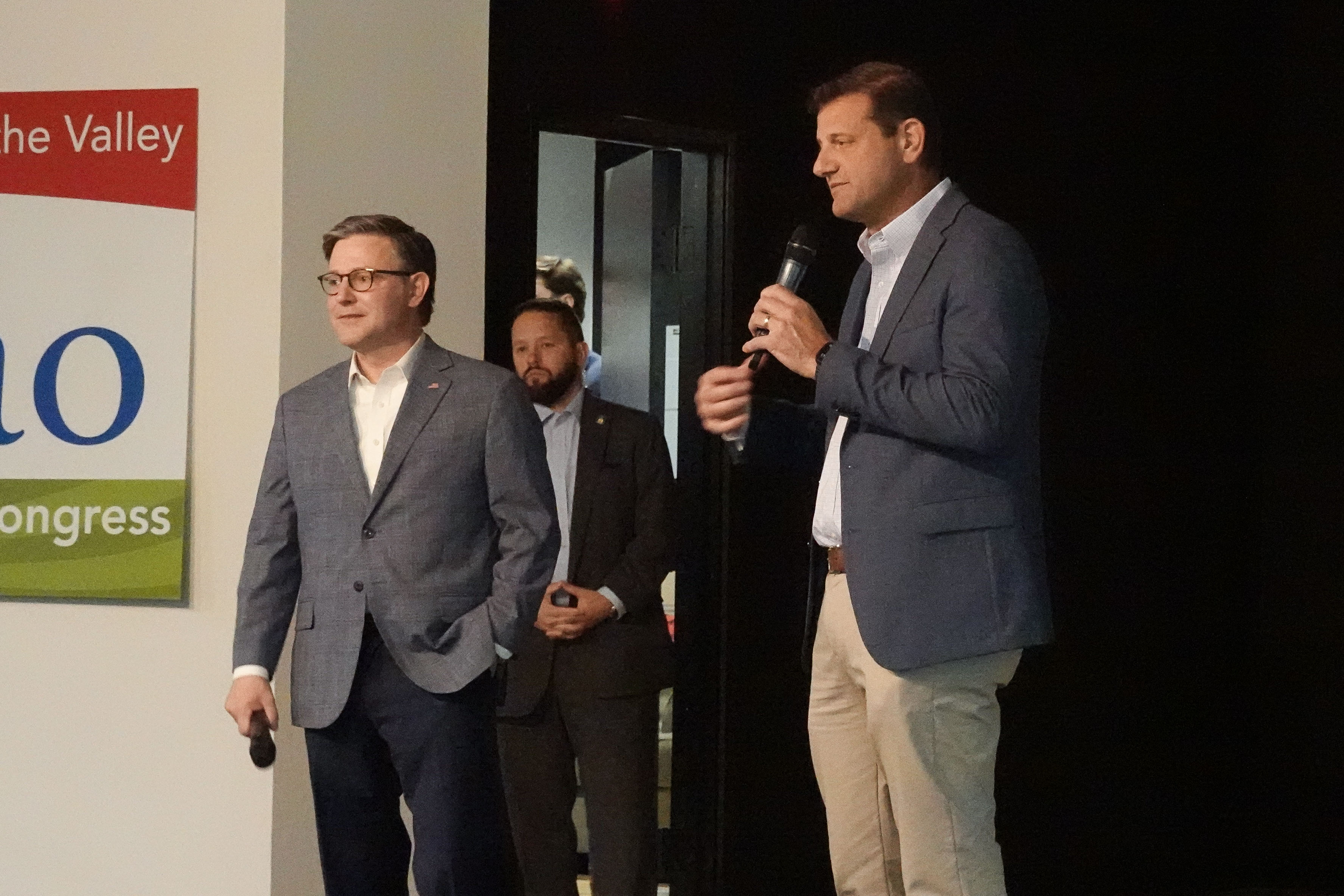
Valadao’s legislative balancing act is playing out on one of the most expensive and closely watched battlegrounds in the country. He faces a formidable challenge from Democrat Randy Villegas in California’s 22nd District, a region that was reconfigured to lean more favorably toward Democratic voters. According to comprehensive media tracking data compiled by AdImpact, both campaigns and their respective outside allies have pumped a staggering combined total of more than $16 million into advertising through Election Day.
The healthcare debate has quickly become the primary theater of combat in the district. Villegas and Democratic challengers nationwide have made votes in favor of the Republican healthcare and entitlement reductions a central pillar of their platform. Critics point out that the vast majority of Medicaid enrollees who can work are already employed, disabled, or serving as primary caregivers for family members, rendering the federal work requirement not only redundant but punitive.
Independent health policy researchers have sounded the alarm over the compounding effects of the new law. According to projections by policy analysts at institutions like the Center for American Progress, the combination of the new work mandates and the expiration of enhanced premium tax credits for Affordable Care Act (ACA) marketplace plans could leave an estimated 60,000 residents in Valadao’s district alone entirely without health insurance coverage by the year 2034.
“It feels akin to an arsonist trying to take credit for helping put out a fire that they themselves ignited when all of this was avoidable pain from the outset,” said Miranda Yaver, an assistant professor of health policy and management at the University of Pittsburgh.
Implementation Hurdles and Data Discrepancies
While the policy debate rages on the campaign trail, administrative hurdles at both the federal and state levels threaten to create chaos as the January deadline approaches. The federal Centers for Medicare & Medicaid Services (CMS) has been tasked with overseeing the rollout of the work mandates and approving state-level waiver applications. However, the precise mechanisms for determining which communities qualify for hardship exceptions remain murky.
CMS guidance indicates that states may submit unemployment data sourced from “reliable” origins, including their own state departments of labor. Yet, the federal agency has notably omitted rigid guidelines regarding the specific timeframes states must utilize. Unemployment metrics can vary drastically depending on whether they reflect the most recent monthly snapshot, a three-month rolling average, a six-month average, or a smoothed 12-month figure.
This statistical ambiguity has massive real-world consequences. A comprehensive health policy analysis conducted by KFF, a prominent nonprofit health information organization, illustrates how drastically the numbers shift depending on the methodology applied. Utilizing unadjusted July unemployment figures, 95 U.S. counties would clear the threshold for a hardship exception. However, when transitioning to a 12-month average, that figure swells to 120 qualifying counties.
“Which data is used matters,” noted Jennifer Tolbert, deputy director of KFF’s Program on Medicaid and the Uninsured. “I think there’s a lot still unknown.”
Adding to the administrative logjam, states are reacting to the impending rules in sharply contrasting ways. A coalition of five Democratic-led states has formally petitioned the federal government to delay the rollout of the work requirements entirely, citing an impossibly compressed timeline to build out compliance infrastructure and verify data before the end of the year.
California, through the Department of Health Care Services, is among the states pressing federal authorities for flexibility. State officials submitted requests to CMS asking for permission to leverage timelier state-level labor metrics rather than lagging federal datasets. As of late autumn, California officials were still awaiting a formal response from Washington, alongside critical clarifications regarding the maximum permissible duration of approved hardship waivers, according to Griselda Melgoza, a spokesperson for the state agency.
Conversely, a handful of conservative-leaning states—including Indiana, Iowa, and Missouri—have opted out of pursuing the hardship exceptions altogether, choosing instead to implement the baseline federal standards without carving out local exemptions for high-unemployment pockets.
The Political Paradox of Hardship Exemptions
The strategy of building localized safety valves into sweeping federal legislation presents a fascinating political paradox. On one hand, provisions like the high-unemployment exemption provide vulnerable incumbents like Valadao with a necessary shield, allowing them to vote for strict ideological measures in Washington while assuring local voters that they are insulated from the worst of the fallout. KFF’s tracking analysis reveals that at least 21 Republican lawmakers running for reelection voted in favor of the package while representing congressional districts that contain counties eligible for hardship relief.
On the other hand, health policy analysts suggest that these administrative workarounds may ultimately obscure the true legislative record of lawmakers from the electorate.
“I think that exemptions and strategic burden reduction will ultimately undercut the accountability,” Professor Yaver observed. “Because voters will just not really see the full reach of the law.”
For voters in the Central Valley, however, the stakes transcend political maneuvering and statistical modeling. Rallies outside congressional offices in cities like Bakersfield—featuring community members holding placards reading “Don’t take away my care”—demonstrate an acute public anxiety over soaring healthcare costs and the stability of the safety net.
As the January implementation date draws closer, the convergence of federal rulemaking, state administrative negotiations, and a multimillion-dollar legislative brawl ensures that the future of healthcare access in agricultural California will remain under an intense national microscope. Whether the promised hardship waivers successfully protect vulnerable constituents or merely serve as a temporary band-aid on a structural healthcare contraction remains one of the defining questions of the current political cycle.