John Fetterman keeps political future uncertain as Democrats eye Senate control in high-stakes midterms

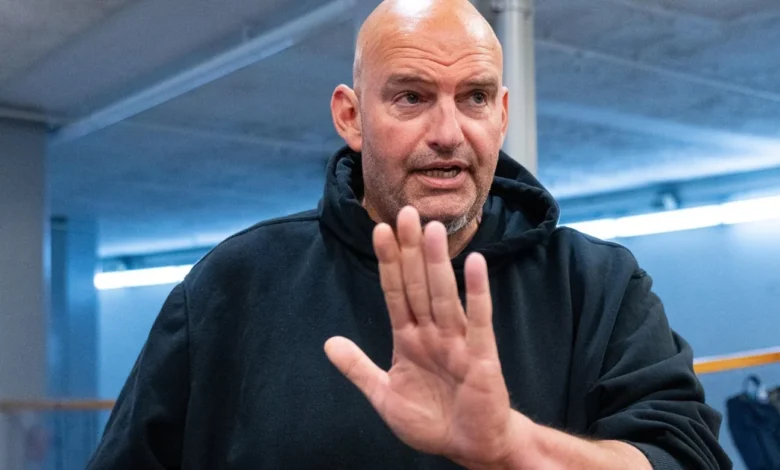
Democratic Senator John Fetterman of Pennsylvania has declined to definitively commit to his long-term political trajectory, instead signaling that his future within the Democratic Party remains tethered to the outcome of the 2026 midterm elections. Speaking at the Texas Tribune Festival in Austin on Saturday, September 27, 2026, the junior senator offered a cryptic assessment of the national political landscape while simultaneously tempering expectations regarding his own legislative alignment.
As the 2026 election cycle reaches its final, critical weeks, the path to the Senate majority has shifted in ways few analysts anticipated at the start of the year. With Republicans currently holding a 53-seat majority, the Democratic Party entered the cycle facing a daunting electoral map. However, persistent economic concerns regarding the cost of living under the Trump administration and widespread public dissatisfaction with the ongoing conflict with Iran have provided an opening for Democrats to potentially reclaim the upper chamber.
A Shifting Electoral Landscape
The current Senate composition is a product of the 2024 general election, which saw the GOP solidify its hold on the chamber. Since then, the political narrative has been dominated by the legislative gridlock and the administration’s handling of foreign policy. For Democrats, the strategy has relied on both the recruitment of competitive candidates and the exploitation of regional weaknesses in Republican-held seats.
Recent polling data, such as the Marist survey showing Iowa Senate candidate Josh Turek leading by eight points, has provided a morale boost for Democratic strategists. Senator Fetterman, who secured his own seat in 2022 by defeating Republican challenger Mehmet Oz, remains a pivotal figure in this calculus. His ability to connect with working-class voters in a swing state like Pennsylvania is a primary reason why party leadership is closely watching his every move.
The Fetterman Paradox: Independence and Party Unity
Senator Fetterman’s tenure has been characterized by a willingness to defy conventional party lines, a trait that has both endeared him to independent voters and frustrated some elements of the Democratic caucus. His recent actions, including a notable video appearance at the Republican midterm convention to introduce GOP Senator Dave McCormick, sent shockwaves through the Democratic establishment. While Fetterman framed the appearance as a demonstration of his commitment to working across the aisle—specifically regarding steel industry protections—it ignited intense speculation about his partisan loyalty.
When pressed on his potential departure from the Democratic Party, Fetterman was blunt. "I don’t have a reason to," he told CBS News’ Major Garrett. "I am not a Republican." He further noted that the ideological gulf between himself and the modern GOP is insurmountable, particularly on issues of reproductive rights and LGBTQ+ protections. "There are no Republicans with a 90% Democratic vote line. There are no pro-choice, there’s no pro-gay community, that does not exist in the Republican Party."
Despite these denials, Fetterman continues to operate as an internal critic. He has openly challenged the party’s stance on government shutdowns, arguing that the Democratic leadership’s willingness to leverage shutdowns was a tactical and moral error. "Do you think it’s right and smart to shut our government down? No, Democrats, we used to say, ‘No, never, never do that,’" he stated. By positioning himself as a pragmatist who prioritizes "country over party," Fetterman has carved out a unique, if isolated, niche in Washington.
Internal Tensions and the Future of Leadership
The friction within the Democratic caucus extends beyond mere policy disagreements; it reflects a deeper debate about the party’s ideological direction. Fetterman has expressed concern over what he perceives as a growing anti-Israel sentiment among his colleagues, citing this as a significant point of divergence. These tensions suggest that even if Democrats succeed in capturing the Senate, the task of maintaining a unified front under Senate Minority Leader Chuck Schumer may prove difficult.
Despite these internal fissures, Fetterman voiced support for the current leadership structure, noting that no credible challenge to Schumer’s position has emerged. He praised Schumer’s recruitment efforts for the 2026 cycle, crediting the minority leader with assembling an "incredibly strong class" of candidates who have outperformed expectations in difficult states. Fetterman warned against premature infighting, stating, "It’s not helpful to go after our leader because we have no idea until we wait until the midterm."
Chronology of Recent Political Developments
- Late 2024: The Republican Party secures a 53-seat majority in the Senate, setting the stage for a period of legislative dominance.
- Early 2026: Midterm campaign cycles commence with Democrats initially facing a challenging map and a historically difficult climate.
- September 2026 (Early): Senator Fetterman makes a surprise appearance at the Republican midterm convention, signaling a willingness to collaborate with GOP leadership on trade and industry policy.
- September 2026 (Mid): Polling in states like Iowa indicates a potential Democratic surge, narrowing the path for a party takeover of the Senate.
- September 27, 2026: Fetterman discusses his political future and the state of the Democratic Party at the Texas Tribune Festival, emphasizing the "mathematical possibility" of a 51-seat Democratic majority.
Implications for 2028 and Beyond
The question of whether Fetterman will seek reelection in 2028 looms over his current activities. While he confirmed that he has been actively fundraising, he explicitly tied his long-term planning to the results of the upcoming election. "Let’s revisit after the midterm," he said, leaving the door open to a potential change in his political status or professional focus.
The implications of a Democratic victory in the Senate are profound. If the party manages to reach the 51-seat threshold, the legislative agenda of the Trump administration would face significant obstruction, particularly regarding judicial appointments and cabinet confirmations. Fetterman’s role in such a majority would be that of a potential "kingmaker." As he noted, his presence is a key component of the mathematical path to control. "If we do win and I’m 51, people can remember, ‘hey, that’s why it’s mathematically possible to retain the majority,’ because I was able to win a state like Pennsylvania."
Analysis: A Strategic Ambiguity
Fetterman’s current strategy appears to be one of "strategic ambiguity." By refusing to rule out future departures or shifts in alignment, he maintains leverage over both his own party and the political narrative. He is effectively signaling to Democratic leadership that his support is not unconditional, while simultaneously assuring his constituents that his policy priorities—such as manufacturing, labor, and domestic economic stability—remain non-negotiable.
For political observers, the coming weeks will be a test of whether this maverick approach yields results or alienates the very base he relies on. As he noted during the festival, the energy of "insurgent Democrats" and the shifting winds of public opinion have created a volatile environment. Whether Fetterman remains a stalwart, if dissenting, member of the Democratic Party or moves toward a more independent posture will likely depend on how much power the party is able to reclaim in November.
Ultimately, Fetterman remains a bellwether for the broader challenges facing the Democratic Party. As the nation approaches the midterm elections, his focus on balancing party loyalty with personal conviction mirrors the larger struggle of the Democratic coalition to reconcile its diverse internal factions while attempting to regain control of the federal government. For now, the Senator from Pennsylvania remains a figure of intrigue, holding his cards close until the results are tallied.