Frontier Airlines Posts Record Quarterly Revenue Amid Rising Fares and Reduced Competition Following Spirit Airlines Exit

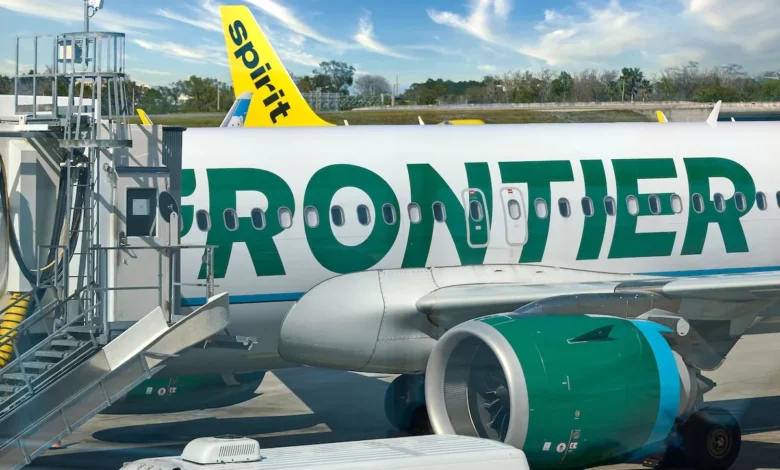
Frontier Airlines has reported record-shattering financial figures for its latest quarter, posting total revenues of nearly $1.4 billion, a dramatic increase of more than 50 percent compared to the same period in the previous year. The ultra-low-cost carrier has successfully capitalized on a significantly altered domestic aviation landscape, marked by soaring average ticket prices and a massive reduction in low-cost seat capacity. Yet, despite carrying nearly 1.5 million more travelers and registering an unprecedented surge in passenger yield, the airline ultimately recorded a net loss of $104 million, underscoring the complex macroeconomic headwinds and operational cost pressures that continue to challenge the budget airline sector.
The quarter’s results offer a compelling case study in the post-pandemic evolution of low-fare air travel in the United States. While consumers are clearly willing to pay substantially higher ticket prices than they did a year ago, the airline’s inability to translate top-line growth into bottom-line profitability highlights the delicate balance between pricing power and escalating structural expenses, including labor contracts, aircraft maintenance, and volatile jet fuel prices.
The Post-Spirit Landscape: A Reprieve in Domestic Competition
One of the most consequential catalysts for Frontier’s recent revenue surge has been the dramatic contraction of the ultra-low-cost carrier market itself. For years, Frontier and Spirit Airlines engaged in fierce, hyper-competitive pricing wars that frequently drove base fares down to unsustainable levels. These overlapping routes and aggressive capacity expansions often benefited budget-conscious travelers at the expense of carrier profitability.
However, the competitive dynamics of the industry underwent a tectonic shift when Spirit Airlines officially ceased all flight operations in May following a protracted and ultimately unsuccessful struggle with its financial obligations, culminating in two successive Chapter 11 bankruptcy filings. The disappearance of Spirit instantly removed millions of discount seats from key leisure markets across the United States, particularly in high-density corridors connecting the Northeast, Florida, and the Caribbean.
In the wake of Spirit’s market exit, Frontier moved swiftly to absorb displaced demand. By strategically deploying capacity to routes previously dominated by its defunct rival, Frontier was able to command much higher pricing discipline. Average ticket fare revenue per passenger surged by an astonishing 71 percent during the quarter, demonstrating that travelers are still booking flights even as the era of ultra-cheap, commoditized baseline fares recedes.
Financial Performance and Revenue Metrics
A deeper dive into Frontier’s financial statements reveals both extraordinary top-line momentum and persistent underlying vulnerabilities. The company generated nearly $1.4 billion in quarterly revenue, representing a year-over-year jump exceeding 50 percent. This revenue expansion was driven by a dual engine: higher pricing yields and increased passenger volume.
During the quarter, Frontier transported nearly 1.5 million more passengers than it did during the corresponding period last year. This traffic growth was achieved even as average fares climbed steeply, indicating that overall travel demand remains robust despite persistent inflationary pressures on household budgets. Ancillary revenues—charges for seat selection, carry-on bags, and priority boarding, which form the bedrock of the ultra-low-cost business model—also saw healthy growth as passenger volumes expanded.
Despite these impressive volume and yield milestones, the company’s bottom line remained in the red. Frontier posted a net loss of $104 million for the quarter. Industry analysts point out that while the absence of Spirit has removed a major deflationary pressure on ticket prices, legacy carrier basic economy offerings and shifting consumer preferences continue to impose a ceiling on how much margin budget airlines can extract. Furthermore, fixed operational costs, rising airport fees, and higher compensation packages negotiated across the industry have exerted heavy upward pressure on unit costs.
Chronology of Consolidation and Industry Upheaval
To understand Frontier’s current financial standing, it is necessary to examine the turbulent timeline that reshaped the budget carrier ecosystem over recent years:
- Early 2022: Frontier Airlines initiates a high-profile takeover bid for Spirit Airlines, aiming to create a dominant ultra-low-cost powerhouse capable of competing directly with major network carriers.
- July 2022: JetBlue Airways launches a hostile counter-offer for Spirit, ultimately outbidding Frontier and convincing Spirit shareholders to accept its merger proposal.
- 2023–Early 2024: The U.S. Department of Justice challenges the proposed JetBlue-Spirit merger on antitrust grounds, leading to a federal judge blocking the transaction in early 2024, citing potential harm to budget-conscious consumers.
- Late 2024: Deprived of the merger rescue and burdened by heavy debt loads and delayed aircraft deliveries, Spirit Airlines enters a downward financial spiral.
- May 2025: Following consecutive Chapter 11 bankruptcy filings and failed restructuring attempts, Spirit Airlines permanently grounds its fleet and ceases all operations.
- Current Quarter: Frontier reports record revenue of $1.4 billion and a 71 percent surge in average ticket fare revenue per passenger, though tempered by a $104 million net loss.
Executive Commentary and Strategic Outlook
In earnings calls and communications with investors, Frontier’s executive leadership team has expressed cautious optimism regarding the structural shift in the airline industry. Management emphasized that the rationalization of domestic capacity is a permanent positive development for surviving carriers. With fewer operators competing for leisure travelers, airlines possess greater pricing power than they have experienced in years.
"The structural changes in our competitive environment have fundamentally altered how we approach network planning and yield management," a senior Frontier executive noted during the earnings briefing. "Our ability to scale up passenger volumes while simultaneously expanding average fares proves that our core value proposition remains attractive to consumers, even in a higher-cost operating environment."
At the same time, leadership acknowledged that returning to consistent profitability requires rigorous cost containment and operational efficiency. The airline is actively evaluating its fleet utilization, seeking to optimize flight schedules and improve aircraft turnaround times to maximize asset productivity. Management has also hinted at potential adjustments to its network strategy, focusing expansion efforts exclusively on high-margin leisure destinations where demand is resilient and alternative carrier options are limited.
Broader Industry Implications and the Future of Budget Travel
Frontier’s mixed quarterly results offer a clear window into the broader transformation of American commercial aviation. The era of perpetual ultra-low baseline fares—where passengers could routinely purchase cross-country tickets for less than the cost of a tank of gas—is drawing to a close.
For consumers, the exit of Spirit and the corresponding rise in Frontier’s ticket prices signal the end of a uniquely aggressive pricing war. Travelers are likely to see baseline airfares drift upward across the board as the remaining low-cost carriers prioritize margin over market share. While ancillary fees will remain a core component of the travel experience, airlines are finding that they can no longer rely solely on hyper-cheap base tickets to stimulate volume.
For investors, the key question is whether Frontier and its remaining low-cost peers can successfully transition from rapid expansion models to disciplined, margin-focused operations. The $104 million quarterly loss demonstrates that top-line revenue records alone are insufficient in an era of elevated labor, fuel, and regulatory costs.
As the industry moves forward, Frontier’s performance will serve as a bellwether for the domestic travel market. If the airline can leverage its enhanced pricing power to overcome its cost burdens, it may chart a viable path toward sustainable profitability. If not, the struggles of America’s discount carriers may indicate that the ultra-low-cost business model itself requires fundamental structural reinvention to survive in a post-pandemic economic environment.