American Airlines Flight Attendant Arrested Following Sophisticated Financial Scam Targeting Elderly Resident

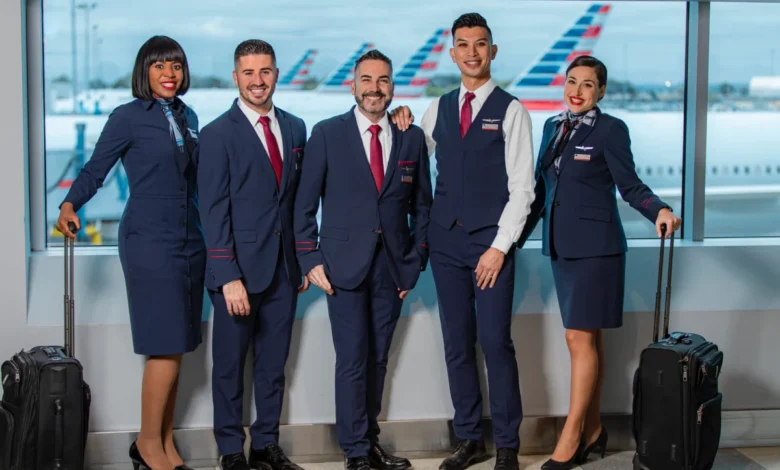
An American Airlines flight attendant has been apprehended following an investigation into an elaborate financial fraud scheme that allegedly defrauded a 75-year-old Palm Coast, Florida, woman of more than $25,000. Law enforcement officials allege the flight attendant leveraged her professional travel benefits to facilitate the crime, traveling across state lines to gain direct access to the victim’s financial accounts. The arrest occurred at Miami International Airport on October 23, following the execution of a warrant issued by the Flagler County Sheriff’s Office.
Chronology of the Alleged Fraudulent Activity
The investigation into the incident reveals a timeline of events that began in mid-November 2025. According to the Flagler County Sheriff’s Office, the scam originated as a classic "sweepstakes" fraud. The victim received an unsolicited phone call from an individual claiming to represent Publishers Clearing House. The caller informed the senior citizen that she had won a substantial monetary prize but stipulated that she was required to mail a $500 gift card to a specific recipient—later identified as the flight attendant—to facilitate the "processing" of her winnings.
The situation escalated significantly on November 18, 2025. Authorities state that the flight attendant utilized her "non-rev" (non-revenue) flight benefits to travel from New York to Daytona Beach, Florida. Upon arrival, the suspect allegedly utilized a ride-sharing service to check into the Hilton Garden Inn before proceeding to the victim’s residence the following morning.
Records indicate the visit to the victim’s home was brief; the suspect allegedly spent only 15 minutes at the property before returning to the Daytona Beach airport. By the time the flight attendant began her journey back to her home base, she was reportedly already utilizing the victim’s credit card information at airports in Charlotte and Daytona Beach. Between November 16 and December 11, 2025, the suspect is accused of executing 88 separate unauthorized credit card transactions totaling $10,590.30, in addition to obtaining $14,220 through cash withdrawals and Zelle transfers.
The Arrest and Legal Proceedings
The suspect’s travel patterns ultimately led to her apprehension. U.S. Customs and Border Protection officers at Miami International Airport took the flight attendant into custody on October 23 as she arrived on an international flight. The arrest was the result of a warrant issued roughly 10 days prior.

Following her arrest, the individual was processed at the Miami-Dade County jail. She was subsequently released after posting a $30,000 bond. The suspect is currently awaiting an arraignment hearing scheduled for November 24.
The investigation faced unique challenges due to the victim’s health status. Investigators reported that the 75-year-old woman suffered from memory impairments, which initially hampered the collection of evidence, as the victim could not recall authorizing the large cash withdrawals or hosting the suspect at her home.
Analysis of the Financial Exploitation
The total loss incurred by the victim reached $25,000, a sum largely comprised of consumer goods and digital expenses. Police reports detail that the suspect used the victim’s Apple credit card account to purchase various high-end Apple products and frequent orders through the food delivery service Uber Eats.
One of the most notable aspects of the case, which drew sharp criticism from observers on the Flagler County Sheriff’s social media platforms, was the apparent lack of caution taken by the perpetrator. Reports suggest that many of the illicit purchases were shipped directly to the suspect’s personal home address, a move that provided investigators with a clear trail of evidence. This has led to widespread public debate regarding the suspect’s release on bond, with many questioning the logic of granting pre-trial release to an individual whose professional role grants them immediate access to international travel, thereby categorizing them as a potential flight risk.
Broader Implications for Airline Personnel
This incident highlights a growing concern within the aviation industry regarding the misuse of employee travel privileges. Flight attendant non-revenue benefits are designed as a professional perk, allowing staff to travel on standby during their off-hours. However, when these privileges are leveraged to commit criminal acts, they present significant security and liability concerns for the carriers involved.
American Airlines, while not directly implicated in the criminal act, faces the challenge of addressing the misuse of its corporate benefits. In previous years, major carriers have taken aggressive steps to curb the abuse of travel privileges. For instance, United Airlines previously terminated 35 employees who were found to be "brokering" their flight benefits—a practice where employees would register strangers as family members or domestic partners to sell them discounted travel. Similarly, other carriers have dealt with instances where flight attendants used their credentials to facilitate identity theft or other retail scams.

The use of travel benefits to bypass distance in order to commit fraud is a particularly concerning development for law enforcement, as it demonstrates a level of premeditation that extends beyond local crime. By utilizing the anonymity of standby travel, the suspect was able to move between states with minimal documentation and oversight, effectively bridging the gap between a remote phone scam and physical theft.
Preventing Elder Financial Abuse
The case serves as a stark reminder of the prevalence of elder financial exploitation. According to data from the FBI’s Internet Crime Complaint Center (IC3), elder fraud is a multibillion-dollar industry. Scams involving impersonation, such as the Publishers Clearing House ruse, remain the most common entry point for bad actors.
Victims are often targeted based on their perceived vulnerability, with perpetrators using psychological manipulation to build trust. Once a victim is convinced that a prize is imminent, they are often coerced into sharing sensitive financial data, such as credit card numbers or banking passwords. In this instance, the transition from a remote phone interaction to an in-person home visit signifies a dangerous escalation in the suspect’s tactics.
Financial institutions and law enforcement agencies continue to urge families to implement protective measures for elderly relatives, including:
- Monitoring Financial Accounts: Setting up automated alerts for large transactions or withdrawals to ensure that unauthorized activity is detected in real-time.
- Limiting Information Sharing: Educating seniors on the fact that legitimate sweepstakes organizations do not require a payment (in the form of gift cards or otherwise) to release a prize.
- Establishing Power of Attorney: Ensuring that a trusted family member has oversight over financial accounts to help manage potential risks and provide a secondary layer of verification for large expenditures.
As the legal process unfolds for the suspect, the case will likely serve as a reference point for future discussions regarding how airlines monitor the usage of flight benefits and the jurisdictional complexities that arise when individuals use their professional status to facilitate interstate crime. The arraignment in late November will mark the next step in determining the legal consequences for the accused, while the victim continues the process of financial and personal recovery.