Apex Predators of the Cretaceous Seas: How Mosasaurs Mastered the Art of the Underwater Ambush

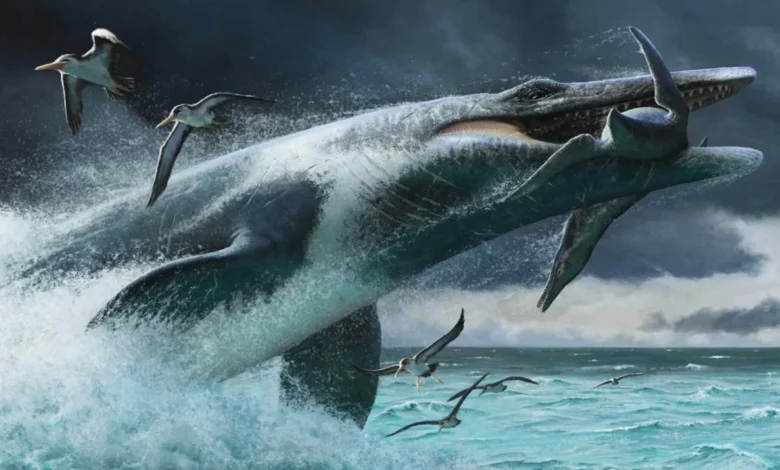
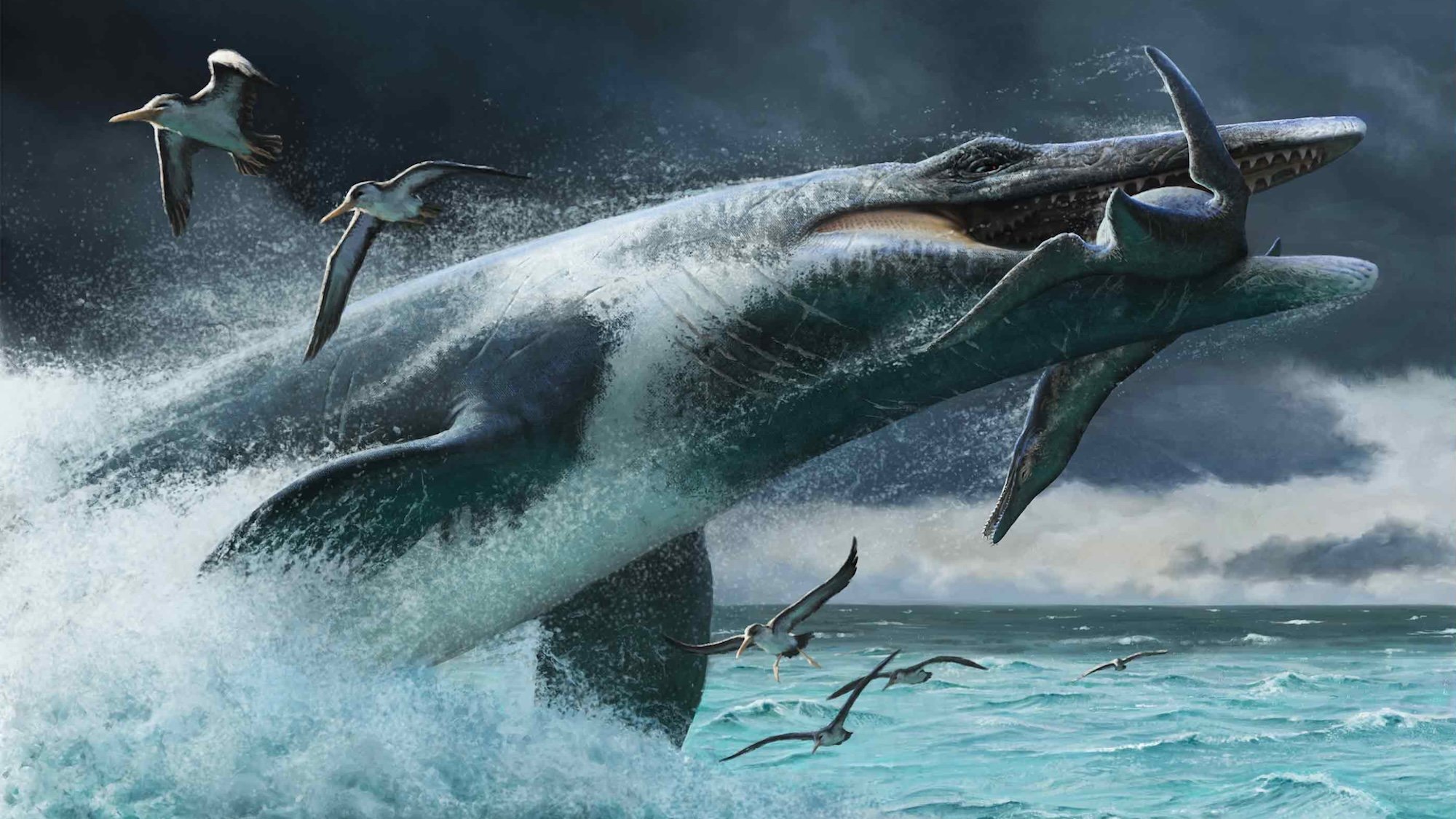
Long before the first human sailed the open ocean, the ancient marine ecosystems of Earth were dominated by a lineage of gigantic, scaly predators known as mosasaurs. Ranging across the globe during the Cretaceous period, these colossal reptiles sat firmly at the apex of the marine food web. While their sheer size and terrifying dental equipment have long made them staples of both scientific fascination and popular culture, new paleontological research reveals that their hunting strategies were far more sophisticated—and much deadlier—than previously understood. According to a landmark study published in the journal Current Biology, certain species of mosasaurs relied on explosive, physics-defying "slam-start" ambush tactics to capture unsuspecting prey, changing the way scientists view these prehistoric rulers of the deep.
The Mechanics of Prehistoric Ambush Hunting
To understand the terrifying efficiency of these ancient marine predators, researchers led by evolutionary paleontologist Kiersten Formoso of Rutgers University turned to a combination of fossil record reconstructions and comparative biomechanics. Because soft tissues rarely fossilize, piecing together how an animal moved millions of years ago requires an interdisciplinary approach. Formoso and her colleagues examined the skeletal architecture of four distinct mosasaur genera, applying fundamental principles of physics to evaluate how these creatures generated propulsion in aquatic environments.
The study centered heavily on massive carnivores such as Tylosaurus, a behemoth that roamed the shallow seas between 92 and 66 million years ago. Growing up to 45 feet in length and tipping the scales at nearly 10 tons, Tylosaurus possessed physical traits that made continuous, high-speed open-ocean cruising inefficient. However, its anatomical design was exceptionally well-suited for explosive acceleration.
By analyzing the vertebrae and tail structures of Tylosaurus and its relative Platecarpus, the research team discovered that these animals belonged to a specific evolutionary branch characterized by a longer, highly flexible posterior tail region. When preparing to strike, these predators utilized a single, immensely powerful sweep of the tail against the water—comparable to a modern Olympic swimmer pushing off a pool wall with their legs—to lunge forward at speeds reaching up to 15 miles per hour from a dead stop. This sudden burst of speed allowed them to close the distance on prey before the target had any opportunity to react.
Divergent Evolutionary Strategies in the Cretaceous Ocean
The new findings highlight a fascinating ecological divergence within the mosasaur family tree. While genera like Tylosaurus and Platecarpus evolved specialized anatomies for shallow-water ambushes, other mosasaurs favored entirely different hydrodynamic lifestyles.
The study contrasted the ambush specialists with open-ocean predators such as Mosasaurus and Plotosaurus. Measuring up to 50 feet long and weighing as much as 20,000 pounds, Mosasaurus hoffmanii and its streamlined relative Plotosaurus were built for sustained, continuous swimming rather than sudden bursts. Formoso noted that while Plotosaurus was remarkably fast, its tail anatomy resembled that of modern tuna, designed for long-distance cruising and endurance hunting in pelagic zones rather than the rapid, explosive lunges seen in coastal ambush predators.
This behavioral and anatomical split demonstrates that the Cretaceous oceans supported a diverse array of specialized niches. Rather than operating as a monolithic group of giant swimming lizards, mosasaurs occupied varied ecological roles, utilizing distinct locomotion strategies to dominate habitats ranging from shallow interior seaways to the open expanse of ancient oceans.
Bridging the Past Through Modern Analogues
Reconstructing the biomechanics of extinct animals inherently presents immense challenges. To validate their hypotheses regarding mosasaur locomotion, the research team relied on comparative biology, drawing parallels between extinct marine reptiles and extant terrestrial predators that employ similar ambush strategies.
Specifically, the researchers looked at the physiology and hunting behaviors of the Komodo dragon (Varanus komodoensis), a close evolutionary relative of mosasaurs within the scaled reptile order, Squamata. By studying how modern monitor lizards generate explosive bursts of speed and leverage their muscular frames during surprise attacks, paleontologists were able to ground their mathematical models of mosasaur physics in empirical biological data.
Furthermore, the researchers cross-referenced their biomechanical models with existing fossil evidence, including microscopic tooth wear patterns, healed bone fractures in prey species, and estimated bite force calculations. These combined datasets provided a robust framework confirming that the physical demands of capturing evasive prey shaped the skeletal evolution of these ancient marine reptiles.
Implications for Paleontological Research and Public Data Sharing
Beyond its immediate contributions to vertebrate paleontology, the study emphasizes a growing trend toward open-access scientific methodology. The research team has made their data, analytical tools, and anatomical models available online for free, enabling fellow paleontologists, biomechanists, and educators to apply these methods to other extinct aquatic and terrestrial species.
By democratizing access to these specialized computational tools, the study paves the way for a more comprehensive re-evaluation of marine predator-prey dynamics throughout the Mesozoic era. Researchers can now better test hypotheses concerning how various prehistoric creatures interacted with their environments, managed energy budgets, and competed for dominance in crowded ecosystems.
Broader Ecological Context and Historical Timeline
To contextualize the reign of the mosasaurs, it is helpful to look at the broader timeline of the Cretaceous period. Lasting from approximately 145 to 66 million years ago, the Cretaceous was characterized by relatively warm global climates, high sea levels, and the widespread presence of shallow interior seaways, such as the Western Interior Seaway that once split North America in two.
While iconic dinosaurs such as Tyrannosaurus rex and Triceratops commanded the terrestrial landscapes during the final millions of years of the Mesozoic, the marine realms were unquestionably under the control of mosasaurs. Evolving from small, lizard-like ancestors that ventured into coastal marine environments during the Early Cretaceous, these animals rapidly diversified and expanded in size following the decline of earlier marine apex predators like ichthyosaurs and short-necked pliosaurs.
Their ultimate reign came to a dramatic end approximately 66 million years ago during the Cretaceous-Paleogene (K-Pg) extinction event. The catastrophic impact of a massive asteroid in the Yucatán Peninsula, combined with widespread volcanic activity, triggered global environmental collapse. The resulting disruptions to the marine food web—specifically the collapse of primary producers and ammonites—decimated the ecosystems that sustained giant marine reptiles, driving mosasaurs and many other iconic prehistoric species to total extinction.
The Legacy of the Ocean’s Ultimate Ambush Predators
The revelation that giants like Tylosaurus were masters of the high-speed "slam-start" ambush adds a new layer of complexity to our understanding of Cretaceous marine ecosystems. Far from being clumsy, slow-moving behemoths that relied solely on brute force, these animals combined immense physical power with refined hydrodynamic adaptations to execute lethal surprise attacks.
As ongoing technological advancements in biomechanical modeling and fossil analysis continue to reshape the field of evolutionary paleontology, researchers remain committed to uncovering the hidden details of prehistoric life. Yet, even as new discoveries emerge from the fossil record, few ancient creatures will ever rival the sheer imposing presence of the mosasaurs—the undisputed, and occasionally stealthy, rulers of the ancient seas.