The Enduring Legacy of Wendell Berry: A Life Rooted in the Land and the Resistance Against Industrialization

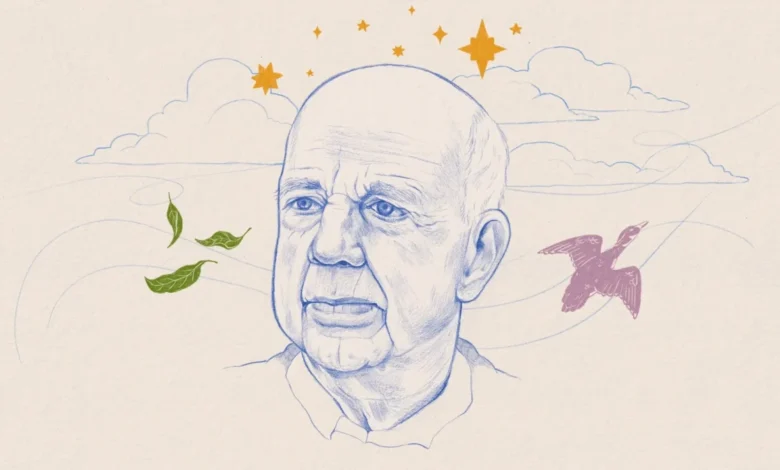
Wendell Berry, the acclaimed poet, novelist, environmental essayist, and agrarian philosopher who challenged the modern world to re-examine its relationship with the earth, passed away on August 31 at the age of 92. From his ancestral farmhouse in Henry County, Kentucky, Berry cultivated a body of work that spanned more than five decades, comprising over 50 books. His death marks the conclusion of a singular life that served as both a quiet, domestic experiment in sustainable living and a loud, public defiance of industrial overreach. Berry’s philosophy—a marriage of local stewardship and systemic critique—continues to resonate as the global community grapples with the accelerating crises of climate change and rural decay.
A Chronology of a Life Spent in Resistance
Born in 1934, Berry’s life was defined by a deliberate return to the rhythms of the Kentucky River valley. After an academic career that included a fellowship at Stanford and teaching positions at various institutions, he returned to his home state to farm in 1964. This transition was not merely a lifestyle choice; it was a political act.
The trajectory of his public life is marked by several key milestones:
- 1964: Returns to Kentucky to begin farming and writing, establishing the foundation for his lifelong critique of industrial agriculture.
- 1972: Publishes the seminal essay "Think Little," which argues that public crises are inseparable from private choices, challenging the environmental movement to focus on local, individual accountability.
- 1979: Arrested for his involvement in a protest against the Marble Hill nuclear power plant in Indiana, signaling his shift from a literary observer to an active participant in civil disobedience.
- 1987: Publishes "Why I am Not Going to Buy a Computer" in Harper’s Magazine, a manifesto that solidified his reputation as a critic of technological alienation.
- 2011: Arrested for a peaceful sit-in at the Kentucky governor’s office to protest mountaintop removal coal mining, an act that brought his environmental advocacy to the forefront of state politics.
- 2016: Withdraws his papers from the University of Kentucky in protest of the institution’s acceptance of a $7 million donation from Alliance Coal, emphasizing his refusal to allow his work to be associated with extractive industries.
The Philosophy of the Small: Challenging Industrial Hegemony
Berry’s skepticism toward technology was not, as his detractors often claimed, a rejection of progress. Rather, it was a critique of the "technological imperative"—the belief that any invention which can be used must be used, regardless of the social or ecological costs. By refusing to adopt a computer or smartphone, Berry practiced a form of digital asceticism that allowed him to focus on the tangible, the manual, and the local.
His economic theories, often categorized as "agrarianism," held that the health of the land is inextricably linked to the health of the community. He argued that when we lose our connection to the source of our food and the tools of our labor, we lose our capacity for self-governance and communal care. Data from the USDA’s Census of Agriculture, which has documented a consistent decline in the number of small family farms since the mid-20th century, mirrors the warnings Berry issued for decades. As industrial consolidation absorbed family-run operations, rural communities faced an erosion of their tax bases, social cohesion, and local ecological stability.
The Intersections of Faith, Politics, and Advocacy
Berry’s worldview was notoriously difficult to categorize, refusing to fit into the binary of American partisan politics. He was a devout, if unorthodox, Christian who viewed the exploitation of the environment as a moral failing. He often described himself as a "bad weather church-goer," prioritizing his communion with the woods over the pews.
His influence crossed ideological lines, drawing interest from conservatives concerned with traditionalism and community, as well as liberals focused on environmental justice and anti-capitalism. His rejection of dualisms—the separation of body and soul, human and nature, or neighbor and enemy—made him a rare figure in a polarized landscape. By centering his arguments on "universal kinship and kindness," he provided a framework for action that transcended the standard left-right divide, appealing instead to a sense of common heritage.
Scholarly and Institutional Analysis
Jeffrey Bilbro, an English professor at Grove City College and a scholar of Berry’s work, notes that the writer’s "dirty hands" approach was his most profound contribution to activism. "Berry recognized that in a fallen world, we are all compromised," Bilbro stated. "His work suggests that it is better to be honest about the necessity of our compromises and to work within our immediate spheres to heal the rupture, rather than waiting for a purity of action that is unattainable."
The impact of this philosophy is evident in the rise of the local food movement, the resurgence of regenerative agriculture, and the growing focus on "place-based" education. Institutional figures in the environmental movement have frequently cited Berry as a foundational influence, though his critique of large-scale, top-down activism remains a point of tension. While environmental NGOs often rely on lobbying and national policy shifts, Berry’s work consistently redirected focus toward the "small" actions of the individual—tending a garden, knowing one’s neighbors, and maintaining the integrity of one’s local landscape.
A Legacy Measured in Cycles
To read Berry is to encounter a persistent rejection of apocalyptic finality. While he acknowledged the severity of the climate crisis, he resisted the narrative that the world was moving in a straight line toward a singular destruction. Instead, he favored the cyclical view of nature: death and rebirth, planting and harvesting.
This perspective provided a different kind of motivation for his followers. If the goal is not to "save" the world in a single, heroic stroke, but to "tend" it through the generations, the nature of the work changes. It becomes a matter of discipline and patience. As he wrote in his poem A Discipline: "It is the time’s discipline to think / of the death of all living, and yet live."
Implications for the Future
The passing of Wendell Berry leaves a void in the American literary and environmental landscape, but his writings remain a primary source for those seeking an alternative to the industrial status quo. His papers, his essays, and his fiction serve as a blueprint for a life that prioritizes the health of the "whole" over the efficiency of the "part."
As policymakers struggle to address the environmental externalities of global trade and industrial production, Berry’s insistence on "the local" offers a stark challenge. Whether his warnings are heeded will depend on the willingness of future generations to embrace the discomfort of his "small" solutions. His life serves as a testament to the idea that, in an age of global abstraction, the most radical thing one can do is to become a good steward of a small piece of the earth, knowing oneself to be an intrinsic part of the soil one tends.
As the literary and environmental worlds reflect on his life, the consensus remains that Berry’s contribution was not merely the preservation of a rural way of life, but the articulation of a moral necessity: to live in a way that allows the world to persist, even long after we are gone. In the quiet fields of Henry County, and in the thousands of small communities that took inspiration from his work, the "mad farmer" remains a foundational architect of a more sustainable, and ultimately more human, future.
Related posts: