Trump Administration Activates Long-Dormant Alien Terrorist Removal Court for First Time to Deport Suspected Terrorist

In a landmark move, the Trump administration has initiated proceedings to deport an unnamed undocumented immigrant suspected of terrorism through the Alien Terrorist Removal Court (ATRC), a specialized judicial body that has remained dormant since its inception nearly three decades ago. This unprecedented action marks the first time the Justice Department has sought to invoke the ATRC’s unique authority, established to handle cases involving non-citizens accused of terrorism using sealed classified evidence. The application, filed on July 15, signals a determined effort by the administration to leverage all available legal instruments in its national security and immigration enforcement agenda, potentially reviving what legal scholars have previously dubbed a "zombie" court.
Historical Genesis of the Alien Terrorist Removal Court
The Alien Terrorist Removal Court was created under the Antiterrorism and Effective Death Penalty Act (AEDPA) of 1996, a sweeping legislative package signed into law by President Bill Clinton. The Act itself was largely a response to the 1993 World Trade Center bombing and the 1995 Oklahoma City bombing, events that heightened national anxieties about domestic and international terrorism. AEDPA aimed to strengthen the federal government’s ability to combat terrorism by expanding the types of activities that constituted terrorism, increasing penalties for terrorist acts, and, crucially, streamlining the process for deporting non-citizens involved in such activities.
During the signing ceremony, President Clinton emphasized the new law’s intent, stating, "From now on we can quickly expel foreigners who dare to come to America and support terrorist activities." The establishment of the ATRC was a key component of this effort, designed to address the challenge of removing non-citizens whose presence in the U.S. posed a national security threat, particularly when the evidence against them was classified and could not be disclosed in open court without compromising intelligence sources and methods.
The ATRC is composed of five federal district judges, each appointed to a five-year term, who are responsible for hearing applications for removal orders. Its distinctiveness lies in its ability to rely on classified information, presenting the respondent with an unclassified summary of the evidence rather than the full classified details. This mechanism was intended to balance national security imperatives with a measure of due process, albeit one significantly different from standard immigration or criminal court proceedings.
Despite its powerful mandate, the ATRC never heard a single case prior to the Trump administration’s recent application. According to a staff report from the 9/11 Commission, Department of Justice attorneys considered approximately 50 cases for potential ATRC referral by 1998, and another 50 over the subsequent two years. However, all these considerations ultimately led to rejections, with many terrorism-related deportation cases instead proceeding through the regular immigration court system. The reasons for this dormancy are complex, ranging from the legal and procedural complexities of using classified evidence to concerns about the court’s constitutionality and the potential for due process challenges.
The "Zombie" Court Awakens: The Current Application
The Justice Department’s July 15 application represents a significant departure from nearly three decades of inaction. The application itself, a terse, one-page document, was filed under seal, revealing almost no details about the individual concerned, the specific alleged conduct, or the precise section of anti-terrorism law being invoked. This secrecy is a hallmark of ATRC proceedings, designed to protect sensitive intelligence.
A spokesperson for the Justice Department affirmed the administration’s commitment to utilizing this tool, stating, "This Department of Justice will use every tool available to bring alien terrorists to justice and remove them from the United States, including by use of this court established by Congress in 1996." This statement underscores a strategic shift, signaling a more aggressive stance on national security deportations and an intent to fully exploit the legal framework provided by AEDPA.
The decision to activate the ATRC comes amidst a broader context of the Trump administration’s struggles with federal judges over its immigration enforcement policies. The administration has repeatedly faced judicial resistance, with courts blocking, delaying, or narrowing key parts of its agenda. This judicial pushback has often forced the administration to seek alternative legal avenues or strengthen its arguments in existing ones.
Judicial Scrutiny and the Alien Enemies Act Controversy
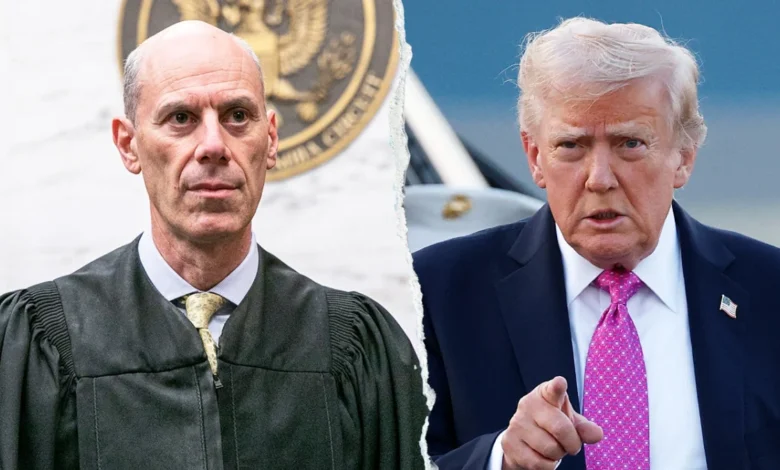
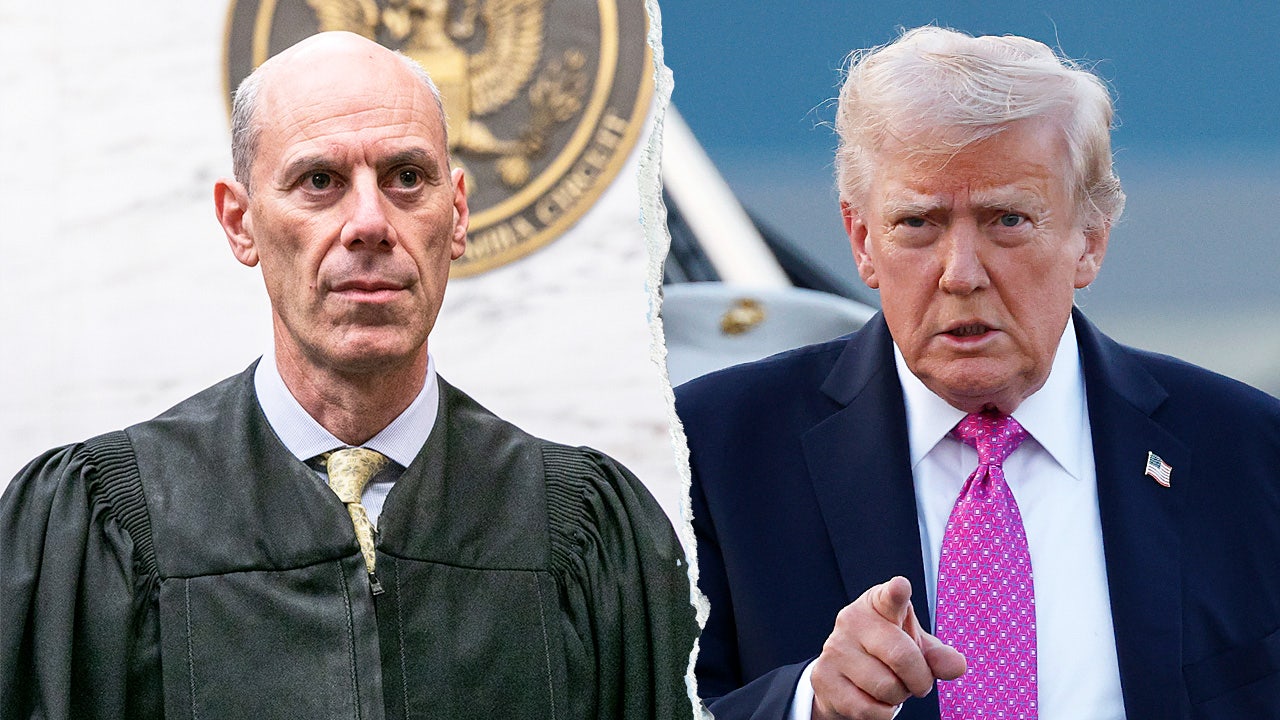
A crucial catalyst for the ATRC’s activation appears to be recent comments by Chief U.S. District Judge James Boasberg in Washington, D.C. In March, Judge Boasberg, while presiding over litigation challenging the administration’s use of the Alien Enemies Act, pointed to the ATRC as a viable alternative for handling terrorism-related deportation cases.
The Alien Enemies Act, a wartime statute dating back to 1798, allows for the summary apprehension and removal of non-citizens from countries with which the U.S. is at war. The Trump administration had sought to apply this act to deport alleged members of the Venezuelan gang Tren de Aragua, sparking considerable legal controversy. Judge Boasberg temporarily blocked the administration from using this wartime law for those removals, questioning its applicability in non-traditional conflicts and ordering deportation flights already in the air to return to the U.S. This set off a high-profile legal battle, highlighting the judiciary’s role in scrutinizing executive power in immigration matters.

During a hearing on the Alien Enemies Act, Judge Boasberg explicitly suggested the ATRC as the appropriate mechanism: "In fact, Congress has an answer for us, doesn’t it? Because they created the Alien Terrorist Removal Court. So if there’s a national security concern with having these hearings, whether via habeas or otherwise, you can always go to the ATRC, which would be a first, but that’s what it’s there for, right?" His comments, though perhaps intended as a challenge or a clarification of legal options, seemingly provided a direct impetus for the Justice Department to consider the ATRC.
The Initial ATRC Hearing and Call for More Information
Following the Justice Department’s application, ATRC Chief Judge Joan N. Erickson, an appointee of President George W. Bush, presided over the initial proceedings. After hearing arguments from Justice Department officials, Judge Erickson requested additional information before allowing the case to proceed.
In her written response, Judge Erickson noted, "The Court had questions about the nexus that the government alleges between the actions of the respondent and the specific sections and subsections it invokes with respect to those actions." She further elaborated, "The answers persuaded the Court that the Government could benefit from the opportunity for more thoughtful consideration." This request for further documentation, with a deadline set for Wednesday, indicates that even in a specialized court designed for national security, the judicial process will not be a mere formality. It underscores the court’s role in ensuring that the government’s application meets the statutory requirements, despite the classified nature of the underlying evidence.
Legal Perspectives and Due Process Concerns
The activation of the ATRC has ignited a renewed debate among legal experts and civil liberties advocates concerning the balance between national security and due process rights for non-citizens.
Hans von Spakovsky, a senior legal fellow at Advancing American Freedom, expressed strong support for the Justice Department’s move. He told Fox News Digital that previous administrations were "negligent, frankly," for not utilizing this special court. Von Spakovsky argued that the ATRC provides a "special procedure that was specifically set up by Congress, so that they could quickly get aliens — aliens who were either terrorists or supported terrorist activities — out of the U.S." He views the court as a more robust tool for the Justice Department, potentially reducing interference from what he termed "rogue" liberal judges who have often challenged the administration’s immigration policies. For proponents like von Spakovsky, the ATRC represents an efficient and legally sanctioned pathway to address grave national security threats posed by non-citizens.

However, the very nature of the ATRC’s proceedings – particularly its reliance on sealed, classified evidence and the provision of only an unclassified summary to the respondent – has long drawn criticism from civil liberties groups and some legal scholars. A notable early critic was then-Senator Joe Biden, who, during the debate over AEDPA’s passage in 1996, vehemently opposed this aspect of the law. Biden famously characterized the process as "You and me, Judge—me, the prosecutor; you, the judge—let’s deport him in a secret hearing, using secret evidence. We know you did it, and we can’t tell you how we know. Now I think that is about as un-American as it gets."
Critics argue that denying a respondent access to the full, classified evidence against them severely hampers their ability to mount an effective defense, potentially violating fundamental principles of due process. While an unclassified summary is provided, its sufficiency to allow for meaningful rebuttal is often questioned. Such concerns echo broader debates about the use of secret evidence in other national security contexts, such as the Foreign Intelligence Surveillance Act (FISA) court. Civil liberties organizations like the American Civil Liberties Union (ACLU) have historically raised alarms about proceedings where individuals are not fully informed of the accusations against them or given a fair opportunity to challenge the evidence. They contend that while national security is paramount, it should not come at the expense of core constitutional protections, even for non-citizens.
Broader Implications and Future Precedent
The successful activation and utilization of the ATRC could have profound implications for U.S. national security and immigration policy. If the Trump administration prevails in this initial case, it could establish a precedent that encourages future administrations to more frequently resort to this specialized court. This could streamline the deportation process for suspected terrorists, potentially bypassing the delays and legal challenges often encountered in conventional immigration courts.
The case also highlights the ongoing tension between the executive branch’s prerogative in national security and immigration enforcement, and the judiciary’s role in safeguarding individual rights and ensuring legal compliance. The Justice Department’s strategic decision to use the ATRC may be seen as an attempt to find a judicial forum less susceptible to the broader legal and political challenges that have plagued other immigration initiatives.
Moreover, the outcome of this specific case, and any subsequent legal appeals, will likely shape the interpretation and application of the AEDPA and the ATRC’s powers. Should the court’s process withstand constitutional scrutiny, it could become a powerful and frequently invoked tool in the government’s counter-terrorism efforts. Conversely, if legal challenges based on due process or other constitutional grounds gain traction, it could lead to further refinements or limitations on the court’s authority.
This inaugural case before the Alien Terrorist Removal Court represents a significant moment in the evolving landscape of U.S. immigration and national security law. It underscores the administration’s resolve to employ robust measures against perceived threats, while simultaneously reigniting critical debates about judicial oversight, due process, and the fundamental rights of non-citizens in an era of heightened global security concerns. As the Justice Department prepares its additional documentation for Judge Erickson, the eyes of legal scholars, civil liberties advocates, and policymakers will be closely watching the proceedings of this long-dormant court, now awakened to address a contemporary challenge.