Southwest Airlines flight crew dispute leads to hours of delays and conflicting explanations for passengers

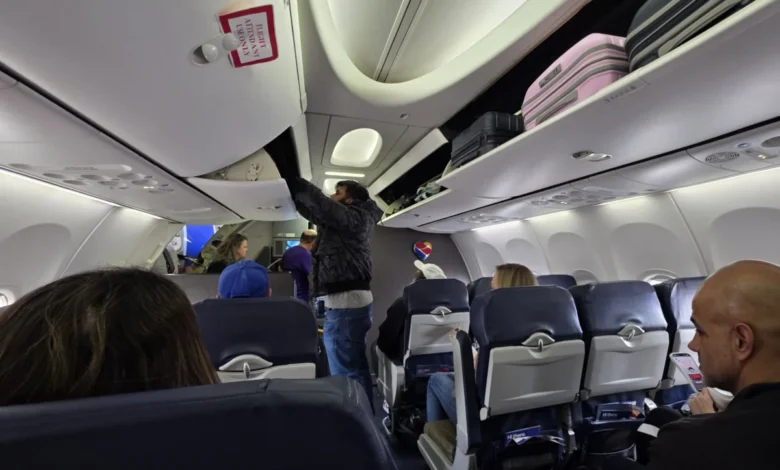
The atmosphere aboard Southwest Airlines Flight 557 on Friday, November 6, shifted rapidly from routine pre-flight preparation to an unprofessional public confrontation, resulting in significant scheduling delays and a chaotic cabin environment. Passengers scheduled to travel from Dallas Love Field to Kansas City International Airport were forced to endure an extended ground hold, which onlookers attributed to a heated verbal altercation between flight attendants that eventually necessitated the removal of crew members from the aircraft. The incident, which was documented by passengers in real-time via social media, highlights the operational vulnerabilities airlines face when internal professional disputes intersect with customer-facing responsibilities.
A Chronology of the Operational Disruption
The scheduled departure for Southwest Flight 557 was 2:25 p.m. Central Time. According to flight tracking data and passenger accounts, the aircraft, a Boeing 737-700 with registration N255WN, began the boarding process under standard conditions. However, the flight did not depart as scheduled. While there were initial reports of a technical maintenance issue, passengers noted that this complication was resolved within approximately ten minutes of boarding.
The focus of the delay soon shifted from mechanical to human factors. By 4:39 p.m., more than two hours after the intended departure time, passengers began airing their frustrations on social media platforms, including X (formerly Twitter). One passenger, identifying as @dualczn, reported that the delay was exacerbated by an open dispute between flight attendants that unfolded directly in front of the traveling public.
The internal discord reportedly culminated in one flight attendant resigning on the spot, while another was requested to leave the aircraft. This sudden change in crew composition required Southwest Airlines to initiate emergency staffing protocols to find a replacement crew member, a process that inherently forces a lengthy ground delay.

Conflicting Communications and Public Perception
The handling of the situation by the flight deck added a layer of confusion to the already tense cabin environment. Following the removal of the contentious crew members, an announcement was made to the passengers informing them that a flight attendant was “sick” and unable to continue with the flight.
However, the credibility of this explanation was quickly undermined when the pilot later addressed the cabin. According to witnesses, the pilot provided a contradictory account, attributing the delay to “personality differences” between the crew members. This discrepancy between the official company explanation—illness—and the pilot’s candid assessment of the conflict served to highlight the lack of a cohesive communication strategy during the incident.
The aircraft eventually pushed back from the gate at 5:12 p.m., nearly three hours behind schedule. It arrived at Kansas City International Airport at 6:16 p.m., finalizing a total delay of approximately two hours and 21 minutes. The cascading effects of this delay continued throughout the evening, as the same aircraft was slated for subsequent legs to Nashville and Knoxville. The final arrival in Knoxville was logged at 10:47 p.m. Eastern Time, roughly two hours and 12 minutes behind its original schedule.
Safety Protocols and the Necessity of Crew Cohesion
In the aviation industry, the concept of "Crew Resource Management" (CRM) is paramount. CRM is a set of training procedures used in air travel to improve communication, leadership, and decision-making in the cockpit and cabin. The primary objective of CRM is to minimize human error and ensure that all crew members are aligned in their response to both routine operations and emergency situations.
When a dispute arises that compromises the ability of a crew to function as a cohesive unit, the airline is legally and operationally obligated to intervene. An aircraft is required to be staffed with a minimum number of flight attendants based on the number of passenger seats available; if a crew member is incapacitated or removed due to conflict, the flight cannot legally depart until a qualified replacement is on board.
Beyond the regulatory requirements, there is a fundamental safety argument for replacing crew members who have demonstrated an inability to work together. Should an emergency occur—such as an engine failure, a medical crisis, or a security threat—the crew must be able to act with absolute synchronization. A team divided by personal animosity poses a significant risk to the safety of the cabin, as the distraction and lack of cooperation could delay life-saving actions.
Industry Precedents for Crew Disruptions
Southwest Airlines is not the first carrier to experience such operational turbulence due to personnel conflicts. In 2025, a United Airlines flight was grounded in Des Moines, Iowa, after a heated dispute between flight attendants resulted in the airline being forced to pull the entire cabin crew. Similar to the Southwest incident, the disruption required the mobilization of a reserve crew, illustrating the fragile nature of airline scheduling.
These events underscore a broader challenge in the aviation sector: the pressure placed on frontline staff. Flight attendants are tasked with maintaining safety and order in a high-stress, confined environment. When internal conflicts breach the professional barrier, the visibility of these arguments to passengers can erode brand trust. Industry analysts suggest that while the primary concern for airlines is the adherence to federal safety regulations, the secondary concern—the reputation of the airline—is significantly damaged when passengers are privy to the breakdown of internal professional standards.
Broader Implications for Southwest Airlines
The incident involving Flight 557 serves as a case study in the consequences of internal mismanagement. While Southwest Airlines has long maintained a reputation for a specific corporate culture characterized by lightheartedness and high spirits, the public airing of a grievance of this nature suggests potential strain within the labor force.
For the airline, the implications are three-fold:

- Operational Costs: The diversion of resources, the need for last-minute reserve crew, and the potential for compensation claims from delayed passengers represent direct financial hits.
- Brand Reputation: In an era of viral social media posts, the speed at which a negative passenger experience travels is instantaneous. The "personality differences" comment from the pilot, while potentially accurate, lacks the polish expected in professional crisis communication and leaves the airline open to public mockery.
- Labor Relations: Frequent occurrences of this nature often prompt management to review internal training and conflict resolution protocols. If disputes between crew members become a recurring theme, it may necessitate a more rigorous enforcement of professional codes of conduct during pre-flight briefings.
Analysis of the Official Response
As of the latest reports, Southwest Airlines has not released a comprehensive statement detailing the disciplinary actions taken against the involved crew members. In professional aviation, personnel matters are typically handled internally under the privacy protections afforded by labor agreements. However, the discrepancy between the "sick" announcement and the "personality differences" explanation suggests a lack of coordination between the flight deck and the ground operations team.
For passengers, the experience was emblematic of the unpredictability of modern air travel. While the mechanical issue was resolved with efficiency, the human factor proved to be the more significant hurdle. As the airline industry continues to navigate staffing shortages and high passenger volumes, the ability of flight crews to maintain a professional demeanor—even under immense pressure—remains a critical component of the passenger experience.
Conclusion: The Human Element in Aviation
The grounding of Southwest Flight 557 serves as a reminder that aviation is a human-centric industry. Despite the sophisticated technology inherent in a Boeing 737, the safety and efficiency of the flight rely entirely on the human beings operating it. When that human element fails to communicate effectively or maintain a professional environment, the entire operational chain is disrupted.
Moving forward, the aviation industry will likely continue to face challenges regarding crew fatigue, workplace environment, and professional standards. For passengers, the event serves as an unconventional look at the complexities behind the scenes of commercial travel. While most flights proceed without incident, the fragility of the crew-passenger relationship is evidenced whenever the professional boundary is crossed, leading to the kind of public discord witnessed on this particular Friday in November. The case of Flight 557 remains a notable instance of how a breakdown in interpersonal relationships can ground an aircraft as effectively as any mechanical failure.