Lufthansa Airlines to Cut 1,000 Full-Time Jobs at Frankfurt and Munich Hubs Amid Persistent Financial Struggles

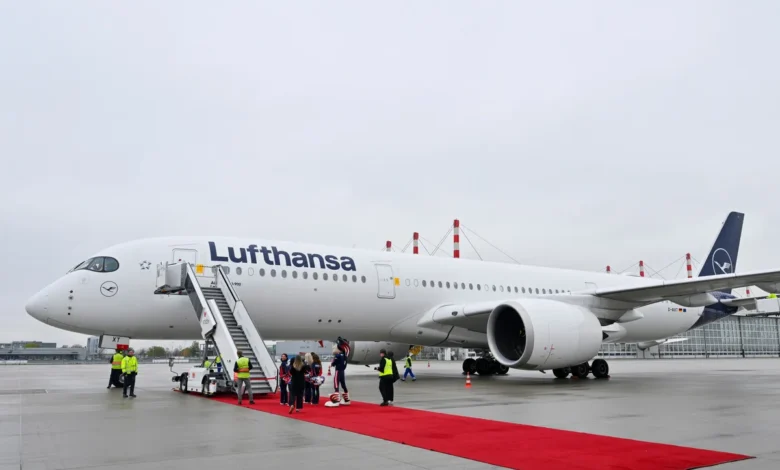
German flag carrier Lufthansa is facing a critical juncture in its corporate history as management attempts to navigate a prolonged period of economic instability. According to an internal management letter reviewed by multiple media outlets, Lufthansa Airlines has announced plans to eliminate 1,000 full-time positions concentrated primarily across its primary domestic hubs in Frankfurt and Munich. This sweeping reduction in headcount is part of an aggressive turnaround strategy designed to rescue the struggling airline from mounting financial pressures, characterized heavily by persistently high fuel costs, structural inefficiencies, and a sluggish post-pandemic recovery relative to some of its international competitors.
The decision to cut jobs underscores the deep-seated challenges currently plaguing one of Europe’s largest aviation groups. In the leaked communication, Lufthansa’s executive board did not mince words regarding the company’s financial trajectory. The board explicitly stated that the carrier is enduring its third consecutive year of unsatisfactory financial performance, pointing directly to an uncompetitive cost structure and lagging operational efficiency as the root causes of the airline’s ongoing vulnerabilities.
The Anatomy of a Crisis: Cost Pressures and Market Realities
The aviation industry has faced unprecedented turbulence over the past half-decade. Following the catastrophic disruptions of the COVID-19 pandemic, airlines anticipated a triumphant return to profitability driven by surging global travel demand. While passenger volumes have indeed rebounded significantly, the financial realities of running an airline have shifted dramatically.
Chief among these burdens are skyrocketing operational expenses. Fuel prices have remained stubbornly high due to ongoing geopolitical instability, supply chain disruptions, and fluctuating global energy markets. Concurrently, labor costs have risen across the board as unions successfully push for wage increases to offset inflation. For Lufthansa, these macroeconomic headwinds have been compounded by high internal overhead. Germany’s notoriously high regulatory burdens, steep aviation taxes, and expensive airport infrastructure fees at mega-hubs like Frankfurt (FRA) and Munich (MUC) have placed the carrier at a distinct disadvantage when competing with ultra-low-cost carriers and heavily subsidized international legacy airlines.
Industry analysts note that Lufthansa’s traditional operating model—reliant heavily on connecting global traffic through its primary German fortresses—is under threat. While premium demand remains relatively resilient, corporate travel has not returned to pre-2020 volumes, squeezing the high-yield margins that legacy carriers historically depended upon to offset operational bloat.
A Timeline of Strain: How Lufthansa Reached This Turning Point
To understand the gravity of the current restructuring announcement, it is necessary to examine the chronology of events that have shaped Lufthansa’s recent trajectory:
- 2020–2021 (The Pandemic Era): Lufthansa narrowly avoids bankruptcy through a €9 billion government bailout package provided by the German Economic Stabilization Fund (WSF). Thousands of jobs are cut through voluntary programs, early retirements, and natural attrition, while fleet sizes are drastically downsized.
- 2022–2023 (The Fragile Recovery): Travel restrictions lift globally, sparking a wave of "revenge travel." Lufthansa returns to profitability faster than anticipated, allowing the German government to sell off its remaining stake in the airline at a profit. However, chronic industry-wide staff shortages, air traffic control strikes, and rising inflation begin to erode profit margins.
- 2024 (The Turning Point): Despite strong top-line revenue, net income begins to stall. Rising jet fuel expenses, expensive labor negotiations with pilots and ground staff, and operational bottlenecks at Frankfurt and Munich airports eat into earnings. Management warns that structural cost problems are beginning to structuralize.
-
2025 (Deepening Pessimism): Lufthansa’s financial performance fails to meet internal targets for
the second consecutive year. Labor strikes repeatedly disrupt operations, costing tens of millions of euros in lost revenue and passenger compensation. Management initiates internal reviews of non-core operations and corporate overhead.
- Late 2026 (The Restructuring Announcement): With the third straight year of sub-par financial results closing in, the board issues its candid management letter announcing the immediate elimination of 1,000 full-time administrative and operational roles at the Frankfurt and Munich hubs.
Inside the Management Letter: Key Takeaways
The internal memorandum distributed to staff highlights the urgency with which Lufthansa must address its financial health. The board emphasized that the airline can no longer rely on top-line revenue growth alone to mask underlying structural deficiencies.
“Lufthansa is currently not competitive in terms of its cost structure and efficiency,” the board wrote, signaling that incremental changes would no longer suffice. The decision to target 1,000 full-time roles at the airline’s dual nerve centers is a calculated move to streamline corporate overhead, reduce management layers, and optimize ground operations where redundancy has accumulated over decades.

While the exact breakdown of which departments will bear the brunt of the job cuts has not been fully detailed to the public, labor representatives expect administrative, corporate support, and non-flying ground operation roles to be primarily affected. Flight operations and front-line customer service positions are anticipated to be largely insulated to protect the passenger experience during an already tense travel season.
Stakeholder Reactions and Labor Relations
Unsurprisingly, the announcement has triggered immediate concern and pushback from labor unions representing Lufthansa employees. Germany boasts some of the strongest labor protections in the world, and any move to slash thousands of jobs at major corporate hubs is met with rigorous legal and institutional scrutiny.
Representatives from Verdi, the powerful trade union representing German service workers, along with various pilot and flight attendant associations, have expressed outrage over the timing and nature of the cuts. Union leaders argue that employees should not be forced to bear the cost of managerial missteps and long-term strategic miscalculations. Furthermore, labor advocates point out that workers have endured years of intense operational stress, understaffing, and protracted wage disputes while attempting to keep the airline functioning smoothly through successive crises.
“Targeting the workforce is the default and lazy response to structural challenges that require visionary leadership, not administrative downsizing,” a union spokesperson noted in early commentary following the leak of the management letter. Negotiations between Lufthansa management and labor councils are expected to be tense, complex, and protracted, with unions likely pushing for severance packages, early retirement incentives, and strict limits on compulsory redundancies.
Broader Economic and Aviation Implications
The challenges facing Lufthansa are symptomatic of a broader malaise affecting the European aviation sector as a whole. Legacy carriers across the continent are caught in a protracted squeeze between escalating environmental regulations, stringent labor laws, high fuel taxation, and aggressive competition from Middle Eastern carriers and low-cost European airlines like Ryanair and easyJet.
Regulatory Pressures and Green Transitions:
Compounding Lufthansa’s financial woes is the impending cost of the European Union’s green transition mandates. The ReFuelEU Aviation initiative requires airlines to progressively increase their uptake of expensive Sustainable Aviation Fuels (SAF). While necessary for long-term climate goals, these mandates add hundreds of millions of euros in compliance costs to legacy carriers without an immediate, scalable supply chain to drive down prices. For an airline struggling with its baseline cost structure, absorbing these green levies while remaining price-competitive is an exceptionally difficult balancing act.
Hub Competitiveness:
Frankfurt and Munich are critical economic engines for Germany, serving as massive global connectors. However, high airport user fees—driven in part by state-mandated security and air navigation charges—have led several low-cost carriers to reduce or abandon their operations at these airports in favor of cheaper secondary markets. If Lufthansa itself begins shrinking its footprint at these hubs, it risks a negative feedback loop: fewer connecting flights mean lower passenger volumes, which in turn reduces the financial viability of maintaining extensive long-haul networks out of Germany.
Fact-Based Analysis of Lufthansa’s Path Forward
As Lufthansa enters this critical restructuring phase, financial analysts and industry observers are closely monitoring the carrier’s next moves. Simply cutting 1,000 jobs, while symbolically significant and financially meaningful for short-term overhead reduction, will not single-handedly solve the structural deficits outlined by the board.
To achieve sustainable competitiveness, Lufthansa must address several interlocking priorities:
- Labor Harmonization: Finding a constructive path forward with German labor unions that balances worker security with flexible, modern cost structures.
- Digital Transformation: Accelerating the automation and digitalization of back-office and ground-handling processes to permanently reduce administrative bloat.
- Fleet Modernization: Continuing investments in fuel-efficient next-generation aircraft to permanently lower fuel consumption and carbon compliance costs.
- Network Optimization: Relentlessly evaluating route profitability to prune underperforming point-to-point and connecting services that fail to generate adequate margins.
The coming months will prove decisive for Lufthansa. As management works to finalize the implementation of these job cuts amidst fierce union opposition, the airline’s ability to restore profitability while maintaining operational safety and service quality will serve as a bellwether for the entire European legacy carrier segment. For now, the message from Frankfurt is clear: the era of business-as-usual is over, and survival requires radical internal transformation.
Related posts: