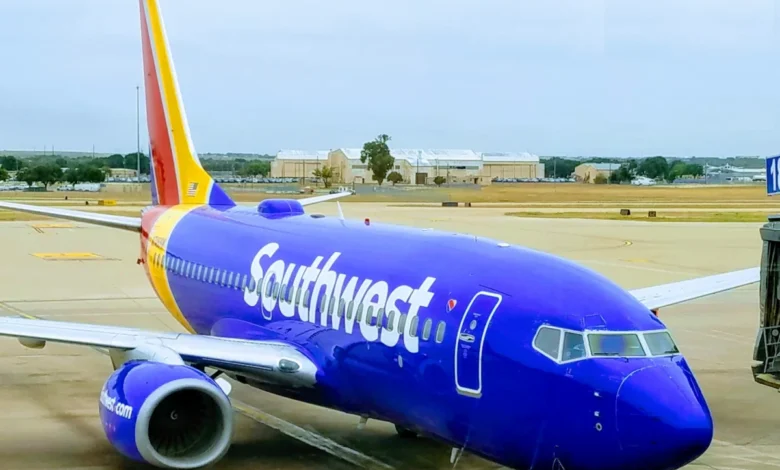
Southwest Airlines has long marketed itself as the "customer-friendly" outlier in the domestic aviation industry, distinguished by its lack of change fees, two free checked bags, and an open-seating policy. However, in a strategic pivot that signals a fundamental shift in its business model, the Dallas-based carrier has begun systematically dismantling these pillars. The most significant of these changes involves the expiration of flight credits—a policy that was lauded as a permanent benefit as recently as 2022 but has now been rolled back, creating a complex and often disadvantageous landscape for travelers.
The Shift in Policy: From Flexibility to Expiration
In 2022, Southwest Airlines made headlines by declaring that all flight credits would never expire, effectively eliminating the "breakage" model that many other major carriers utilize to boost bottom lines. This move was intended to build brand loyalty and offer travelers peace of mind. However, the airline’s financial performance and competitive pressure have led to a reversal.
For reservations booked or modified on or after May 28, 2025, Southwest has reinstated expiration dates on flight credits. This change is particularly punitive for those purchasing the airline’s newly introduced "Basic" economy fare. Under the current rules, credits derived from Basic fares are non-transferable and expire precisely six months from the original date of purchase. This stands in stark contrast to the previous era of indefinite flexibility.
The financial motivation behind this shift is rooted in what the industry calls "breakage"—the revenue recognized by an airline when a customer fails to utilize a flight credit before it expires. In recent financial disclosures, Southwest revealed a $285 million adjustment related to flight credit breakage. The airline had previously forecasted that 15% of credits would go unused; newer internal data suggested the actual figure was 12%. By reinstating expiration windows, the airline is effectively tightening its revenue recognition cycle, ensuring that unused credits are converted into corporate profit rather than remaining as long-term liabilities on the balance sheet.
Navigating the Fare Families
Southwest now operates under a four-tier fare structure, and the rules governing credit expiration and transferability vary significantly between them. The complexity of these rules has created a secondary market of "workarounds" that frequent flyers are increasingly utilizing to preserve the value of their funds.
For tickets issued on or before May 27, 2025, the original "no-expiration" policy remains in effect. However, travelers must distinguish between expiration and transferability. A "legacy" credit might state "Expiration: None," but it may still be tagged as "Not eligible for transfer," meaning it is restricted solely to the original passenger.
Furthermore, the airline’s current system for handling combined funds is inherently restrictive. When a traveler applies multiple flight credits toward a new reservation, the resulting replacement credit is governed by the earliest expiration date among the combined funds. If a passenger uses a six-month Basic credit toward a higher-tier booking, the new credit will inherit that abbreviated six-month window, effectively shortening the life of any other credits used in the transaction.
Strategic Workarounds: The Gift Card Loophole
While the official terms for Basic fares are strict, the mechanics of Southwest’s ticketing system allow for a degree of "financial engineering" that can restore transferability and remove expiration dates. According to the airline’s current fare charts, flight credits applied toward "Choice Preferred" or "Choice Extra" fares are eligible to be refunded as a "Transferable Flight Credit."
The most sophisticated travelers have identified a specific method to exploit this: using a small-denomination Southwest gift card in conjunction with an expiring flight credit. Because Southwest gift cards do not have expiration dates, applying one toward a "Choice Preferred" or "Choice Extra" ticket acts as a reset mechanism. When such a ticket is subsequently canceled, the airline issues a new, transferable, non-expiring credit in the passenger’s name.
The process typically involves:
- Ensuring both the original passenger and the recipient have active Rapid Rewards accounts.
- Applying the expiring credit and a small gift card payment to a higher-tier fare.
- Canceling the reservation, which prompts the system to generate a fresh, transferable credit.
This strategy is not officially sanctioned as a feature, and industry analysts warn that it relies on current software logic that could be patched at any time. Furthermore, the use of "Choice Preferred" or "Choice Extra" is essential; reports from frequent flyer communities indicate that standard "Choice" fares may not trigger the same reset of the expiration date, likely due to the difference in the refundable components of those fare classes.
Consolidating Funds and LUV Vouchers
For many travelers, the primary challenge is not just expiration, but the fragmentation of funds. Southwest limits users to three forms of payment per booking, which can make managing a "wallet" of small, expiring credits difficult.
To consolidate these, customers have reported success by applying two small credits plus a modest credit card payment toward a "Choice Preferred" ticket. Upon cancellation, the cash portion is returned to the card, and the credits are merged into a single, consolidated credit inheriting the earliest expiration date. By repeating this process with a gift card in the final stage, travelers can essentially "clean" their account of expiring, non-transferable funds.
"LUV Vouchers"—a separate form of travel compensation—also operate under their own distinct rules. While they are inherently transferable, they are often restricted from covering government taxes and fees. However, by applying a LUV voucher and a gift card to a higher-tier fare, users have found they can bypass the tax-payment limitation, as the resulting credit generated from the cancellation is treated as a general flight credit, which can be applied to any future booking, including the taxes and fees that were previously excluded.
The Broader Implications for Aviation Consumers
The degradation of Southwest’s "customer-friendly" reputation is a significant case study in airline economics. As Southwest faces increased pressure from shareholders to improve margins—pressures that led to the introduction of assigned seating and basic economy—the airline is shedding the very policies that once acted as its primary competitive moat.
The shift toward expiring credits and stricter transfer rules aligns Southwest more closely with legacy carriers like United, American, and Delta. While these changes may optimize the airline’s balance sheet by capturing revenue from breakage, they also introduce a layer of consumer friction. For the casual traveler, these rules are often opaque, leading to situations where funds are inadvertently lost.
In response to inquiries regarding these policy changes, Southwest has maintained that its new fare structure provides more options for travelers. However, the data suggests that for the average consumer, the "option" of a lower-cost Basic fare comes with a hidden tax in the form of diminished flexibility.
As the industry continues to evolve, the burden of managing travel funds has shifted from the airline to the passenger. Travelers are now forced to become amateur accountants, tracking expiration dates, managing payment combinations, and navigating the nuances of fare tiers to protect their assets. Whether this model proves sustainable for Southwest’s long-term brand identity remains to be seen, but for now, the era of "hassle-free" credits at Southwest Airlines has effectively come to an end.