Tracing the Legacy of Loss and Resilience: Kate Beaton’s New Children’s Book Explores Intergenerational Grief

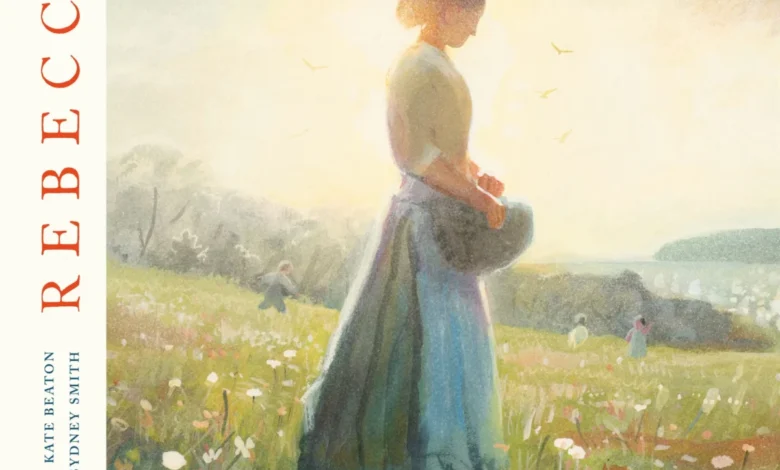
The release of Kate Beaton’s latest children’s book, titled Rebecca, marks a significant departure from traditional literary tropes in the youth publishing sector. While the picture book genre is frequently characterized by themes of whimsy or gentle moral instruction, Beaton’s work serves as a somber yet hopeful meditation on the endurance of the human spirit in the wake of profound loss. The narrative bridges the gap between contemporary personal tragedy and historical resilience, focusing on the life of an 18th-century ancestor while reflecting the author’s own journey through the death of her sister, Becky, in 2018.
The Chronology of a Personal and Historical Narrative
The story of Rebecca is rooted in two distinct timelines. The first began in May 2018, when the author’s sister, Becky, succumbed to cervical cancer after a three-year struggle. This period of illness fundamentally altered the author’s life, creating a psychological divide she describes as a "bifurcation"—a life before the diagnosis and a life defined by the void left in its aftermath.
The second timeline traces back to 1789, centering on Rebecca Lombard Smith, a great-great-great-great-grandmother who lived on a remote island off the coast of Cape Breton, Nova Scotia. In March of that year, Rebecca’s husband, Captain David Smith, died in a maritime accident, falling through the ice near Port Hood Island while the family was expecting their final child. Rebecca remained on the island to raise their seven children alone. For Beaton, who resided in the village of Port Hood during her sister’s illness, the proximity to the site of her ancestor’s tragedy provided a framework for processing her own grief.
Historical Context and Demographic Significance
The historical narrative of the Smith family is well-documented within Cape Breton genealogical records. The transition from a patriarchal focus—often centered on the Captain’s maritime death—to a matrilineal focus is a recurring theme in Beaton’s work. Historically, maritime fatalities in the 18th century often left widows in precarious economic positions. Records from the era suggest that the survival of such families depended heavily on the resilience of the surviving spouse.
The Old Protestant Graveyard in Port Hood, where Rebecca Lombard Smith is buried, contains a headstone that distinguishes itself through a rare, personal inscription. Unlike many markers of that period, which focused primarily on the deceased’s marital status or religious standing, Rebecca’s stone bears the names of her surviving sons: Lewis, Parker, and David. Historians note that such explicit acknowledgments of offspring on a memorial were unconventional for the time, suggesting a deep communal and familial recognition of her role as the matriarch who held the family together through extreme hardship.
Addressing Grief in Youth Literature
The publication of Rebecca by Roaring Brook Press challenges the "rules" of the children’s book industry. In the current publishing landscape, picture books for younger audiences rarely address the subject of death with such directness, particularly when the protagonist is an adult and the plot involves multiple fatalities.

Connie Hsu, the publishing director at Roaring Brook Press, noted that the manuscript initially prompted a re-evaluation of editorial standards. "My brain began to think about all the usual rules about picture book publishing," Hsu stated. "Here, the main protagonist is an adult, the book is about loss, and two people die in the book! But I just had to publish it."
This trend aligns with a broader shift in pediatric psychology and education, which increasingly supports "grief literacy" for children. Experts in child development suggest that introducing themes of loss in a controlled, narrative environment can help younger readers build empathy and resilience. By anchoring the story in a historical setting, Beaton provides a buffer that allows children to observe the reality of death without the immediate trauma of losing a contemporary peer or parent.
Supporting Data on Sibling Loss and Mental Health
The impact of losing a sibling is a well-studied phenomenon in psychological research. According to data from the American Psychological Association (APA), sibling loss is often termed a "disenfranchised grief," as it is frequently overshadowed by parental or spousal loss in public discourse. Studies indicate that individuals who lose a sibling in early adulthood often experience "delayed developmental milestones," as the loss can disrupt the individual’s sense of self and their historical continuity.
Beaton’s account mirrors findings in longitudinal studies regarding "grief integration." Rather than suggesting that grief has an endpoint, experts emphasize that it becomes a permanent component of an individual’s identity. The author’s decision to continue the family name and to write the story of her ancestor serves as a mechanism for what psychologists call "legacy-building," an effective coping strategy that transforms the passive experience of sorrow into an active process of creation.
The Broader Impact: Art as a Tool for Healing
The creation of Rebecca also highlights the role of creative expression in managing complex trauma. Beaton, who rose to prominence through her webcomic Hark! A Vagrant and her New York Times bestselling graphic novels, has consistently used history as a canvas for contemporary human concerns. By moving into the children’s picture book format, she is expanding the scope of her work to reach a younger demographic, teaching them that grief is not an anomaly to be hidden, but a shared human experience that has been documented for centuries.
The book’s reception is expected to be significant, particularly among educators and therapists who look for literature that validates difficult emotions. By connecting her personal narrative to the 18th-century story of Rebecca Lombard Smith, Beaton elevates her private struggle to a universal level. The message of the work is consistent with current trends in mental health advocacy: that resilience is not the absence of pain, but the capacity to continue living in the presence of it.
Conclusion
Kate Beaton’s Rebecca serves as a poignant reminder that history is not merely a collection of dates and events, but a series of overlapping lives that continue to inform the present. By weaving her sister’s untimely death with the 18th-century survival story of her ancestor, Beaton has created a piece of literature that functions simultaneously as a historical record and a modern therapeutic tool. As the book enters the public sphere, it provides a valuable contribution to the ongoing conversation regarding how we speak to future generations about the inevitability of loss, and more importantly, the necessity of continuing to live with hope.