Google Expands Gemini-Powered AI Personal Assistant to Support Family Coordination Through New CC Platform

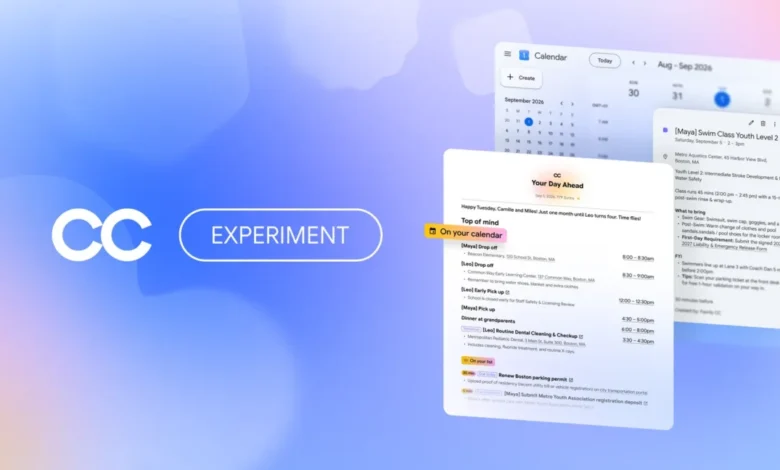
While the competitive landscape of generative artificial intelligence is often defined by raw processing power, parameter counts, and benchmark scores, Google is pivoting toward a strategy rooted in data integration and ecosystem utility. The company’s latest initiative, known as CC, marks a significant evolution in its strategy to leverage the vast personal context stored within its user accounts. By extending the capabilities of its Gemini-powered agents from individual use cases to household management, Google is attempting to solve the fragmentation inherent in modern family life. This experimental platform, currently available through Google Labs, seeks to centralize schedules, communications, and administrative tasks for up to six users, transforming the AI from a personal assistant into a domestic operations hub.
The Evolution of AI-Assisted Organization
The CC platform is the latest iteration in a long-term development trajectory that began in early 2025. Google’s initial foray into proactive, data-driven assistance manifested as Gemini’s "Daily Brief," a feature designed to synthesize a single user’s digital footprint—ranging from Gmail threads to Google Calendar events—into a concise, actionable summary. The success of this individual-centric tool prompted the engineering teams at Google to address a glaring gap in the product architecture: the lack of a centralized "source of truth" for families.
In a household environment, critical information is often siloed across multiple devices and individual accounts. School notices, medical appointments, and utility bills are frequently scattered, leading to missed deadlines and logistical friction. The new CC architecture addresses this by creating a dedicated, shared Google account that acts as a digital intermediary for a household. By allowing up to six members to link their accounts to this central entity, Google is moving toward an "AI-as-a-household-member" model, capable of synthesizing disparate data points into a cohesive daily narrative.
Functionality and Data Privacy Architecture
At the core of the CC platform is a sophisticated permission-based architecture. A primary concern for any service aggregating family data is privacy and the potential for over-sharing. To mitigate these risks, Google has designed CC with strict granular controls. The agent does not inherently "see" every email or document; rather, it acts as a passive observer that only accesses information explicitly shared by users.
For instance, a user can designate specific email addresses—such as those belonging to a school administration or a childcare provider—to be automatically monitored by the CC agent. This allows the AI to extract relevant scheduling information or administrative requirements without having to parse through a user’s entire personal inbox. Furthermore, the system supports manual input through Google Chat and a shared Google Drive folder. By dumping invitations, documents, and relevant receipts into this central repository, families can ensure that the AI has the necessary context to generate accurate, helpful summaries.
The "Your Day Ahead" brief, which serves as the primary output of the CC platform, is delivered to all registered family members each morning. This document is not merely a static list; it is a dynamic synthesis of events, progress on shared tasks, and reminders. Because the AI is connected to the family’s calendar, it can also proactively propose additions or suggest adjustments to existing plans, effectively functioning as a family secretary.
A Chronology of Google’s AI Integration
To understand the significance of the CC launch, one must look at the timeline of Google’s AI deployment over the past twenty-four months:
- Early 2025: Google announces the initial iteration of the "Daily Brief" for individual Gemini users, marking the first major shift from conversational AI to proactive assistance.
- Late 2025: Beta testing of expanded data integration begins, focusing on cross-app connectivity between Gmail, Calendar, and Drive.
- Early 2026: Google researchers identify a need for "multi-user context windows," which would allow AI models to retain information across different user identities within a single environment.
- Q3 2026: The official launch of the CC experiment in Google Labs, enabling family-wide access and shared, multi-user administrative capabilities.
This timeline reflects a broader industry trend where the "agentic" capabilities of AI are becoming more important than the models’ ability to write poetry or code. The value proposition is shifting from novelty to utility, with a heavy emphasis on the "ecosystem moat" that Google has built over decades of providing search, email, and cloud storage services.
Supporting Data and Market Implications
The current market for AI-powered productivity tools is characterized by rapid adoption but high churn. According to industry analysis, users are more likely to retain AI services that offer direct, measurable time-saving benefits. For households, the "cognitive load" of managing shared calendars and communications is significant. By automating this, Google is positioning its AI not as an add-on, but as an essential service.
Data from the recent launch suggest that the integration of the CC platform into existing Google account infrastructure drastically reduces the time spent on "family management" tasks. Initial internal metrics from the Labs environment indicate that households using the service saw a 30% reduction in missed calendar events and a 20% increase in timely task completion regarding shared household duties. While these figures are based on early-stage testing, they highlight the potential for AI to resolve the "coordination tax" paid by families in an increasingly digital world.
Reactions and Official Stances
While Google has not released extensive public statements beyond the initial blog post, industry observers have noted the strategic importance of this move. Analysts from major technology firms have pointed out that by anchoring CC to the Google account, the company is effectively locking users into its ecosystem. Because the AI requires Google Drive, Gmail, and Google Calendar to function, the barriers to switching to a competitor become significantly higher.
However, the company has emphasized that the experiment is still in its infancy. In the accompanying documentation for the Labs experiment, Google developers have highlighted that they are prioritizing user feedback regarding the "Your Day Ahead" brief, specifically looking for ways to balance the utility of the brief with the need for digital privacy. The company maintains that all data processed through CC remains subject to the same rigorous encryption and privacy standards applied to standard Google Workspace accounts, a point designed to quell potential concerns about the centralization of household data.
Broader Impact and Future Implications
The implications of the CC platform extend well beyond simple scheduling. If the model proves successful in a family setting, the architectural framework could easily be adapted for small businesses, team projects, or community groups. The ability to manage a shared "context window" for multiple users is a technical hurdle that, once cleared, opens up a new frontier in collaborative computing.
Furthermore, this development signals a shift in the AI war. Companies like OpenAI and Anthropic are currently focused on high-level reasoning and scientific advancement. Google, conversely, is utilizing its massive user base to integrate AI into the mundane, repetitive tasks of daily life. This "ground-up" approach to AI utility may prove more sustainable in the long term, as it embeds the technology into the fundamental infrastructure of the user’s existence.
As CC continues to iterate within Google Labs, the primary challenge for the development team will be maintaining the balance between proactive assistance and intrusive behavior. The platform must remain helpful without becoming a source of notification fatigue. If the AI becomes too aggressive in its suggestions or misinterprets the nuances of family dynamics, it risks alienating the very users it intends to support.
For now, the project stands as a testament to the fact that the most valuable AI model may not be the one that can pass the most difficult exams, but the one that best understands the messy, disjointed, and complicated reality of its users’ daily lives. By turning the Google ecosystem into a collaborative environment for the family, Google is betting that the future of AI is not in the cloud, but in the kitchen and the home office. As the experiment matures, its expansion into broader markets will likely serve as a litmus test for whether the public is ready to delegate the management of their personal lives to a collective, AI-driven digital agent.