The Ultimate Guide to Fat Bear Week: How Alaska’s Brown Bears Prepare for Winter and Compete for the Crown


The annual salmon feast in Alaska’s Katmai National Park and Preserve has once again drawn the eyes of millions of wildlife enthusiasts worldwide, signaling the imminent arrival of Fat Bear Week. This highly anticipated, single-elimination tournament serves as both a lighthearted internet phenomenon and a crucial public engagement tool for conservationists tracking the health and survival of brown bears (Ursus arctos). As the days shorten and the rivers run thick with marine nutrients, the ecosystem of the Brooks River becomes the stage for an extraordinary biological transformation.
The Origins and Evolution of Fat Bear Week
Launched in 2014 by park rangers and naturalists at Katmai National Park in partnership with explore.org and the Katmai Conservancy, Fat Bear Week began as a modest, single-day local event known as "Fat Bear Tuesday." In its inaugural year, just 1,700 votes were cast to determine which brown bear had most successfully capitalized on the summer salmon bounty.
Over the course of a decade, the tournament evolved into an international sensation. By the 2024 and 2025 iterations, the contest captured the global imagination, drawing over 1.2 million votes from more than 100 countries. Modelled casually after collegiate basketball’s March Madness brackets, the tournament substitutes slam dunks with side-by-side photographic evidence of individual bears transitioning from lean early-summer arrivals to massive, calorie-stuffed heavyweights by the autumn.
The structure of the competition invites the public to scrutinize the physiological changes of specific, named bears. Voters weigh not only raw mass, but also the unique life histories, foraging strategies, and survival challenges faced by each animal in the rugged Alaskan wilderness.
Biological Imperatives: Why Bears Must Bulk Up
The primary driver behind this extreme weight gain is the looming reality of winter hibernation. While popular culture often equates hibernation with deep, uninterrupted sleep, brown bears undergo a specialized physiological state known as torpor. Unlike true hibernators such as certain rodents, bats, and insects—whose core body temperatures plummet dramatically—bears in torpor maintain near-normal body temperatures while shutting down key metabolic processes.
During this multimonth period of inactivity, which can last up to half the year depending on environmental conditions, bears do not eat, drink, or produce metabolic waste. Instead, they survive entirely off the fat reserves accumulated during the hyperphagia phase of late summer and early autumn.
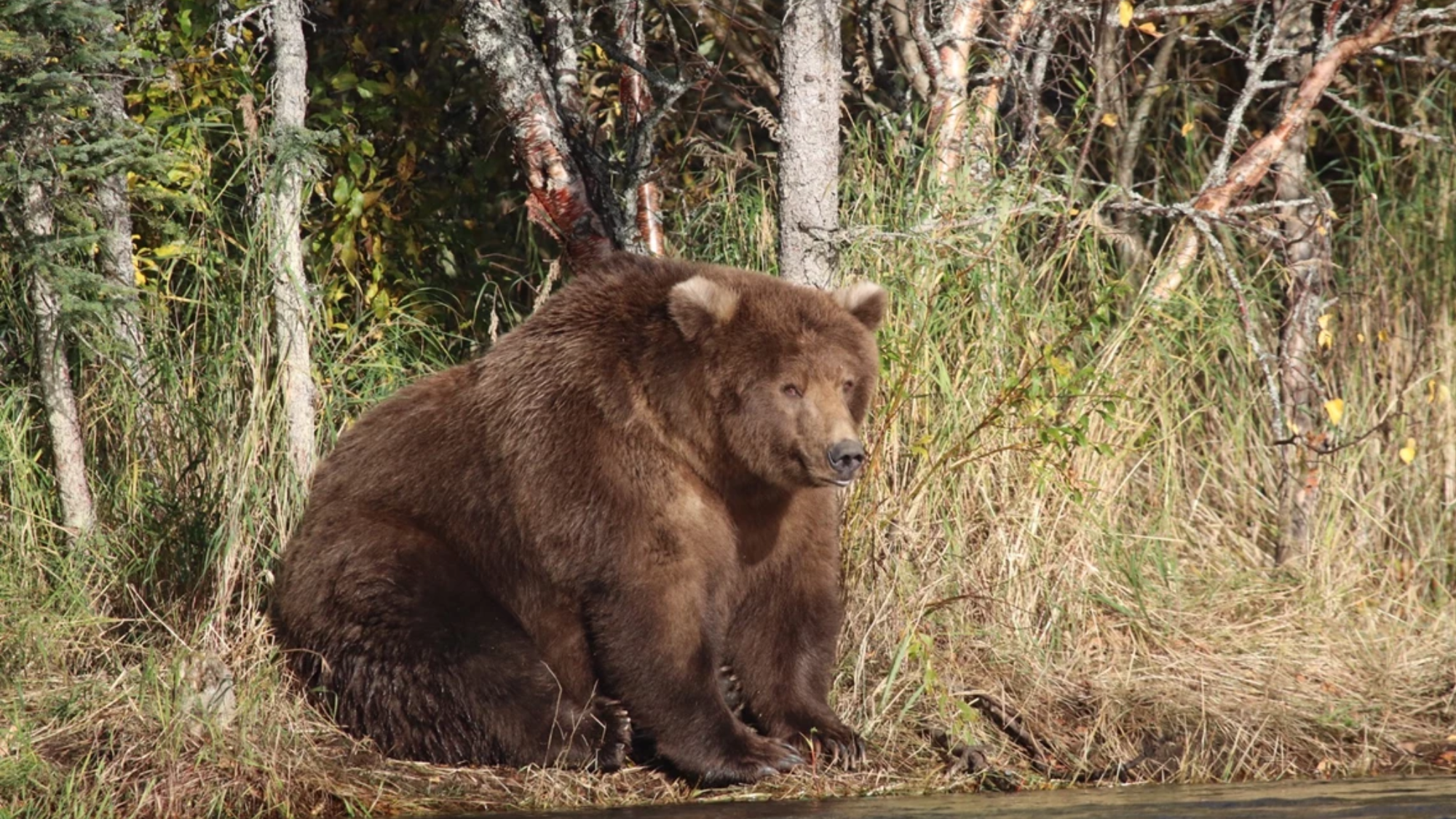
The math of survival is strictly tied to scale. An adult male brown bear that tips the scales at a relatively modest 700 pounds in June can easily balloon to over 1,200 pounds by late September. Female bears, while generally smaller, undergo an equally rigorous transformation. The sheer volume of adipose tissue a bear packs on directly correlates to its probability of surviving the winter, particularly for pregnant females who must give birth and nurse tiny cubs inside the den during the coldest months without access to outside sustenance.
The Foraging Cycle at Brooks River
The success of Katmai’s brown bears is inextricably linked to the Pacific salmon runs that surge through the region each year. In late June, millions of sockeye salmon return from the ocean to spawn in the freshwater streams of the Bristol Bay watershed. The bears congregate at iconic viewing locations like Brooks Falls, where they employ diverse fishing techniques—ranging from standing patiently at the lip of the waterfall to snatching leaping fish out of the air, to diving underwater or snorkeling for prey.
As summer transitions to autumn, the ecological dynamics shift. Having spawned, the salmon begin to die, creating an accessible, low-energy-expenditure buffet along the lower Brooks River in September and October. This second phase of the feeding frenzy allows bears to maximize caloric intake with minimal physical exertion, sealing their fate as contenders for the heavyweight title.
Highlights and Surprises of the Recent Seasons
Recent years have underscored the unpredictable, often brutal realities of life in the wild, providing a stark educational contrast to the playful nature of the online voting bracket.
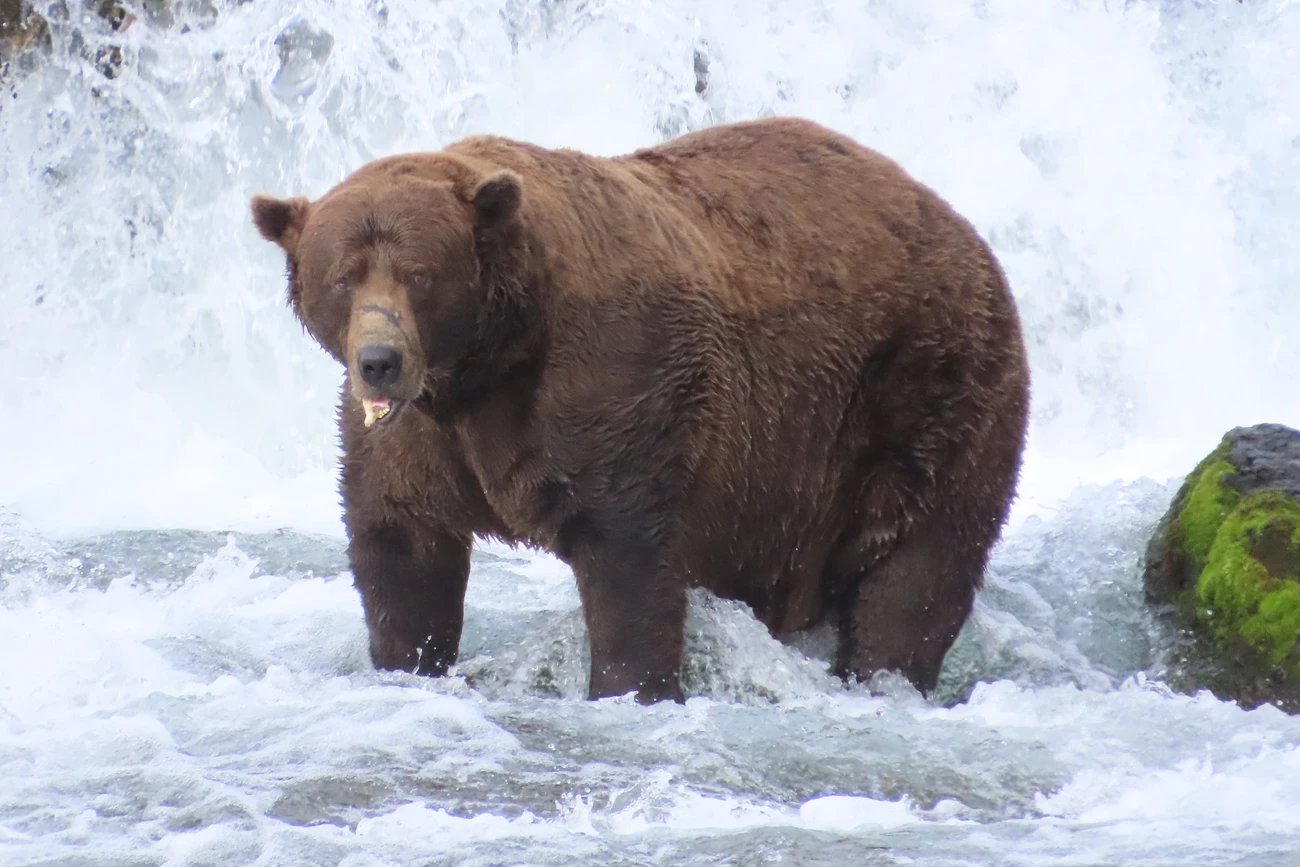
In the 2025 tournament, Bear #32, widely known as Chunk, claimed the championship crown despite facing significant physical adversity. Chunk entered the salmon-running season with a freshly broken jaw, an injury likely sustained in a territorial dispute with another adult male over a potential mate. Despite the handicap, Chunk’s dominance, immense frame, and relentless fishing skill allowed him to out-compete rivals, secure ample marine resources, and ultimately win the popular vote. His distinctive physical traits—including dark fur, narrow-set eyes, a prominent brow ridge, and a distinct scar across his muzzle—have made him an enduring favorite among observers.
Conversely, the summer seasons in Katmai have also highlighted the raw and sometimes jarring nature of apex predator behavior. Park naturalists documented rare and intense intraspecific aggression. In late July, live-cams captured an unrelated mother bear, Bear #806, attacking and killing a spring cub belonging to a 10-year-old bear named Bear #909. Shortly thereafter, another tragic encounter involving Bear #335 (Jolly) resulted in the loss of a cub following a dispute with neighboring bears.
While such events can be distressing for the millions of viewers tuned into the live webcams, park biologists emphasize that these behaviors, though rarely witnessed in such detail by humans, are part of the natural complex dynamics of high-density brown bear populations. Factors such as resource competition, territorial defense, and attempts to eliminate genetic competition all contribute to these occurrences.
Amid the drama, the bear cams also showcased remarkable resilience and unique personalities. Observers celebrated a rare cub with silver-hued fur, a younger bear that learned a hard lesson regarding porcupine quills, the inventive fishing styles of Bear #164 (Bucky Dent), and the uncanny ability of Bear #284’s (Electra) offspring to navigate fast-moving river currents.
Supporting Conservation Through the Otis Fund
Beyond the digital ballot box, Fat Bear Week serves as a vital fundraising vehicle for the Katmai Conservancy. Donations directly support park education, scientific research, and conservation infrastructure.
A central philanthropic engine of the event is the Otis Fund, named in honor of Bear #480 (Otis). Otis, a legendary elder statesman of the Brooks River, secured four Fat Bear Week titles before passing away. Demonstrating a commitment to wildlife preservation, explore.org matches all donations made to the Otis Fund during the peak of the autumn season, channeling vital resources back into the management and protection of Katmai’s unique ecosystem.
Implications for Public Engagement and Wildlife Management
Wildlife experts and park administrators view the phenomenal growth of Fat Bear Week as a major victory for science communication. By packaging complex ecological concepts—such as trophic cascades, lipid metabolism, habitat preservation, and population dynamics—into an accessible, gamified format, Katmai National Park engages a demographic that might otherwise remain disconnected from public lands management.
The event highlights the delicate balance required to maintain a healthy wilderness area where humans and apex predators coexist. As climate patterns shift and marine ecosystems face evolving pressures, continuous monitoring of bear populations through initiatives like the Brooks River webcams provides researchers with invaluable observational data. Ultimately, Fat Bear Week bridges the gap between scientific inquiry and public appreciation, ensuring that the health of Alaska’s iconic brown bears remains a priority for generations to come.