The U.S. Retreat from Global Civilian Harm Mitigation Standards Marks a Turning Point in International Defense Diplomacy

Three years ago, the U.S. Department of Defense spearheaded an ambitious international movement aimed at fundamentally altering how modern militaries account for and minimize civilian casualties in conflict zones. Born from the sobering, decades-long lessons of the post-9/11 wars in Afghanistan and Iraq, the Civilian Harm Mitigation and Response (CHMR) framework was intended to serve as a gold standard for professional, ethical, and strategic warfare. Today, that vision of American leadership has been decisively abandoned, as the Pentagon has dismantled the very mission it once championing, leaving key European allies to navigate the complexities of humanitarian protection in the absence of U.S. participation.
This week, as an international coalition of nations meets at NATO headquarters in Brussels to refine shared standards for protecting noncombatants, the U.S. delegation is notably absent. This void at the table—the International Contact Group on Civilian Harm Mitigation and Response—serves as the final confirmation of a policy reversal that has sent ripples of concern through the international security community.
The Rise and Fall of the CHMR Framework
The inception of CHMR in 2022 was widely hailed by human rights organizations and military scholars alike. The framework, colloquially known as "chimmer," was designed to move beyond the antiquated and morally fraught concept of "collateral damage." It called for the establishment of specialized centers to centralize strike data, the embedding of civilian protection advisers within regional combatant commands, and a systemic commitment to investigating and acknowledging harm.
For the United States, the adoption of CHMR was a strategic reckoning. Years of high-profile incidents in Iraq and Afghanistan—where opaque reporting and inconsistent accountability damaged the credibility of U.S. forces—had necessitated a shift. The Pentagon, working in tandem with the Netherlands, sought to export these best practices to ensure that coalitions operating in volatile environments could maintain both tactical effectiveness and moral authority.
However, the current administration has drastically altered this trajectory. Defense Secretary Pete Hegseth, who has frequently characterized modern rules of engagement as "woke" or overly restrictive, moved to dismantle the core architecture of the CHMR program. Reports indicate that the specialized staff dedicated to these missions was gutted, with personnel numbers plummeting from nearly 200 experts to fewer than two dozen. This internal pivot has effectively silenced the U.S. voice on the global stage regarding humanitarian protection.
Chronology of a Policy Reversal
- 2022: The Department of Defense formally adopts the CHMR Action Plan, promising a "new era" of civilian protection and accountability.
- 2023: The U.S. and the Netherlands co-found the International Contact Group on Civilian Harm Mitigation and Response, creating a formal space for sharing best practices among allies.
- Early 2024: The coalition meets six times, with participation from countries including Austria, Australia, Belgium, Denmark, Finland, Germany, and Norway.
- Late 2024: Following a change in administration, Secretary Pete Hegseth moves to restructure the Pentagon, leading to the gutting of CHMR-related staff and the reassignment of its core functions.
- 2025: The U.S. begins to scale back involvement in international forums, with officials citing a shift in operational priorities.
- Current Week: The Brussels summit convenes without a U.S. delegation, marking the first time the co-founding nation has completely absented itself from the proceedings.
The Consequences of Disengagement
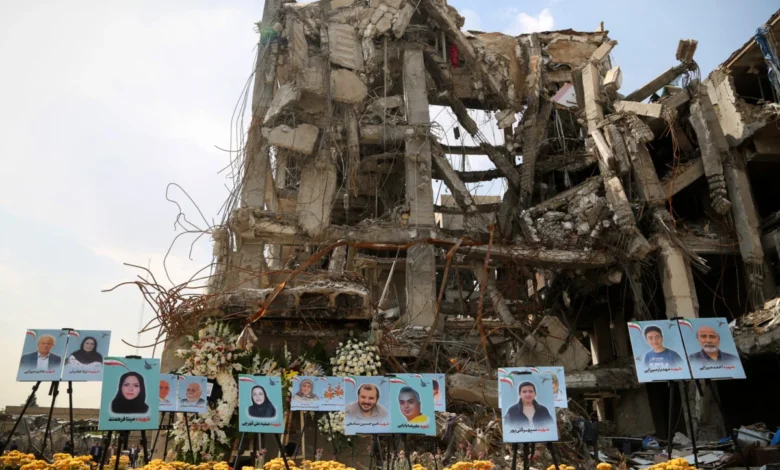
The impact of the U.S. withdrawal is not merely symbolic. Current and former defense officials, many of whom spoke on the condition of anonymity due to fears of professional retribution, characterize the shift as "dangerous." They point to a recent surge in reported civilian casualties in Iran, specifically following airstrikes on schools and residential infrastructure, as evidence that the absence of a robust international accountability framework has created a vacuum of responsibility.
Jenny McAvoy, a former Defense Department official who was instrumental in shaping the initial CHMR program, expressed deep concern over the long-term fallout. "There will be a day when people who care about mitigating civilian harm can come back and say, ‘OK, are we ready to solve this problem?’" she said. "But there are already enormous consequences of abandoning this work."

The Pentagon, when pressed for comment, has largely declined to provide details regarding its non-participation in the Brussels talks. A spokesperson maintained that the Department of Defense "remains committed to fulfilling its civilian harm mitigation and response responsibilities" and that it continues to factor protection into all phases of operational planning. However, critics argue that without the dedicated personnel and international reporting standards required by CHMR, these statements function more as rhetoric than policy.
The European Response and the Future of NATO
With the U.S. stepping back, the burden of leadership in civilian harm mitigation has shifted to European partners, most notably the United Kingdom and the Netherlands. The Dutch government, which has been grappling with the fallout of its own historical errors—such as the 2015 airstrike in Iraq that resulted in at least 70 civilian deaths—has remained a steadfast advocate for the group.
In London, the British Ministry of Defense is currently reviewing its internal procedures. Advocacy groups, including the Ceasefire Centre for Civilian Rights, are pushing the U.K. to formalize a protection program that includes rigorous data tracking and post-harm compensation. Mae Thompson, a lead analyst at the center, noted that while the U.S. program was far from perfect, it established a necessary international benchmark. The U.S. retreat, she suggests, has paradoxically created a space for the U.K. to assume a more proactive leadership role in developing institutionalized safeguards.
At the NATO level, the shift is equally profound. Andrew Hyde, a scholar at the Stimson Center, notes that the alliance is now forced to integrate civilian protection protocols without the primary architect of those very policies. "NATO has continued to push forward without U.S. support or participation," Hyde observed, suggesting that this transition might ultimately make civilian protection work more resilient to the political fluctuations of any single nation. By decoupling these standards from the U.S. administration’s changing priorities, the alliance may be forced to build a more permanent, institutionalized framework that can withstand the "whims" of future political cycles.
Analysis: Strategic and Ethical Implications
The decision to move away from CHMR signals a broader shift in the U.S. approach to global military engagement. For decades, the Pentagon prioritized the "hearts and minds" strategy, acknowledging that excessive civilian casualties serve as a recruiting tool for adversaries and undermine long-term stability. By abandoning the CHMR framework, the current administration is signaling a preference for a more traditional, kinetic-focused approach that minimizes the bureaucratic constraints of humanitarian oversight.
However, historical data suggests that this approach carries significant strategic risks. The erosion of international standards often leads to decreased legitimacy in the eyes of local populations, which can complicate counter-insurgency efforts and degrade alliances. Furthermore, the absence of standardized reporting makes it difficult for commanders to learn from mistakes, potentially leading to the repetition of tactical errors that could have been avoided through rigorous data analysis.
As the Brussels summit concludes, the international community remains at a crossroads. The "chimmer" framework, once a cornerstone of American military policy, now faces an uncertain future. While European allies and NATO remain committed to the principles of civilian protection, the lack of U.S. participation leaves a significant gap in global capabilities. Whether this transition leads to a more robust, decentralized system of accountability or a slow decline in the protection of noncombatants remains to be seen. What is clear, however, is that the era of American-led, standardized civilian harm mitigation has effectively ended, leaving the international community to define the new reality of modern warfare on its own terms.