AI Agents and the Evolution of Travel Infrastructure Insights from the Sabre Hackathon and the Shift Toward Open Ecosystems

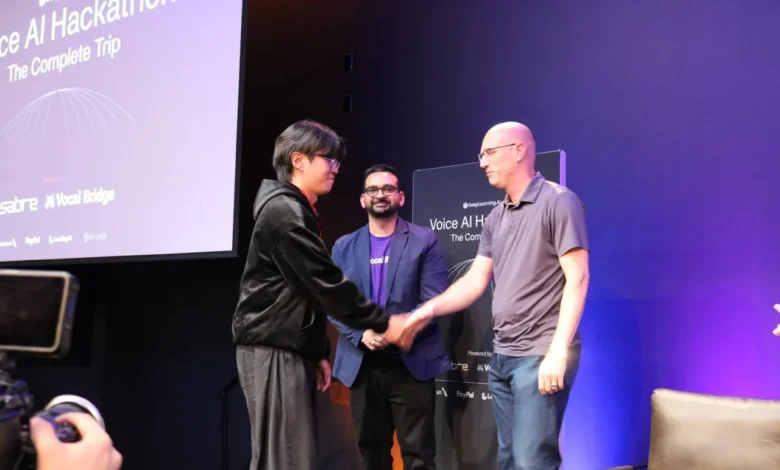
The global travel industry stands at a critical juncture where the promise of artificial intelligence is moving beyond the novelty of conversational search boxes and into the rigorous domain of operational execution. This transition was crystallized during a recent hackathon hosted by Sabre, the Southlake, Texas-based travel technology giant, where developers pivoted away from consumer-facing discovery tools to build high-functioning AI agents capable of navigating the complex, often disconnected "plumbing" of the travel ecosystem. The event underscored a growing realization among industry leaders: the true value of AI in travel lies not in suggesting a destination, but in managing the friction-filled gaps between disparate systems that have historically required manual human intervention.
Redefining the Scope of AI in Travel Operations
For several years, the narrative surrounding generative AI in travel has been dominated by the concept of the "concierge bot"—a tool designed to help travelers decide where to go or which hotel to book. However, the innovations showcased at the Sabre hackathon suggest a paradigm shift. The winning teams focused on the "offline" and "between-the-systems" coordination that has plagued the industry for decades. These developers built autonomous agents that do more than process data; they take action.
One of the standout projects involved an AI agent capable of placing outbound phone calls to hotels. This addresses a persistent pain point in travel logistics: while flight and room bookings are digitized, specific, granular information—such as the availability of a specific amenity, confirmation of a late-night check-in, or verifying a localized service—is often trapped behind a front desk telephone. By automating these calls, the AI agent bridges the gap between a high-tech Global Distribution System (GDS) and a low-tech manual process, ensuring that the traveler’s context is preserved without a human agent having to pick up the phone.
Other winning solutions focused on the fragmentation of modern itineraries. In the current landscape, a single trip is often a patchwork of reservations: an airline ticket on one system, a hotel booking on another, and ground transport or restaurant reservations on a third. When a flight is delayed or a connection is missed, the entire house of cards can collapse. The hackathon participants demonstrated agents that can monitor these disruptions in real-time, pull together scattered reservations, and proactively rebuild the entire trip sequence. This level of automated re-accommodation represents a significant leap forward from the static "search and book" model that has defined online travel agencies (OTAs) for twenty years.
The Fragmented Reality of the Travel Ecosystem
To understand the significance of these AI developments, one must consider the historical and technical context of the travel industry. A single journey is frequently marketed as a seamless experience, yet it is executed across a dozen or more separate silos. Airlines, hotels, car rental agencies, payment processors, and ground transportation providers each operate on their own proprietary stacks.
For decades, the "glue" holding these systems together has been the traveler themselves, or a human travel agent. When a disruption occurs, the traveler must manually carry their "context"—their identity, their destination, their constraints, and their preferences—from one provider to another. This often involves hours spent on hold or standing in line at airport service desks.
The Sabre hackathon highlighted that the next frontier for AI is the management of this context. If an AI agent can hold the "state" of a traveler’s journey across multiple platforms, it can resolve conflicts before the traveler even becomes aware of them. However, as travel executives noted during the event, this requires a fundamental shift in how travel data is accessed and shared.
The Struggle Between Closed Systems and Open Innovation
A recurring theme of the hackathon was the tension between the industry’s traditional "closed" mindset and the "open" tools required for modern AI to thrive. Travel technology has historically been a walled garden, with GDS providers like Sabre, Amadeus, and Travelport acting as the gatekeepers of data. While these companies have made strides in opening their APIs (Application Programming Interfaces), the industry has not yet settled on a standard for who gets to build on these systems and how data should flow between them.
"It was important that we had this event, that we started to change the mindset about travel being closed and shifting to open [tools]," noted one executive close to the event. The sentiment reflects a broader industry challenge: if AI agents are to become effective, they need deep, low-latency access to inventory and the ability to execute transactions across different platforms.
The move toward "Open Travel" mirrors the "Open Banking" movement that transformed the financial sector over the last decade. In banking, the implementation of standardized APIs allowed third-party developers to build innovative apps on top of traditional bank accounts. In travel, a similar shift would allow AI agents to move fluidly between an airline’s seat map and a hotel’s room inventory, creating a unified operational layer that currently does not exist.
Data and Economic Implications of AI-Driven Re-accommodation
The economic stakes for this technological evolution are massive. According to data from the U.S. Department of Transportation, flight disruptions cost the economy billions of dollars annually in lost productivity and operational expenses for airlines. In 2023 alone, flight delays and cancellations reached record levels in several markets, leading to a surge in demand for customer service.
Traditional customer service models are struggling to keep up. The labor-intensive nature of manual rebooking means that during a major weather event, call center wait times can exceed eight hours. Research from organizations like IATA (International Air Transport Association) suggests that automating just 20% of the re-accommodation process could save the industry hundreds of millions of dollars in overhead while significantly improving passenger satisfaction scores.
Furthermore, the market for AI in travel is projected to grow at a compound annual growth rate (CAGR) of over 35% through 2030. Much of this growth is expected to come from B2B (business-to-business) applications that improve operational efficiency, rather than B2C (business-to-consumer) search tools. The Sabre hackathon winners are a testament to this trend, focusing on "earn-their-keep" AI that solves specific, costly logistical problems.
A Chronology of Innovation: From Mainframes to Agents
The evolution of Sabre itself provides a roadmap for where the industry is headed.
- 1960s: Sabre was born out of a collaboration between IBM and American Airlines, creating the first computerized reservation system. It was a closed, mainframe-based environment.
- 1990s-2000s: The rise of the internet led to the creation of OTAs like Expedia and Travelocity (which was originally a Sabre subsidiary). This moved the "search box" to the consumer’s desktop but kept the underlying booking logic largely unchanged.
- 2010s: The "API Economy" began to take hold, allowing mobile apps to pull data from GDS systems, though the systems remained largely siloed and reactive.
- 2024 and Beyond: The "Agentic Era" begins. As demonstrated at the hackathon, the focus is now on autonomous agents that can act as intermediaries, negotiating between systems and performing complex tasks without constant human prompting.
This timeline shows a clear trajectory from centralizing data to distributing the ability to act upon that data. The hackathon serves as a marker for the start of this fourth era, where the "intelligence" is no longer just in the database, but in the agents that navigate it.
The Broader Impact on the Travel Workforce
The shift toward AI agents also raises questions about the future of the travel workforce. If an AI can call a hotel to confirm a crib or rebook a flight during a storm, what happens to the human travel agent or the customer service representative?
The consensus among participants at the Sabre event was not one of total replacement, but of "augmented capability." By offloading the most repetitive and time-consuming "offline" tasks to AI agents, human agents are freed to handle the most complex and emotionally sensitive disruptions. For example, while an AI can handle a straightforward rebooking, a human might be needed to assist a traveler dealing with a medical emergency or a complicated multi-passenger itinerary that requires nuanced decision-making.
Moreover, the creation of these AI tools creates a new category of "travel technologists." These are developers who must understand both the legacy code of 40-year-old GDS systems and the modern requirements of large language models (LLMs). The hackathon proved that there is a significant appetite among the developer community to tackle these "unsexy" but vital problems.
Conclusion: The Path Toward a Frictionless Future
The Sabre hackathon has illuminated a clear path forward for the travel industry. The "search box" era is maturing, and the "action" era is beginning. For travel executives, the takeaway is clear: the most successful AI implementations will be those that address the invisible friction between systems—the phone calls, the manual data entry, and the fragmented itineraries.
To reach this future, the industry must continue to grapple with its "closed" heritage. Success will require a commitment to open standards, robust API access, and a willingness to allow third-party agents to operate within proprietary ecosystems. As AI agents begin to take over the coordination of travel, the industry moves closer to the long-promised goal of a truly seamless, end-to-end traveler experience. The winners of the next decade will not be those who build the best search engine, but those who build the most capable and connected agents to navigate the complex reality of global travel.