
Brazil Us Capitol Riots
Brazil’s Echoes: Understanding the January 8th, 2023 Attacks on Brasília and Their Parallels to the U.S. Capitol Riots
The January 8th, 2023 attacks on Brazil’s governmental institutions in Brasília, mirroring the January 6th, 2021 U.S. Capitol riots, represent a deeply concerning escalation of political polarization and democratic backsliding. The simultaneous storming of the Supreme Federal Court, the National Congress, and the Planalto Presidential Palace by thousands of self-proclaimed "patriots" chanting anti-government slogans and demanding military intervention was a stark visual and ideological echo of the events that transpired in Washington D.C. just over two years prior. While distinct in their immediate triggers and specific political contexts, these two incidents share a disturbing commonality: a coordinated attempt to undermine democratic processes, delegitimize electoral outcomes, and forcefully impose the will of a discontented minority upon the established constitutional order. Understanding the motivations, mechanisms, and consequences of these assaults on democratic capitols is crucial for safeguarding democratic institutions globally, and a comparative analysis of the Brazil and U.S. events offers valuable insights.
The immediate catalyst for the Brasília attacks was the widely disputed election of Luiz Inácio Lula da Silva over incumbent Jair Bolsonaro in October 2022. Bolsonaro, much like former U.S. President Donald Trump, consistently sowed seeds of doubt about the integrity of the electoral system, particularly Brazil’s electronic voting machines, without presenting credible evidence. Following his defeat, Bolsonaro remained largely silent, failing to explicitly concede and fueling the hopes of his ardent supporters that the election results could be overturned. This inaction, coupled with ongoing online rhetoric from various pro-Bolsonaro groups, created a fertile ground for mobilization. The protestors, many of whom had camped outside army barracks for weeks, demanding a military coup to prevent Lula’s inauguration, eventually marched on Brasília, their actions culminating in the violent invasion of the federal buildings. This mirrored the narrative of stolen elections and calls for extraordinary measures that characterized the U.S. Capitol riots, demonstrating a shared playbook of electoral denialism and anti-establishment fervor.
The motivations driving participants in both the Brasília and Capitol riots, while exhibiting nuances, share significant overlap. A core driver is the profound sense of disenfranchisement and grievance among a segment of the population who feel their values, way of life, and political power are under threat from perceived progressive or globalist forces. In both cases, leaders played a critical role in articulating and amplifying these grievances. Jair Bolsonaro, like Donald Trump, cultivated a fervent base of supporters who viewed him as an outsider fighting a corrupt establishment. His rhetoric, often characterized by strongman appeals, anti-communist fervor, and attacks on democratic institutions like the judiciary and the press, resonated deeply with those who felt alienated by mainstream politics. The narrative of a nation "taken back" and a return to perceived past glories was a powerful unifying force for these groups. The erosion of trust in traditional media and the rise of alternative, often ideologically driven, online news sources further contributed to an echo chamber effect, reinforcing pre-existing beliefs and making individuals more susceptible to disinformation.
The organizational and logistical aspects of these events, though differing in scale and sophistication, reveal a disturbing trend towards coordinated action. In Brasília, a movement characterized by a long-standing presence of protestors at military bases, often referred to as "acampamentos," created a pre-existing network of individuals ideologically aligned and ready for action. The march on Brasília itself was a planned event, communicated through social media channels and decentralized organizing. While not exhibiting the same level of overt planning as some of the U.S. Capitol riot investigations have revealed, the sheer numbers and the targeting of specific institutions suggest a degree of coordination, even if it was largely organic and driven by shared sentiment. Similarly, the January 6th events involved a complex interplay of online organizing, rally planning, and direct action. Investigations into the U.S. Capitol riots have uncovered evidence of sophisticated planning by some groups, including reconnaissance of the Capitol building and discussions about seizing lawmakers. The reliance on social media platforms to disseminate calls to action, coordinate movements, and share real-time updates is a common thread in both incidents.
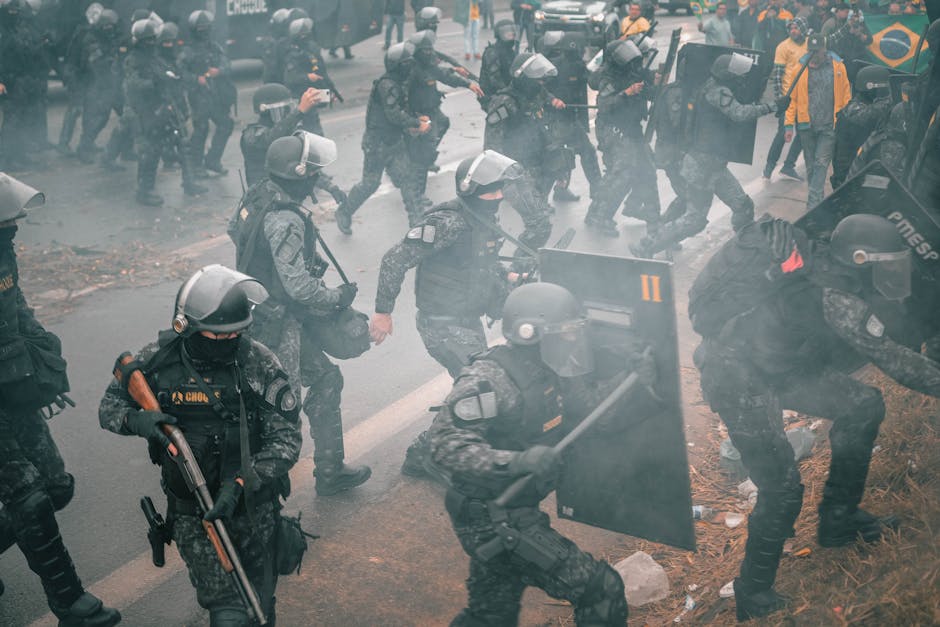
The immediate consequences of the Brasília attacks were swift and severe. Brazilian authorities, under President Lula’s government, moved to restore order, with hundreds of individuals arrested and investigations launched to identify and prosecute those responsible. The attacks led to a significant political crisis, prompting widespread condemnation from domestic and international leaders and calls for accountability. The resilience of Brazil’s democratic institutions, particularly the judiciary and the legislature, was tested but ultimately held. However, the long-term implications for Brazil’s democratic stability remain a concern. The deep societal divisions exposed by the events are unlikely to heal quickly, and the potential for future political instability remains. This mirrors the ongoing challenges faced by the United States following January 6th, where the deep partisan divides and the lingering effects of election denialism continue to shape the political landscape.
The parallels between the Brazil attacks and the U.S. Capitol riots extend beyond their immediate triggers and motivations to encompass the broader context of global democratic challenges. Both events can be seen as manifestations of a growing trend of right-wing populism and authoritarianism that has gained traction in various parts of the world. The use of anti-elite rhetoric, attacks on democratic norms and institutions, and the embrace of conspiracy theories have become hallmarks of these movements. The January 8th events in Brazil, occurring in a country with a history of political instability and democratic fragility, serve as a potent warning. The ease with which a significant segment of the population was mobilized to violently challenge electoral results and governmental authority underscores the vulnerability of democratic systems when faced with sustained campaigns of disinformation and delegitimization.
Furthermore, the role of technology and social media in facilitating these events cannot be overstated. Platforms like WhatsApp, Telegram, and X (formerly Twitter) played a crucial role in the dissemination of information, misinformation, and mobilization efforts for both the Brasília and Capitol riots. The algorithms that promote engagement often prioritize sensational and emotionally charged content, contributing to the formation of echo chambers and the amplification of extremist narratives. The decentralized nature of online communication makes it challenging for authorities to effectively counter disinformation and disrupt the networks of individuals involved in planning and executing such attacks. This presents a significant hurdle for democratic governments seeking to protect their institutions from such threats.
The response from law enforcement and judicial systems in both countries is a critical area of comparison. In Brazil, the swiftness of the arrests and the ongoing investigations signal a commitment to holding perpetrators accountable. The Brazilian Supreme Court has been particularly active in overseeing investigations and issuing rulings against those involved. Similarly, the extensive investigations and prosecutions following the January 6th Capitol riots in the U.S. have resulted in hundreds of convictions. However, the effectiveness and perceived fairness of these legal responses are often subjects of intense political debate, further exacerbating existing divisions. The challenge lies in balancing the need for accountability with the imperative of protecting civil liberties and avoiding further political polarization.
The international dimension of these events is also noteworthy. The Brasília attacks, like the Capitol riots, drew widespread condemnation from democratic leaders around the world, highlighting the global concern over the erosion of democratic norms. The interconnectedness of these movements, with ideas and tactics potentially spreading across borders, suggests a need for international cooperation in addressing these shared challenges. The rise of illiberal forces and the attacks on democratic institutions are not confined to any single nation; they represent a global phenomenon that requires a coordinated and multifaceted response.
In conclusion, the January 8th, 2023 attacks on Brasília and the January 6th, 2021 U.S. Capitol riots, while distinct in their specific contexts, offer a chilling testament to the fragility of democratic institutions in the face of intensified political polarization, electoral denialism, and the weaponization of information. The shared reliance on divisive rhetoric, the amplification of grievances through social media, and the direct challenge to established democratic processes underscore a common threat that transcends national borders. Understanding these parallels is not merely an academic exercise; it is a critical necessity for developing effective strategies to defend democratic governance, combat disinformation, and foster resilience against the forces that seek to undermine the rule of law and the will of the people. The echoes are clear, and the imperative to learn from them is urgent.
