Investigation into the Escalating Use of Glyphosate in California Forestlands and Its Environmental Implications

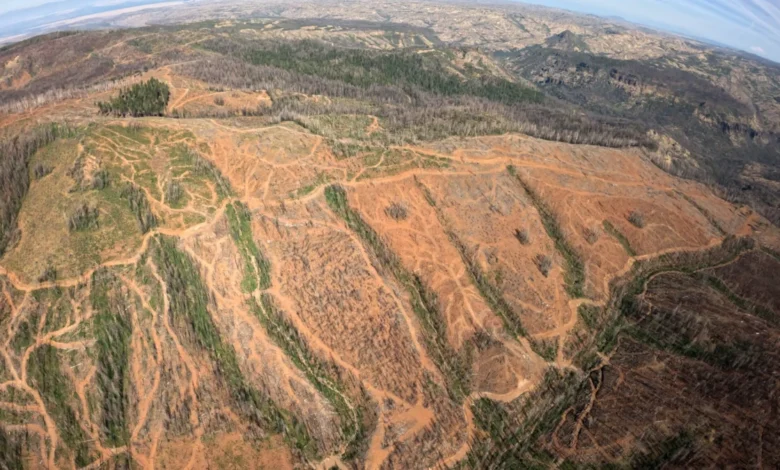
Recent investigative findings and aerial surveys of the Lassen National Forest have unveiled a significant shift in California’s chemical landscape, revealing that forestlands have become the state’s fastest-growing market for glyphosate, the active ingredient in the controversial herbicide Roundup. While glyphosate has long been associated with industrial agriculture in the Central Valley, data suggests a massive surge in its application within timber-producing regions, particularly in the wake of catastrophic wildfires. This expansion of chemical use in sensitive volcanic and mountainous ecosystems has sparked intense debate among federal agencies, timber corporations, and environmental advocates regarding the long-term health of California’s watersheds and biodiversity.
In the high-altitude terrain where the Cascade Range meets the Sierra Nevada, the visual evidence of this chemical intervention is stark. Aerial observations conducted via EcoFlight, a nonprofit dedicated to environmental monitoring, show vast tracts of land stripped of all vegetative life except for young coniferous saplings. These "dead zones" are not merely the result of wildfire, but the product of intentional "site preparation" and "release" treatments. By deploying glyphosate and similar herbicides, land managers aim to eliminate "competing" vegetation—such as native grasses, shrubs, and broadleaf trees—to ensure that commercially viable timber grows as quickly as possible.
The Magnitude of Forestland Chemical Application
An extensive analysis of more than five million state records has confirmed that the application of glyphosate in California’s forests is reaching record levels. This trend is particularly pronounced in areas surrounding Lassen Volcanic National Park, where private timberlands and federal parcels are being managed for rapid reforestation. The U.S. Forest Service has recently signaled its intent to spray approximately 10,000 acres within the Lassen National Forest alone.
The justification provided by the U.S. Forest Service and private timber companies centers on economic and silvicultural efficiency. According to industry standards, young trees face intense competition for sunlight, water, and soil nutrients from faster-growing native species that naturally emerge after a fire or a harvest. By applying herbicides, foresters can effectively "reset" the landscape, allowing monocultures of pine or fir to dominate without the interference of undergrowth. Proponents argue that this method is essential for restoring forest cover in a state increasingly ravaged by megafires.

However, the scale of this practice has raised alarms. The transition from diverse, multi-layered forest ecosystems to barren, chemically maintained plantations represents a fundamental shift in land management. Observers from the air describe mountainsides that appear as "lifeless earth," a surreal contrast to the lush, green foothills that typically define the California wilderness.
A Chronology of Wildfire and Chemical Response
The current surge in glyphosate use is inextricably linked to the timeline of California’s recent fire history. To understand the current state of the Lassen area, one must look at the sequence of events over the last several years:
- 2020: The Environmental Protection Agency (EPA) issued an interim decision stating that glyphosate was unlikely to pose a risk to human health or the environment when used according to label instructions. This occurred despite the World Health Organization’s (WHO) International Agency for Research on Cancer (IARC) classifying the chemical as a "probable human carcinogen" in 2015.
- 2021: The Dixie Fire, one of the largest single wildfires in California history, scorched nearly one million acres, including significant portions of the Lassen region. This created a massive "salvage logging" and reforestation demand.
- 2022: A coalition of environmental and labor groups successfully challenged the EPA’s 2020 assessment in the Ninth Circuit Court of Appeals. The court ruled that the EPA’s conclusion lacked sufficient evidence, particularly regarding the chemical’s impact on endangered species and human health.
- 2024: The Park Fire further decimated Northern California forests, adding hundreds of thousands of acres to the list of lands requiring management. Concurrently, the U.S. Forest Service moved forward with plans for large-scale herbicide applications to manage the regrowth on these charred landscapes.
This cycle of "fire-log-spray" has become the new operational norm for millions of acres in the American West. As wildfires grow in intensity due to climate change, the window for chemical intervention expands, creating a self-perpetuating cycle of industrial forest management.
Scientific Contradictions and Environmental Risks
The central tension in the glyphosate debate lies in the contradiction between regulatory claims and independent scientific findings. One of the most frequently cited arguments by glyphosate proponents is that the chemical binds tightly to soil particles, preventing it from migrating into water systems. However, empirical data from the U.S. Geological Survey (USGS) challenges this premise.
A comprehensive 2020 USGS study detected glyphosate in 74 percent of the American streams tested. This suggests that the chemical is far more mobile than previously admitted, likely transported via sediment runoff during heavy rains—a common occurrence on the steep, denuded slopes of the Lassen National Forest. The presence of glyphosate in mountainous watersheds is particularly concerning because these headwaters feed into critical habitats for threatened species.

The impact on aquatic life is a primary concern for biologists. Peer-reviewed studies have demonstrated that glyphosate is toxic to fish and various aquatic invertebrates. In the canyons below the Lassen highlands, cascading creeks serve as some of the last remaining habitats for spring-run Chinook salmon. This species is currently listed as threatened under the Endangered Species Act. The EPA itself has acknowledged that glyphosate likely harms 93 percent of the species listed under the Act, yet its use in the very watersheds these species depend on continues at a "breakneck pace."
Regulatory Turmoil and Industry Defense
Bayer, the corporation that acquired Roundup manufacturer Monsanto, maintains that the herbicide is a safe and essential tool for modern land management. The company points to decades of EPA-approved labeling as proof of its safety profile. In the wake of multibillion-dollar settlements related to non-Hodgkin lymphoma claims, Bayer has continued to defend the science behind glyphosate, asserting that when applied correctly, it does not pose a systemic risk to the public.
However, the regulatory landscape remains in a state of flux. Following the Ninth Circuit Court of Appeals’ decision, the EPA was forced to withdraw its interim registration review. The court found that the agency had ignored its own internal guidelines and failed to properly account for the ecological risks. While the EPA is currently in the process of a court-mandated reassessment, there is no federal moratorium on the chemical’s use. This allows timber companies and federal agencies to continue spraying while the legal and scientific review remains in limbo.
Critics argue that the EPA’s reliance on industry-funded studies has created a blind spot in federal oversight. They point to the "revolving door" between chemical companies and regulatory agencies as a reason for the persistent use of a chemical that has been restricted or banned in several other nations.
Broader Ecological Impacts and Long-Term Implications
The transformation of California’s forests through chemical means has implications that extend far beyond the immediate loss of brush. By eliminating the "pioneer" species—the shrubs and hardwoods that naturally colonize a burn site—land managers are altering the fundamental biology of the soil. These native plants often play a crucial role in nitrogen fixation and soil stabilization. Without them, the risk of erosion increases, and the soil’s nutrient profile may be permanently degraded.

Furthermore, the creation of "timber plantations" through herbicide use reduces biodiversity. A natural forest recovery includes a variety of plant life that supports diverse insect, bird, and mammal populations. A chemically cleared forest, by contrast, offers little in the way of habitat or forage. For the pollinators and migratory birds that rely on the flowering shrubs of the Sierra Nevada and Cascade confluence, these sprayed zones represent vast ecological deserts.
The long-term human health impacts for those living in or near these forestlands are also under scrutiny. While agricultural workers have historically been the focus of glyphosate health studies, the drift from aerial spraying in mountainous terrain can carry chemicals into rural communities and private water wells. The residents of Northern California, many of whom rely on forest-derived water, are only now beginning to grasp the scale of the chemical application occurring in their backyards.
As California continues to grapple with the dual challenges of climate-driven wildfire and the need for sustainable forest management, the reliance on glyphosate remains a point of deep contention. The results of the current investigations and the pending EPA reassessment will likely determine whether the state’s forests continue to be managed as industrial crops or are allowed to return to a more natural, biodiverse state. For now, the "lifeless earth" observed from the skies over Lassen serves as a silent testament to the high stakes of this environmental gamble.
Related posts: