A Culinary Odyssey Through the Essential Flavors and Regional Traditions of Chinese Gastronomy

The vast geographical expanse of China, spanning nearly 3.7 million square miles and encompassing diverse climates from the subarctic north to the tropical south, has fostered one of the world’s most sophisticated and varied culinary landscapes. To attempt a definitive list of the "best" Chinese dishes is a task of Herculean proportions, yet understanding the foundational elements of the nation’s food culture is essential for any traveler or gastronome. Chinese cuisine is traditionally categorized into the "Eight Great Traditions"—Shandong, Sichuan, Cantonese, Jiangsu, Zhejiang, Fujian, Hunan, and Anhui—each offering a distinct philosophy regarding flavor, technique, and the harmony of ingredients. By examining the essential dishes that define these regions, one gains insight into thousands of years of imperial history, migration patterns, and local adaptations to the environment.
The evolution of Chinese gastronomy is inextricably linked to its imperial past, a fact most evident in the history of roast poultry. Peking Duck (Beijing Kaoya), perhaps China’s most famous culinary export, represents the pinnacle of royal dining. While synonymous with the capital, the dish’s lineage traces back over 1,500 years to Nanjing, which served as the seat of several ancient dynasties. When the Ming Dynasty relocated the capital to Beijing in the 15th century, the imperial chefs brought their sophisticated roasting techniques with them. The modern preparation involves a multi-day process: the duck is air-dried, coated in a sugary syrup, and roasted in either a "closed oven" or an "open oven" using fruitwood, such as jujube or pear, to impart a subtle fragrance. The result is a glass-like, crispy skin and succulent meat, traditionally served with thin pancakes, sweet bean sauce (tianmianjiang), and julienned scallions and cucumbers.
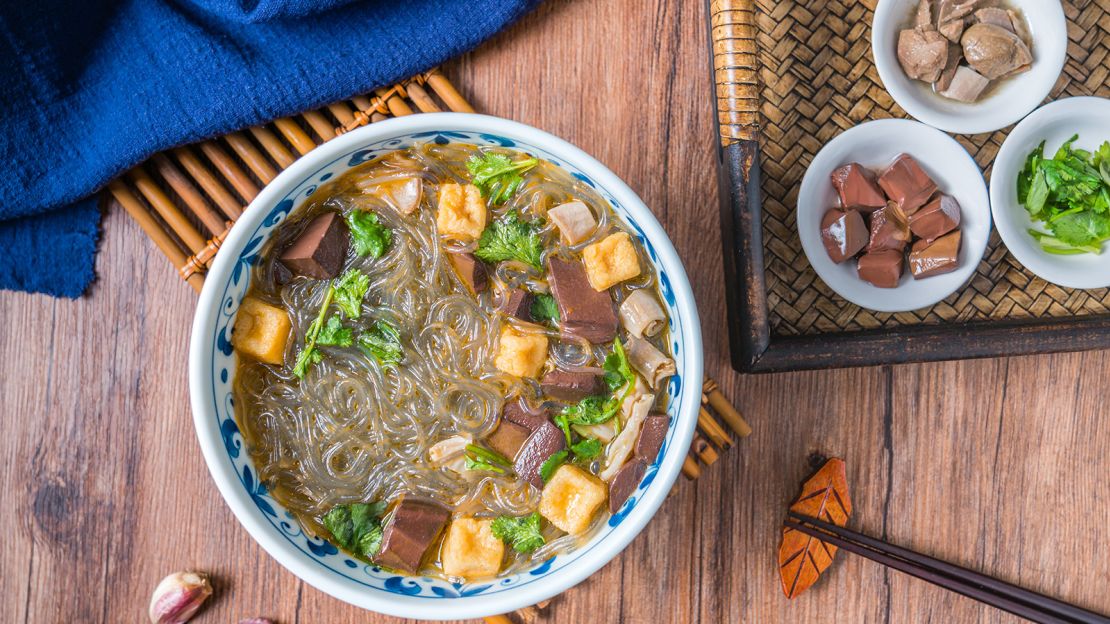
However, many in Nanjing argue that their city remains the true "duck capital." The obsession here extends beyond the meat to the entire bird. The Nanjing Duck Blood Vermicelli Soup is a masterclass in culinary resourcefulness. Utilizing a duck-bone broth, the soup features cubes of duck blood curd—often referred to as "blood tofu" for its silky texture—and bits of offal, including liver and gizzards. This street food staple exemplifies the Chinese philosophy of "nose-to-tail" eating, ensuring no part of the animal is wasted while delivering a deeply savory, complex flavor profile that has sustained the local population for generations.

In the southern provinces, the culinary focus shifts toward the preservation of natural flavors, particularly through the art of steaming. Cantonese Steamed Fish is a deceptively simple dish that serves as a litmus test for a chef’s skill. In the high-pressure environment of a Cantonese kitchen, timing is measured in seconds. A fish steamed for too long becomes tough; a fish removed too early clings to the bone. When executed perfectly, the flesh is tender and flaky, enhanced only by light soy sauce, ginger, scallions, and a final splash of sizzling hot oil to release the aromatics. This dedication to freshness is mirrored in Chaozhou, a seaside region known for its "cold" seafood. By lightly salting and steaming crabs or fish and then serving them at room temperature, chefs maximize the natural umami and sweetness of the catch, often pairing them with fermented soybean paste or vinegar-garlic dips.
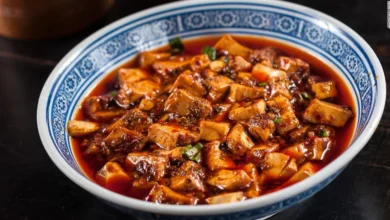
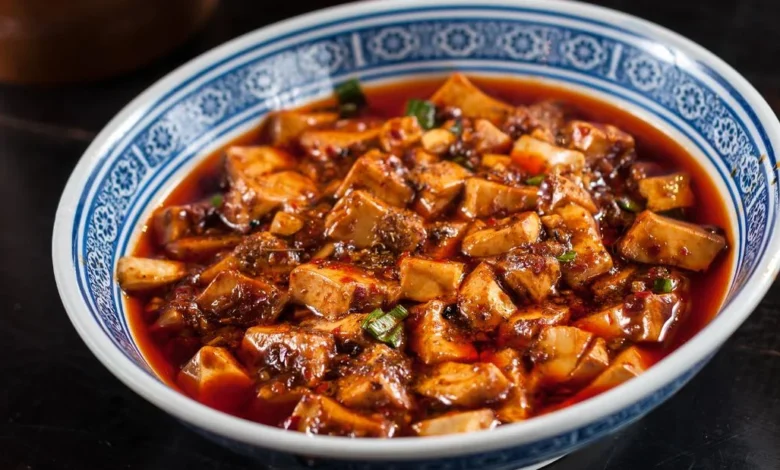
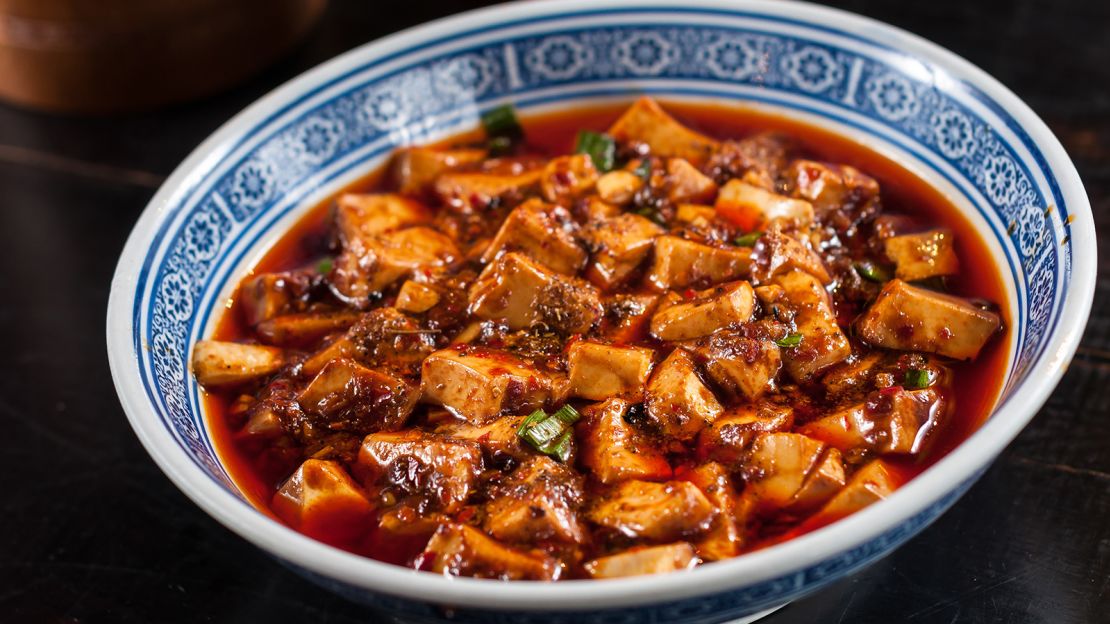
The interior provinces of Sichuan and Hunan offer a starkly different sensory experience, defined by the bold use of chilies and spices. Sichuan cuisine is world-renowned for the "mala" sensation—a combination of "ma" (numbing) from Sichuan peppercorns and "la" (spicy) from dried chilies. Mapo Tofu, a dish dating back to 1862 in Chengdu, embodies this balance. True Mapo Tofu requires Hanyuan peppercorns and fermented broad bean paste (doubanjiang) from the Pidu district. The dish is a symphony of textures: soft tofu, crispy minced meat (beef or pork), and a deep, oily sauce that provides a lingering heat.
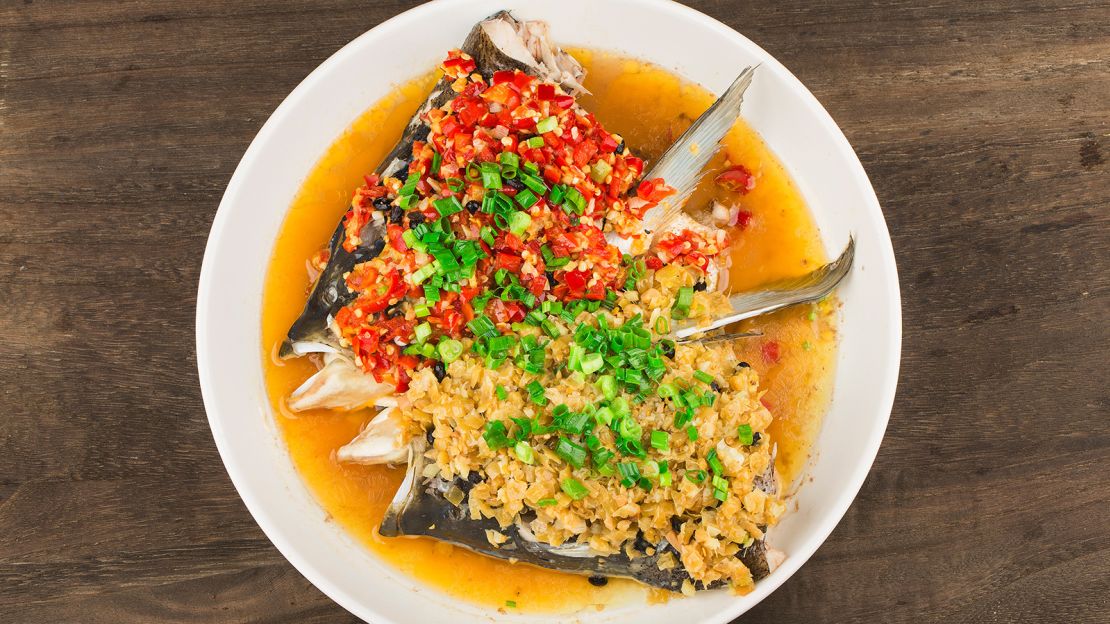
Similarly, Dan Dan Noodles represent the historical ingenuity of Sichuan’s street vendors. Named after the "dan dan" (carrying poles) used by 19th-century hawkers, these noodles are served in a variety of styles across the province. Whether served dry or in a nutty, spicy broth, the inclusion of "rou saozi"—finely chopped pork fried in lard until golden—is considered non-negotiable by traditionalists. Meanwhile, in Hunan (Xiang cuisine), the heat is "gan la" (dry spicy) or "suan la" (sour spicy). The iconic Steamed Fish Head with Chopped Salted Chilies (Duo Jiao Yu Tou) showcases the province’s love for preservation. The "duo jiao" relish, made from chilies fermented with salt, ginger, and baijiu, provides a sharp, salty kick that penetrates the gelatinous meat of the fish head.
The history of Chinese migration and social change is also reflected in its "comfort foods." Crossing-the-Bridge Rice Noodles (Guoqiao Mixian) from Yunnan province come with a poignant legend of a wife who devised a way to keep her scholar-husband’s lunch warm by using a layer of chicken oil as insulation. Today, the dish remains a theatrical experience, with raw ingredients cooked instantly in a bowl of scalding hot broth. In the north, the Jian Bing Guozi—a savory crepe made with mung bean flour and eggs—serves as the quintessential breakfast. Originating in Tianjin and Shandong, this street food has become a global phenomenon, praised for its contrast between the soft crepe and the "guozi" (crispy deep-fried crackers or breadsticks) inside.
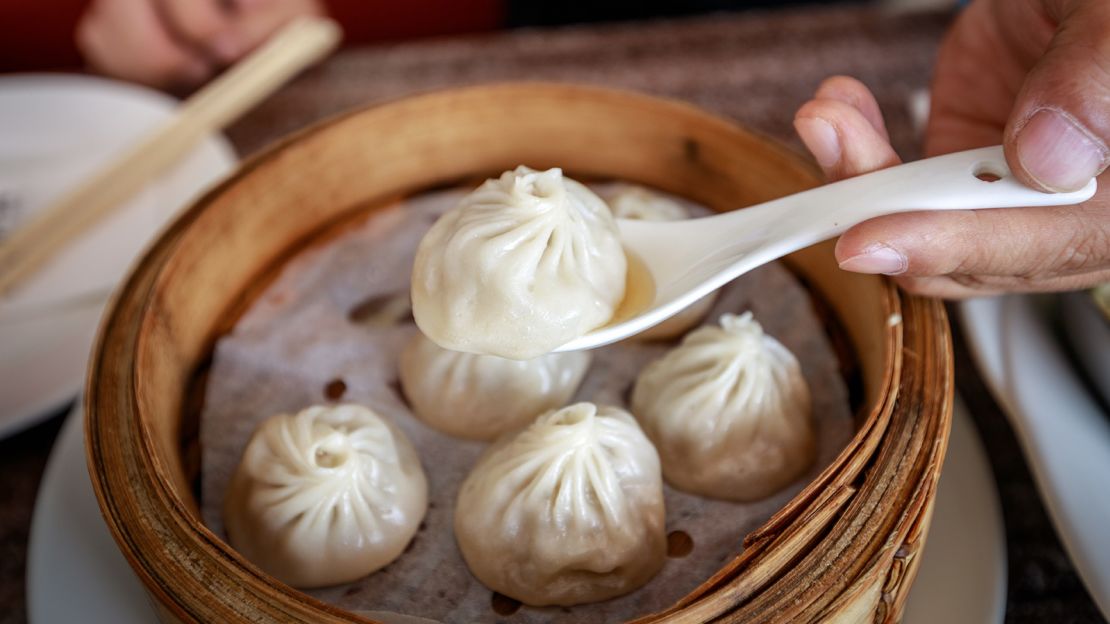
Dumplings (Jiaozi) and buns (Baozi) further illustrate the regional divide between China’s wheat-growing north and rice-growing south. In the north, dumplings are a staple of the Lunar New Year, symbolizing wealth because their shape resembles ancient silver ingots. In the south, the innovations are more technical, such as the Xiaolongbao (soup dumplings) of Shanghai and Wuxi. These delicate parcels contain a pork filling and a solidified gelatin that melts into a rich broth upon steaming. The "Sheng Jian Bao," a pan-fried version, adds a crispy bottom to the experience, offering a different textural play.
The sophistication of Chinese cuisine also extends to its braised and roasted meats. Dongpo Rou, named after the Song Dynasty poet Su Dongpo, consists of a square of pork belly braised in ginger, scallions, soy sauce, and Shaoxing wine until it reaches a "melt-in-the-mouth" consistency. In the Cantonese tradition, Char Siu (barbecue pork) and Wood-Fired Roast Goose represent the pinnacle of "Siu Mei" (roasted meats). The use of maltose gives Char Siu its signature red glaze and sweet-savory balance, while roast goose is prized for its rendered fat and smoky skin, often achieved by burning camphor or lychee wood.
The role of food in health and wellness is a cornerstone of Chinese culture, particularly in the practice of "nourishing" the body. Cantonese herbal soups are meticulously simmered for hours, with ingredients chosen based on Traditional Chinese Medicine (TCM) principles. For instance, winter melon is used to clear "internal heat" during humid summers, while snow fungus is believed to hydrate the lungs in autumn. Congee (rice porridge) serves a similar purpose, acting as a gentle digestive aid that can be elevated with everything from century eggs and pork floss to abalone and scallops.
Finally, the meal often concludes with subtle sweets that emphasize texture over high sugar content. Tangyuan, glutinous rice balls filled with black sesame or peanut paste, are a celebratory staple, particularly during the Lantern Festival. Their round shape symbolizes "tuanyuan" (reunion and wholeness). In Fujian, the use of "binlang yu" (a specific taro variety) to create a silky, lard-infused taro paste offers an earthy, nutty finish to a meal.
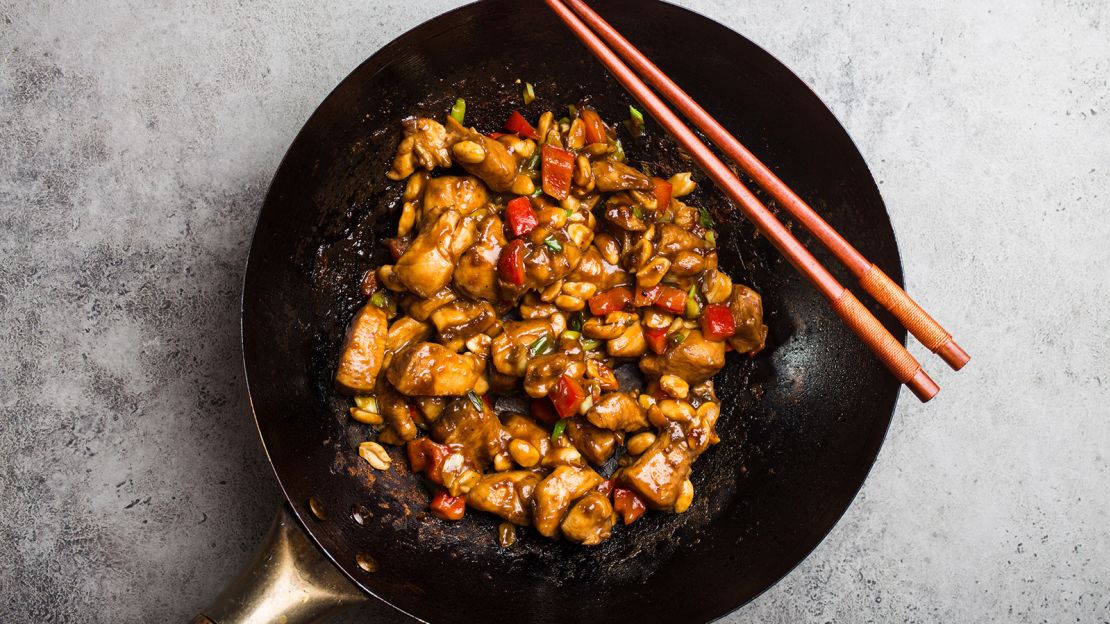
The global impact of these dishes cannot be overstated. From the evolution of Hainanese Chicken Rice (inspired by the Wenchang chicken of Hainan) in Southeast Asia to the ubiquity of Kung Pao Chicken in Western takeout, Chinese culinary traditions have demonstrated a unique ability to adapt while maintaining their core identity. Today, as the "Wok Hei" (breath of the wok) becomes a recognized term among international food critics and the science of the Maillard reaction is used to explain the perfection of fried rice, the world is beginning to appreciate the technical rigor behind these ancient recipes. Chinese cuisine is not merely a collection of dishes; it is a living history, a map of regional pride, and a testament to the enduring power of the communal table. As China continues to urbanize and modernize, these essential eats remain a vital link to its heritage, ensuring that the flavors of the past continue to define the palate of the future.