The Toxic Cost of Plastic Fuel Inside Indonesia’s Hazardous Waste-to-Energy Crisis

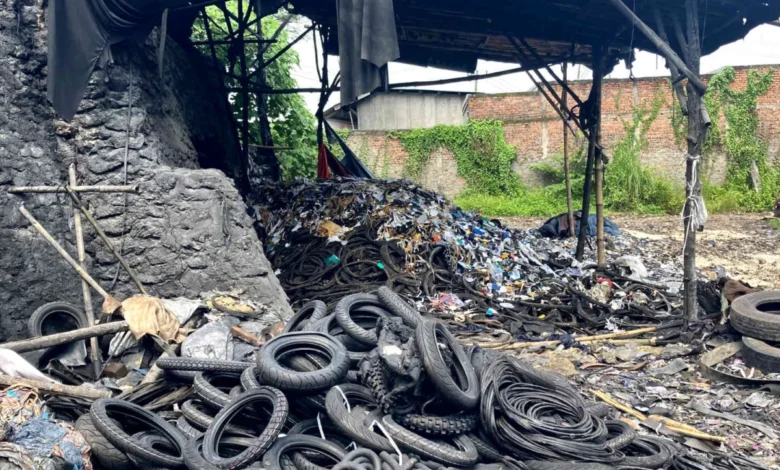
The village of Tropodo, nestled within the lush, green landscapes of East Java, presents a deceptive image of rural tranquility. Narrow streets lined with brightly colored homes and verdant fields suggest a traditional Indonesian lifestyle. However, rising from behind these residences are tall chimneys emitting thick, black plumes of smoke that signal a grim industrial reality. Tropodo has become a primary center for tofu production, but the energy driving this local economy is not wood or gas; it is the burning of plastic waste, much of it sourced from Western nations. This practice, while economically advantageous for local entrepreneurs, has unleashed a public health crisis characterized by toxic air, contaminated food chains, and long-term environmental degradation.
As global plastic production continues to surge, reaching over 400 million tons annually, the question of where this material ends up has become a central focus for environmental researchers and journalists. While a significant portion of plastic waste is destined for landfills or the ocean, approximately 12 percent is burned globally. In sophisticated facilities, this process involves air scrubbers and advanced filtration; however, in the informal "backyard" factories of Indonesia, plastic is incinerated in low-tech furnaces with no pollution controls. This localized burning is a microcosm of a larger global trend where discarded consumer packaging is repurposed as a cheap, albeit deadly, fuel source for industrial processes ranging from food production to cement manufacturing.

The Evolution of Plastic as Industrial Fuel
The transition to plastic fuel in regions like Tropodo was not an overnight occurrence but a response to shifting economic pressures over several decades. In the 1960s and 70s, tofu producers in the region primarily used rice husks or wood to heat the boilers necessary for soybean processing. However, by the 1980s, as plastic waste became more abundant and traditional fuels more expensive, local operators began experimenting with plastic scrap.
Muhammad Gufron, a veteran tofu factory owner in Tropodo, exemplifies this transition. Operating a business named DY—after his daughters’ initials—Gufron processes tons of soybeans daily to supply markets in nearby Surabaya, Indonesia’s second-largest city. Gufron’s family has been in the tofu business for generations. While his parents originally used rice husks, the escalating cost of wood and the collapse of local supply chains forced a return to plastic. For Gufron and his peers, plastic is viewed as an efficient and "cheap" resource. The reality of the supply chain is that much of this plastic arrives as "contamination" in shipments of imported waste paper. While Indonesian regulations theoretically limit plastic contamination in paper imports to 2 percent, environmental groups such as Ecoton (Ecological Observation and Wetlands Conservation) report that actual levels are often significantly higher, providing a steady stream of combustible waste to local villages.
Chemical Exposure and the Contamination of the Food Chain
The environmental impact of burning plastic is not confined to the air; it penetrates the very soil and food that sustains the community. Plastics are complex chemical cocktails; a 2023 study published in Nature revealed that plastic products can contain more than 16,000 different chemicals, at least a quarter of which are known to pose health risks. When these materials are burned at low temperatures in informal kilns, they release a variety of persistent organic pollutants (POPs).

Research conducted by Ecoton and its international partners has highlighted a terrifying level of food chain contamination in Tropodo. By testing the eggs of free-range chickens that forage in soil laden with plastic ash, researchers found some of the highest levels of dioxins ever recorded in Asia. One egg sample from Tropodo contained dioxin levels second only to those found near a former United States military base in Vietnam, which had been contaminated by Agent Orange.
Dioxins are highly toxic compounds that can cause reproductive and developmental problems, damage the immune system, interfere with hormones, and cause cancer. According to health reports, an adult consuming just one egg from a Tropodo chicken would exceed the European Food Safety Authority’s tolerable weekly intake for chlorinated dioxins by 70 times. Furthermore, the eggs were found to contain high concentrations of Polychlorinated Biphenyls (PCBs), which were banned globally in the early 2000s, and Per- and Polyfluoroalkyl Substances (PFAS), often referred to as "forever chemicals."
The Human Toll: From Tropodo to Tamansari
The health consequences for workers and residents are immediate and severe. In the production areas of Tropodo, the air is frequently so thick with smoke that visibility is impaired, and visitors often report immediate headaches and respiratory distress. Workers, many of whom operate without protective gear, are exposed daily to a cocktail of hydrogen cyanide, polycyclic aromatic hydrocarbons, and fine particulate matter (PM2.5). In Tropodo, PM2.5 levels have been measured at over 1,000 micrograms per cubic meter—30 times the acceptable 24-hour standard set by the U.S. Environmental Protection Agency.

The crisis extends beyond tofu production to the informal limestone industry. In Tamansari, located near the capital city of Jakarta, workers operate primitive kilns to produce lime for the construction industry. These kilns are fueled by a variety of hazardous materials, including discarded diapers, scrap tires, and foam plastics. Amin, a worker who has spent 25 years in the Tamansari kilns, earns approximately $6 for a grueling 10-hour shift. He describes a working environment where the smoke makes breathing difficult and physical injuries from falling stone are common. Despite the evident health risks, the lack of alternative employment and the low cost of plastic fuel keep these informal operations running.
The Global Context: Cement and Greenwashing
While the "backyard" burning in Indonesia represents the informal end of the spectrum, the use of plastic as fuel is being institutionalized on a global scale by the cement industry. Multinational corporations and some governments promote "co-processing"—the use of waste-derived fuel in cement kilns—as a sustainable solution to both waste management and carbon emissions. Because cement production is responsible for approximately 8 percent of global CO2 emissions, companies are eager to find alternatives to coal and petroleum coke.
The industry markets "Refuse-Derived Fuel" (RDF)—a mixture of plastic, paper, and wood waste—as a "green" alternative. However, environmental advocates argue that this practice simply creates a new market for plastic waste, incentivizing continued production rather than reduction. While industrial-scale kilns operate at higher temperatures than village furnaces, critics point out that emissions monitoring is often inadequate, particularly in developing nations with lax regulatory enforcement. Furthermore, the incineration of plastic still releases significant amounts of carbon dioxide, undermining the "climate-friendly" narrative promoted by industry lobbyists.

Regulatory Challenges and the Path Forward
The persistence of plastic burning in Indonesia highlights a significant failure in both local and international waste management regulations. The global trade in plastic waste, often disguised as "recycling" or "paper scrap," continues to funnel hazardous materials from wealthy nations to communities ill-equipped to handle them safely. Although the Basel Convention was amended to restrict the trade of unrecyclable and contaminated plastic waste, loopholes and poor enforcement allow the flow to continue.
In Indonesia, the informal nature of these businesses makes them difficult to regulate. Factories like Gufron’s are vital to local economies, providing jobs and affordable food. Without government intervention to provide subsidized clean energy—such as electricity or natural gas—producers are unlikely to abandon cheap plastic fuel. Environmental organizations are calling for a shift in focus: rather than finding new ways to burn plastic, the global community must prioritize the reduction of plastic production and the implementation of truly circular economies.
The situation in Tropodo and Tamansari serves as a stark reminder that the "away" in "throwing things away" is a physical location. For the residents of East Java, "away" is their backyard, their air, and their food. As international negotiators work toward a Global Plastics Treaty, the toxic reality of plastic burning remains an urgent health priority that challenges the convenience of the modern plastic-dependent lifestyle. The true cost of "cheap" plastic fuel is being paid not in dollars, but in the health and longevity of the world’s most vulnerable populations.