Legal Challenge Targets Proposed Hydrocarbon Highway Through Utah’s Nine Mile Canyon Archaeological Treasure

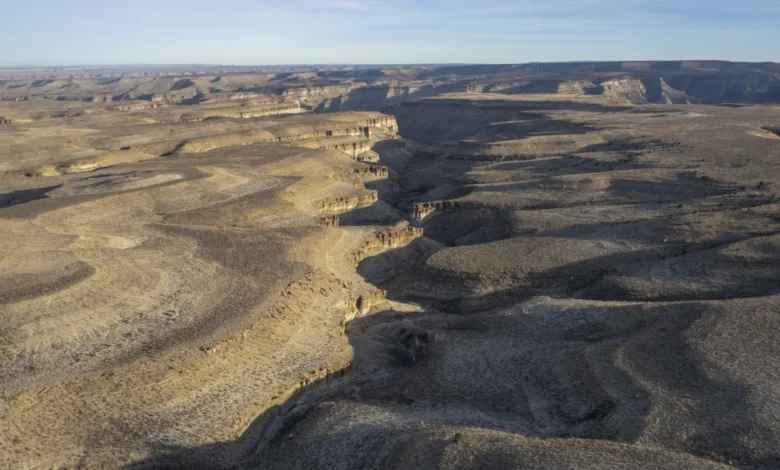
Nine Mile Canyon, a 46-mile stretch of remote wilderness in eastern Utah often heralded as the "world’s longest art gallery," has become the focal point of a contentious legal battle between federal land managers and a coalition of environmental and historic preservation groups. At the heart of the dispute is a project to transform a winding, historic dirt path into a heavy-duty industrial thoroughfare designed to expedite the transport of petroleum products from the Uinta Basin to rail-loading facilities in Carbon County.
In October 2026, the Nine Mile Canyon Coalition, the Southern Utah Wilderness Alliance (SUWA), and the Center for Biological Diversity filed a formal complaint in the U.S. District Court for the District of Utah. The lawsuit challenges the Trump administration’s recent approval of the project, alleging that the Bureau of Land Management (BLM) circumvented essential environmental and cultural protections to greenlight the construction.
A Landscape of Cultural Significance
Nine Mile Canyon is not merely a geographic feature; it is an irreplaceable repository of human history. The canyon contains thousands of ancient petroglyphs, intricate rock art panels crafted by the Fremont and Ute people, and structural remnants of ancestral dwellings. In addition to its Indigenous heritage, the canyon preserves layers of Western history, including inscriptions left by pioneers and early settlers, some written in original axle grease.
The proposed "hydrocarbon highway" focuses on Gate Canyon, a critical tributary to Nine Mile. According to internal BLM documentation dating back to 2015, the project area encompasses 47 distinct historic sites, 43 of which meet the rigorous criteria for inclusion in the National Register of Historic Places. Critics argue that industrializing this corridor—which involves dynamiting, clearing, and paving a high-traffic road—would inflict irreparable damage on these fragile archaeological resources. J. Michael Hansen, president of the Nine Mile Canyon Coalition, characterized the proposal as "constructing a highway through the Louvre Museum," emphasizing that the physical vibrations and dust generated by heavy truck traffic would inevitably degrade the integrity of the rock art panels.
Chronology of the Gate Canyon Conflict
The controversy surrounding the expansion of Wells Draw Road is the culmination of a decade of bureaucratic shifts and regional economic pressure.
- 2015: Duchesne County initiates a request to the BLM to realign and improve the winding dirt road in Gate Canyon to facilitate more direct access for the oil and gas industry.
- 2016: The BLM conducts an initial environmental assessment, receiving nearly 700 public comments, many expressing deep concern over the ecological and cultural impacts of increased traffic. The project stalls shortly thereafter.
- 2023: Following a period of inactivity, the BLM solicits a new round of public comments after reviewing an amended right-of-way proposal covering 2.8 miles of federal land. The proposal is met with significant public opposition and is subsequently scrapped as the agency cites a need for further cultural surveys.
- September 2025: A Duchesne County special service district submits a revised development plan to federal authorities.
- April 13, 2026: The revised development plan is finalized.
- April 28, 2026: The BLM issues a formal approval, declaring that the project will have no significant impact on the environment, wildlife, or cultural heritage of the area.
- October 2026: Environmental groups file suit, alleging violations of the National Environmental Policy Act (NEPA), the National Historic Preservation Act (NHPA), and the Endangered Species Act (ESA).
Industrial Demands and Traffic Projections
The economic motivation for the highway is rooted in the energy production profile of the Uinta Basin. Duchesne County officials have long argued that the existing infrastructure is inadequate for the volume of heavy machinery and oil tankers required for regional extraction. By straightening the switchbacks and widening the road, the project aims to accommodate up to 500 heavy trucks per day.
Proponents, including local county officials, have maintained that the project is a safety necessity, suggesting that the current road is too narrow and treacherous for modern industrial equipment. However, the plaintiffs contend that this "safety" justification masks a broader, long-term commitment to industrializing public lands without adequately weighing the costs to public trust resources. The discrepancy between the county’s infrastructure goals and the federal mandate to protect cultural sites remains the crux of the legislative impasse.
Alleged Violations of Federal Law
The lawsuit filed in October 2026 outlines a comprehensive list of legal grievances. A primary argument centers on the claim that the BLM failed to conduct a proper "hard look" analysis, as required by the National Environmental Policy Act. The plaintiffs argue that the agency approved the project without identifying the specific historical and archaeological resources that would be affected, despite their own 2015 documentation acknowledging the density of sensitive sites.
Furthermore, the complaint invokes the Endangered Species Act. The region provides potential habitat for the Mexican spotted owl, a species protected under federal law. The plaintiffs argue that the construction and the subsequent increase in noise and air pollution will disrupt the habitat and breeding cycles of this threatened bird, yet no recent, comprehensive biological assessment was conducted to address these threats before the April approval.
"This lawsuit challenges the Trump administration’s disgraceful plan to transform a quiet backcountry road into a highway clogged with speeding oil tanker trucks," said Deeda Seed, senior Utah campaigner at the Center for Biological Diversity. "We are going to court to protect this irreplaceable cultural treasure and the animals calling it home."
Implications for Public Land Management
The outcome of this litigation could set a significant precedent for how the federal government balances energy development with cultural preservation. The "hydrocarbon highway" reflects a broader trend in Western land management where local development interests frequently clash with federal oversight responsibilities.
If the court finds in favor of the plaintiffs, the BLM may be forced to rescind its approval and conduct a more exhaustive, multi-year Environmental Impact Statement (EIS), which would include more robust tribal consultation and archaeological site mapping. Conversely, a ruling in favor of the government could embolden administrative efforts to fast-track infrastructure projects on public lands, potentially narrowing the scope of future environmental reviews.
The legal teams for the environmental groups are also highlighting a breakdown in public transparency. According to the complaint, several requests for comment and participation in the NEPA process—submitted after the public learned of the revived proposal in March 2026—were either ignored or denied by the BLM. This lack of engagement has fueled concerns that the agency’s decision-making process was predetermined to favor industrial interests.
Broader Environmental and Economic Context
The Nine Mile Canyon case arrives at a time when the Biden-era protections for public lands are being tested by shifting political priorities. The transition between administrations has brought renewed scrutiny to the "all-of-the-above" energy strategies that prioritize logistical efficiency for the oil and gas sector.
Beyond the immediate legal arguments, the case underscores the vulnerability of the American West’s "cultural landscape." Unlike a single, fixed site like a monument, Nine Mile Canyon is a sprawling, contiguous system where the value lies in the totality of the experience—the silence of the canyon, the integrity of the ecosystem, and the visibility of the rock art. Critics of the road project argue that the industrialization of the canyon’s floor will permanently sever the connection between the modern visitor and the ancient inhabitants, turning a place of quiet reflection into a transit corridor for fossil fuels.
As the case moves through the U.S. District Court, the Department of Interior and the BLM have yet to file a formal response. Until such a response is submitted and the court issues a stay or ruling, the fate of the canyon remains uncertain. The coalition of plaintiffs remains steadfast, asserting that the value of the petroglyphs and the ecological health of the canyon far outweigh the marginal gains in transport efficiency for the Uinta Basin’s oil industry. For now, the "world’s longest art gallery" stands as a silent witness to a modern struggle over the future of the American landscape.