The Radioactive Legacy of Niagara: Families Displaced as Toxic History Reemerges in Upstate New York

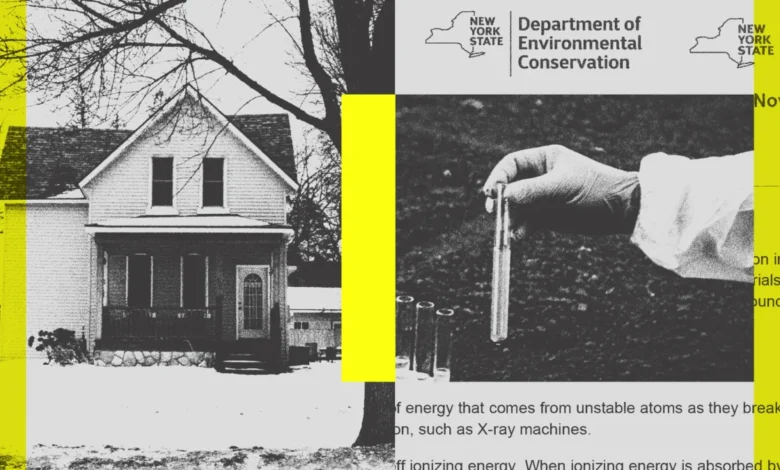
The dream of homeownership has transformed into a living nightmare for residents of Niagara and Erie counties, where a burgeoning environmental crisis has forced families from their properties due to high levels of radioactive contamination. Five years ago, 19-year-old Lexi Hawk purchased what she believed to be her forever home in Niagara, New York, for $129,000. Today, that residence sits empty, a casualty of an industrial past that has returned to haunt the present. Hawk is one of several residents who have been relocated to temporary housing after official assessments revealed radiation levels hundreds of times higher than natural background levels on their properties.
This unfolding situation is not an isolated incident but part of a wider, complex investigation by the New York State Department of Environmental Conservation (DEC) and the Environmental Protection Agency (EPA). As the scope of the contamination becomes clearer, the affected families, often referred to as the "core four" by the local community, are grappling with the loss of their homes, the decline of their property values, and the profound health anxieties associated with long-term exposure to ionizing radiation.
A Legacy of Industrial Contamination
The roots of this crisis stretch back to the mid-20th century, a period marked by rapid industrial expansion and a lack of stringent waste management regulations. The Niagara region served as a critical hub for the Manhattan Project, the top-secret federal program tasked with developing the world’s first nuclear weapons during World War II. The Niagara Falls Storage Site became a primary repository for waste generated by the program.
Beyond the federal Manhattan Project waste, the region has been scarred by decades of industrial "slag." This byproduct—often a glass-like material generated by local chemical and metal processing companies—was frequently repurposed as inexpensive fill for construction projects. Residents discovered that this material, which contains naturally occurring radioactive elements, was used to level roads, fill residential yards, and even reinforce the foundations of suburban homes. The pervasive nature of this contamination has made the Niagara region a focal point for environmental advocacy, with the historical shadow of the 1970s Love Canal disaster—which prompted the creation of the federal Superfund program—serving as a constant, sobering reminder of the area’s toxic inheritance.
Chronology of a Growing Crisis
The current phase of the investigation began in earnest between 2023 and 2025, when both state and federal authorities initiated extensive aerial and road surveys across Niagara and Erie counties. These efforts followed years of pressure from independent researchers and local activists who pointed to discrepancies in historical data.
- 1970s–1980s: Federal agencies conduct initial aerial gamma scans to identify Manhattan Project-related radioactive hotspots. While 100 anomalies are identified, subsequent decades reveal these surveys were incomplete.
- 2016: Independent testing begins to identify additional hotspots that were missed by original government surveys, prompting calls for more rigorous oversight.
- March 2026: Over 100 households receive formal letters from the EPA and DEC, notifying them that radiological surveys have identified hazardous materials on their properties.
- July 2026: A pivotal month where residents, frustrated by a requirement to waive their right to sue in exchange for property testing, hold a joint press conference. The waiver is removed, and comprehensive testing begins on private land.
- September 2026: The first group of families, including Lexi Hawk and the Linkowski family, are moved into temporary housing as initial assessments confirm dangerously high radiation counts.
- November 2026: The EPA reports that over 980 properties have been cleared, while approximately 40 remain under investigation for potential cleanup.
Scientific Data and Health Implications
The radiation levels identified in some residential yards are staggering. In certain instances, equipment has "maxed out" at over one million counts per minute, a massive deviation from the typical background radiation level of five to 60 counts per minute. Beyond surface-level soil contamination, residents are concerned about the presence of thoron and radon gases. These radioactive gases are byproducts of the decay of materials used in residential construction and can accumulate in living spaces, posing a direct inhalation risk.
The health risks associated with ionizing radiation are well-documented by the EPA and the Nuclear Regulatory Commission. Long-term exposure is linked to a higher incidence of various cancers, including leukemia, breast cancer, lung cancer, and multiple myeloma, as well as chronic cardiovascular conditions. For many residents, the health crisis feels personal and generational. Families have reported instances of rare cancers, autoimmune disorders, and unexplained neurological issues that they fear are tied to their years of living atop radioactive fill.
Official Responses and Policy Hurdles
The government’s response has been a subject of significant tension. The EPA maintains that the current assessment is "unprecedented in the United States" and that their primary objective is to ensure public safety. However, the agency has stopped short of declaring a public health emergency, a stance that has drawn criticism from those currently displaced.
Governor Kathy Hochul’s administration has noted that while the health and safety of these families are a priority, legal hurdles complicate the remediation process. Specifically, New York’s state-level Superfund program cannot be invoked for sites contaminated solely with radioactive material, as state law requires such cases to be handled by federal authorities. This regulatory gap has left families in a state of limbo, as they push for the federal government to assume control and provide a pathway for permanent relocation and financial restitution.
In August 2026, State Senate Minority Leader Rob Ortt introduced legislation aimed at expanding the state’s Superfund criteria to include radioactive waste. If passed, this would mark a significant shift in how New York addresses legacy contamination, potentially accelerating cleanup efforts and establishing a framework for accountability.
Broader Implications: Accountability and Future Monitoring
The situation in Niagara serves as a cautionary tale regarding the long-term consequences of industrial negligence. As the "core four" families and other affected residents continue to advocate for their rights, their demands have become clear: they are seeking not just temporary housing, but permanent solutions that include fair property buyouts and long-term medical monitoring for the entire community.
The implications for the region are vast. Property values in affected neighborhoods have plummeted, and the stigma of contamination makes it difficult for residents to sell their homes or plan for their future. Legal experts, such as environmental attorney Christen Civiletto, argue that this is a moment for systemic accountability. They contend that the government’s reliance on historical data that was known to be incomplete, coupled with the slow pace of current remediation, has compounded the trauma for the families involved.
As the scientific and bureaucratic processes grind on, the residents of Niagara are left to reconcile with the reality that their homes—once symbols of stability and safety—are now sites of an ongoing environmental battle. The chant of a toddler, "Radiation! Radiation!," captured in a video call, serves as a haunting reminder that the decisions made in the boardrooms and government offices of the past have a profound, lasting impact on the families of today. Whether this current crisis leads to a comprehensive federal cleanup or remains a fragmented, localized struggle, the residents of Niagara have made one thing certain: they will continue to demand transparency and justice for a community that feels it has been sacrificed for the sake of industrial convenience.