Bong Joon Ho returns to his roots as The Host receives a 4K restoration for its 20th anniversary

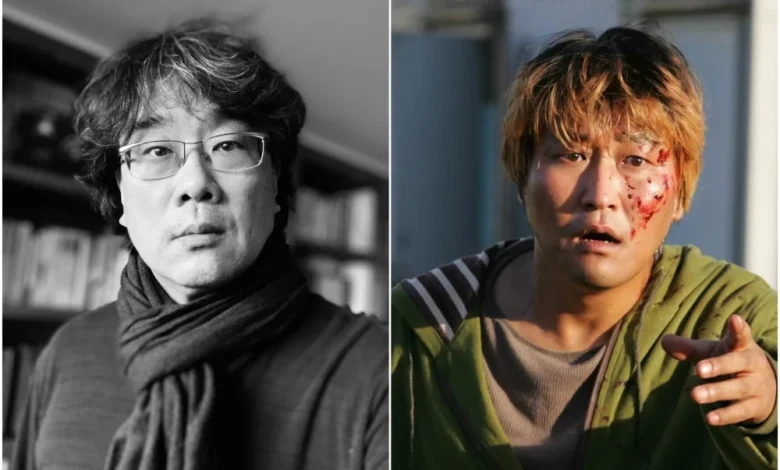
Two decades after it first terrorized audiences and redefined the creature-feature genre, Bong Joon Ho’s The Host is returning to theaters in a pristine 4K restoration. The film, which originally premiered at the 2006 Cannes Film Festival, remains a landmark achievement in South Korean cinema. Magnolia Pictures has scheduled a nationwide theatrical release for November 20, providing a new generation of filmgoers the opportunity to experience the monster movie on the big screen. To mark the occasion, Bong will participate in an exclusive, two-night conversation series with acclaimed British filmmaker Edgar Wright, scheduled for November 21 and 23.
A Chronology of a Modern Classic
When The Host was first released in 2006, the South Korean film industry was in a period of rapid international expansion. Bong Joon Ho, already established as a visionary director with Memories of Murder (2003), sought to blend the creature-feature tropes of Hollywood with a deeply personal, localized critique of Korean social structures.
The production was a technical marvel for its time. Collaborating with New Zealand’s Weta Workshop for creature design and The Orphanage for visual effects, Bong created a monster that was not merely a threat, but a physical manifestation of environmental and political decay. The film’s narrative—following the dysfunctional Park family as they attempt to rescue their daughter, Hyun-seo (played by Ko A-sung), from a mutated creature lurking in the Han River—became a massive commercial success, breaking domestic box office records and securing its status as one of the highest-grossing films in South Korean history at that time.
The Technical Journey of Restoration
The current restoration project was driven by a desire to return to the original aesthetic vision Bong shared with cinematographer Kim Hyung-ku. The film was originally shot on Fuji film stock, which provided a specific color palette and grain structure that digital intermediate processes of the mid-2000s sometimes struggled to preserve.
"The goal was to recreate the experience of watching a fresh 35mm print, as the film was shown when it premiered at Cannes in 2006," Bong stated in an interview with Variety. This process presented a unique challenge: the visual effects, rendered in the mid-2000s, were not designed for the pixel density of 4K resolution. The restoration team had to upscale these sequences meticulously to ensure that the creature remained seamlessly integrated with the live-action footage.
Bong noted that while he could identify minor imperfections in the digital effects—a byproduct of the technology available nearly twenty years ago—he chose to preserve them. Comparing the film to a personal journal, the director expressed a commitment to the authenticity of his past work, resisting the urge to "tweak" or "improve" the footage in the manner of directors like Ridley Scott, who famously altered scenes in subsequent releases of Alien. This philosophy underscores the 4K release as an archival preservation rather than a revisionist edit.
The Intersection of Satire and Reality
While The Host functions as a high-stakes thriller, its enduring relevance is largely attributed to its sharp political satire. Bong wrote the script during the SARS outbreak of the early 2000s, imbuing the narrative with a deep-seated distrust of official, state-sanctioned misinformation.
A pivotal scene in the film, where U.S. lawmakers admit that a purported viral threat is a fabrication, served as a direct allegory for the geopolitical climate of the era, specifically the arguments used to justify the Iraq War. In the decades since, the global landscape has shifted, yet the themes of bureaucratic failure and the manipulation of public fear remain starkly relevant.
"Now we’re in the thick of the Iran War and we’re still in the midst of an ongoing war, and whether it’s good history or bad history, it seems like we as a community, as a whole, are repeating our mistakes," Bong reflected. "Although the film has stayed the same, the history is repeating itself and making the film relevant again."
The film’s portrayal of a government sealing off a zone under the guise of public health, only to have that power abused, resonates with modern audiences who have experienced the complex challenges of the COVID-19 pandemic. By positioning the monster as a catalyst for revealing the rot within human systems, Bong ensures that the film serves as both a genre exercise and a sociological document.
Sound Design and Legacy
The sonic landscape of The Host remains one of its most distinct features. The creature’s unsettling vocalizations were a complex blend of sea lion recordings and the processed vocal performance of actor Oh Dal-su. Bong’s long-standing collaboration with the Seoul-based sound facility Livetone has been crucial to this legacy. The original sound library remains intact, and while discussions regarding a potential upgrade to Dolby Atmos are ongoing for the North American theatrical run, the focus remains on honoring the original sound mix.
Bong’s career trajectory since The Host has been meteoric, culminating in the historic 2019 Palme d’Or win and the subsequent four Academy Awards for Parasite, including Best Picture. However, he maintains that the 4K restoration of his older work is a unique endeavor. Since his films from Okja (2017) onwards were shot natively in 4K and finished with modern sound standards, he sees little need for retrospective remastering of his more recent catalog.
Future Directions
Looking toward the future, Bong has confirmed that his upcoming projects will signal a return to the genre foundations he helped establish. Following his work on the animated feature Ally, the director intends to focus on a slate of crime and horror films.
"I want to return home," Bong remarked, suggesting a desire to revisit the gritty, atmosphere-heavy storytelling that defined his early career. This shift is expected to be closely watched by the industry, as Bong has proven himself to be a master of balancing populist genre tropes with profound, often uncomfortable, examinations of class, power, and human fallibility.
Analytical Implications
The re-release of The Host serves as more than a nostalgic exercise. It highlights the shifting standards of cinematic preservation in the digital age. As films move further from their original analog origins, the ability to restore them to their intended "look" is becoming a critical component of cultural history.
From a commercial perspective, the decision by Magnolia Pictures to return the film to theaters indicates a sustained demand for auteur-driven genre cinema. The inclusion of the Edgar Wright conversation series also underscores the role of film culture and criticism in maintaining the longevity of cinematic works. By framing the 20th anniversary as both a technical achievement and a thematic reflection, the release positions The Host not as a relic of the past, but as a living text that continues to comment on the state of the world today.
As audiences prepare to revisit the Han River monster this November, the context provided by Bong’s own reflections suggests that the film’s power lies in its unflinching look at reality. By refusing to soften his early work or hide its rougher edges, Bong allows the film to stand as an honest record of his growth, ensuring that the legacy of his 2006 masterpiece remains as potent as it was upon its debut.
Related posts: