Seth MacFarlane Honored at Newport Beach TV Fest, Discusses Enduring Legacy and Future of His Iconic Shows

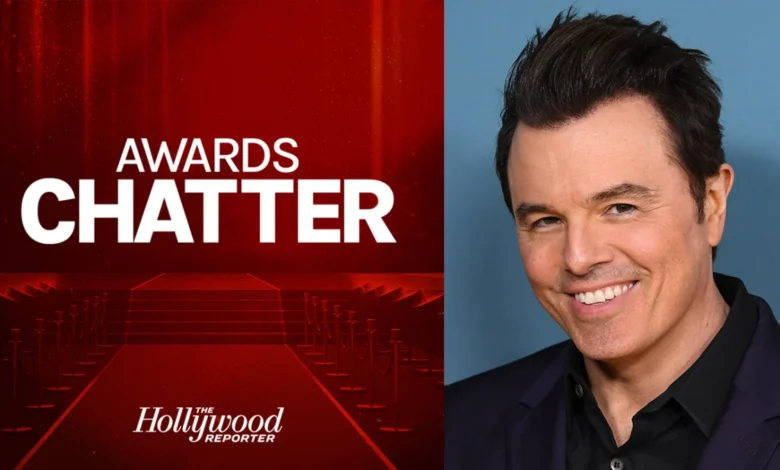
Seth MacFarlane, a titan of contemporary Hollywood known for his prolific work across television, film, and music, was recently honored with the Maverick Award at the Newport Beach TV Fest. The award ceremony, which also served as the backdrop for an in-depth interview on The Hollywood Reporter‘s Awards Chatter podcast, provided a platform for MacFarlane to reflect on his nearly three-decade career and offer candid insights into the longevity of his most beloved projects, including Family Guy, American Dad, and the Ted franchise.
MacFarlane’s journey in the entertainment industry began at an exceptionally young age. At just 24, he achieved a groundbreaking milestone by becoming the youngest executive producer in television history with the debut of Family Guy in 1999. This animated sitcom, which has since become a cultural touchstone, is currently in its remarkable 24th season. Despite stepping back from day-to-day involvement, MacFarlane continues to lend his distinctive voice to key characters such as Peter Griffin, Stewie Griffin, and Brian Griffin.
His creative output extends far beyond Family Guy. American Dad, another animated series co-created with Mike Barker and Matt Weitzman for Fox, is now in its 22nd season. More recently, MacFarlane’s Fuzzy Door Productions has expanded its footprint with shows like The ‘Burbs, which garnered positive reviews in its inaugural season on Peacock, and the television series adaptation of his successful Ted films. The Ted series, which premiered on Peacock, recently concluded its second season. MacFarlane not only created the show but also penned multiple episodes and served as an executive producer and director on every installment, while also providing the voice and motion capture for the titular teddy bear.
The Enduring Influence of Animation Pioneers
During his conversation at the Newport Beach TV Fest, MacFarlane emphasized the profound impact of The Simpsons on his career trajectory. He recalled how the groundbreaking animated sitcom, which first aired in 1989, revolutionized the landscape of television comedy.
" The Simpsons was a show that made us all laugh out loud," MacFarlane stated, reflecting on the formative years of his creative development. "Prior to that, there were animated shows in which you could recognize comedy that was good comedy – like The Flintstones and Looney Tunes and whatnot – but you weren’t necessarily laughing out loud. You could acknowledge it, but it wasn’t really hitting you in the gut. Then The Simpsons came along and, at least for our generation, just changed everything. Suddenly we’re all sitting there howling with laughter. It was like nothing we’d seen in our lives. That was 100 percent an influence that shifted my trajectory from the Disney path toward the path of doing something more primetime oriented."
This sentiment underscores how The Simpsons not only demonstrated the potential for adult-oriented humor in animation but also paved the way for a new generation of creators like MacFarlane to explore more irreverent and sophisticated comedic territories. The success of The Simpsons proved that animation could resonate with a broad audience, not just children, and critically, that it could be a vehicle for sharp social commentary and laugh-out-loud humor.
Navigating the Complexities of the Emmy Awards
MacFarlane also voiced his candid opinions on the Primetime Emmy Awards, particularly concerning the recognition, or lack thereof, for his animated work. He expressed bewilderment over Family Guy‘s nomination for Outstanding Comedy Series in 2009, a historical moment as it was the first animated program to receive such a nomination since The Flintstones nearly 50 years prior.
"The Emmys are so up fucked up," MacFarlane declared, articulating a sentiment shared by many in the animation community. "So much of it is nonsense. First of all, it’s nonsense that we would get nominated for best comedy when The Simpsons had not gotten nominated ever. That’s weird. It’s also weird that Family Guy never won best animated comedy in the 25 years. There’s a lot of things that are weird about the Emmys that make me think, ‘Is anybody watching anything, or is this people just checking boxes while they’re fucking shaving?’ And you start to not care a little bit, which is a healthy place to be."
He further elaborated on the 2009 nomination, noting the lack of active campaigning and the surprise that accompanied the recognition. "What was weird about that [2009 nomination], too, is we weren’t even campaigning for it. I don’t even know if that was our best year. I just suddenly woke up one morning and we got nominated for best comedy. I don’t understand it." This statement highlights a perceived disconnect between critical accolades and the actual reception and impact of animated series, suggesting that traditional awards bodies may not always fully grasp or appreciate the nuances of the genre.
The history of animation at the Emmys is indeed complex. While shows like The Simpsons and South Park have garnered numerous nominations and wins in the Outstanding Animated Program category, achieving a nomination for the top comedy series prize has been exceptionally rare. This has often led to discussions about whether animated shows are consistently undervalued by voters who may still associate the medium primarily with children’s programming.
The Genesis and Future of the Ted Franchise
The conversation also delved into the origins of the Ted television series. MacFarlane revealed that the idea was not his initial concept but rather a proposal brought to him by Susan Rovner, who was leading NBC at the time.
"I got the call from Susan Rovner, who was running NBC at the time, asking me, ‘Would you want to do a Ted TV series?’" MacFarlane explained. "So it wasn’t my idea to do this, it was something that they came to me with. Based on the size of the overall deal that they were giving me at that point, I figured I’d better do whatever the hell they want. So it wasn’t like I was itching to do it, but it was interesting."
A significant factor in MacFarlane’s willingness to pursue the project was the commitment to maintaining the visual quality of the beloved film character. He pressed NBC on their willingness to invest the necessary resources for the CGI. "I said, ‘Is this something that you guys could commit to doing with the same level of quality as the films? I’m not talking about car chases and whatnot, but the bear himself, will you be willing to put the same resources into this, so it doesn’t look like the diet soda version of Ted?’ For a half-hour sitcom, it was like $10 million an episode because of the bear, because of all the CGI. And they said, ‘Yeah, we’re willing to do that.’ And I was like, ‘Great, then let’s give it a shot.’"
This emphasis on production value is crucial for the believability of a CGI character like Ted. The substantial per-episode budget reflects the technical demands of integrating a lifelike animated character into live-action scenes seamlessly.
Looking ahead, MacFarlane expressed a pragmatic view on the future of Ted. While a third season is not currently in active development, he suggested a potential avenue for continuing the franchise. "I mean, the bear is CGI, so he can go as long as there’s an appetite for him. It’s up to Universal. It’s up to Peacock. A third season in the near future – I don’t know that there are any plans for that. I’ve thrown the idea out that maybe we do a direct-to-Peacock Ted feature with this cast. That might be something that’s kind of fun. It was what, 10 years between the last Ted movie and the first episode of this series, and people were still there for it. He’s a character we can bring back at any time.” This indicates a flexibility in approach, with the possibility of a film serving as a more concentrated, event-driven return for the character.
The Unending Appeal of Family Guy and the Dream of a Movie
The enduring popularity of Family Guy remains a source of surprise and satisfaction for MacFarlane. He remains committed to the show as long as there is audience demand. "I think it can go as long as there’s an appetite for it. I’m consistently shocked at the numbers for the show, that they continue to be very, very high. I don’t know why that is. It’s been so long. It’s been a quarter of a century that this thing has been on the air!"
The prospect of a Family Guy feature film also remains a persistent consideration for MacFarlane. He has a clear vision for such a project and views it as a potential strategic move in his career. "The Family Guy feature film is something that’s still always in the back of my head. I’ve always had a pretty clear idea of what it’s going to be. It’s that arrow in the quiver that I keep for when everything else goes to shit."
When pressed about whether this contingency plan could be enacted even while the series remains on television, MacFarlane affirmed the possibility. "Oh, yeah. I always kind of assume that if I have a really dismal professional failure, like I produce a movie or a show that just fails so badly, the only thing that can cleanse the palette of the audience is the Family Guy movie. That’s when I’ll do it." This strategic approach suggests that a Family Guy movie would be reserved for a moment when a significant reset or a powerful artistic statement is needed, leveraging the immense brand recognition and established fanbase to achieve a decisive impact.
The career of Seth MacFarlane, marked by innovation, humor, and a remarkable ability to connect with audiences across multiple platforms, continues to evolve. His recent accolades at the Newport Beach TV Fest serve as a testament to his significant contributions to the entertainment industry, while his forward-looking perspectives on his existing projects highlight a seasoned creator still brimming with ideas and a keen understanding of the media landscape.