Beyond Instinct: New Study Reveals Chimpanzees Learn Social Sound Conventions From Adult Role Models

For decades, the prevailing scientific consensus regarding primate communication drew a hard line between human language and animal vocalizations. While human speech was understood to be culturally transmitted—shaped by regional lexicons, social norms, and interactive learning—non-human primate vocalizations were widely categorized as fixed, instinctive, and biologically hardwired. A chimpanzee, scientists assumed, screamed, panted, or grunted because its biology dictated it, much like a reflex.
However, groundbreaking research published today in the journal Proceedings of the National Academy of Sciences (PNAS) challenges this long-held paradigm. By examining how different communities of chimpanzees (Pan troglodytes) use a specific unvoiced vocalization known as the “raspberry,” researchers have discovered that these primates learn not only how to produce these sounds from adult peers, but also when, why, and in what social contexts to deploy them. The findings suggest a profound evolutionary continuity between primate vocal communication and human linguistic conventions, bridging a gap that scientists once thought was insurmountable.
The Anatomy of the Primate "Raspberry"
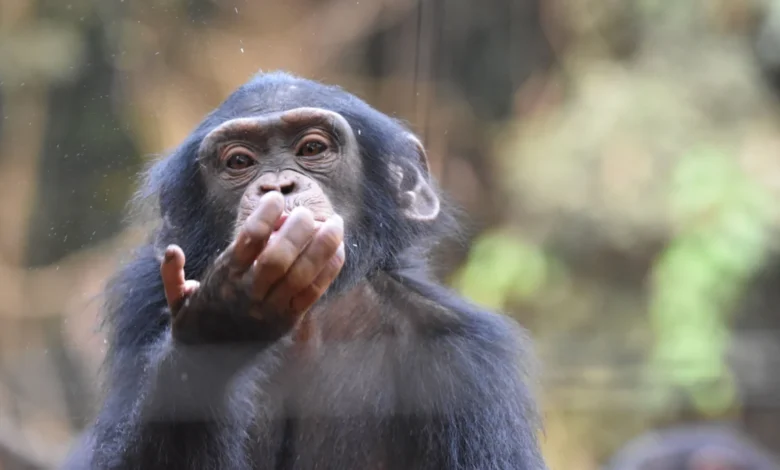
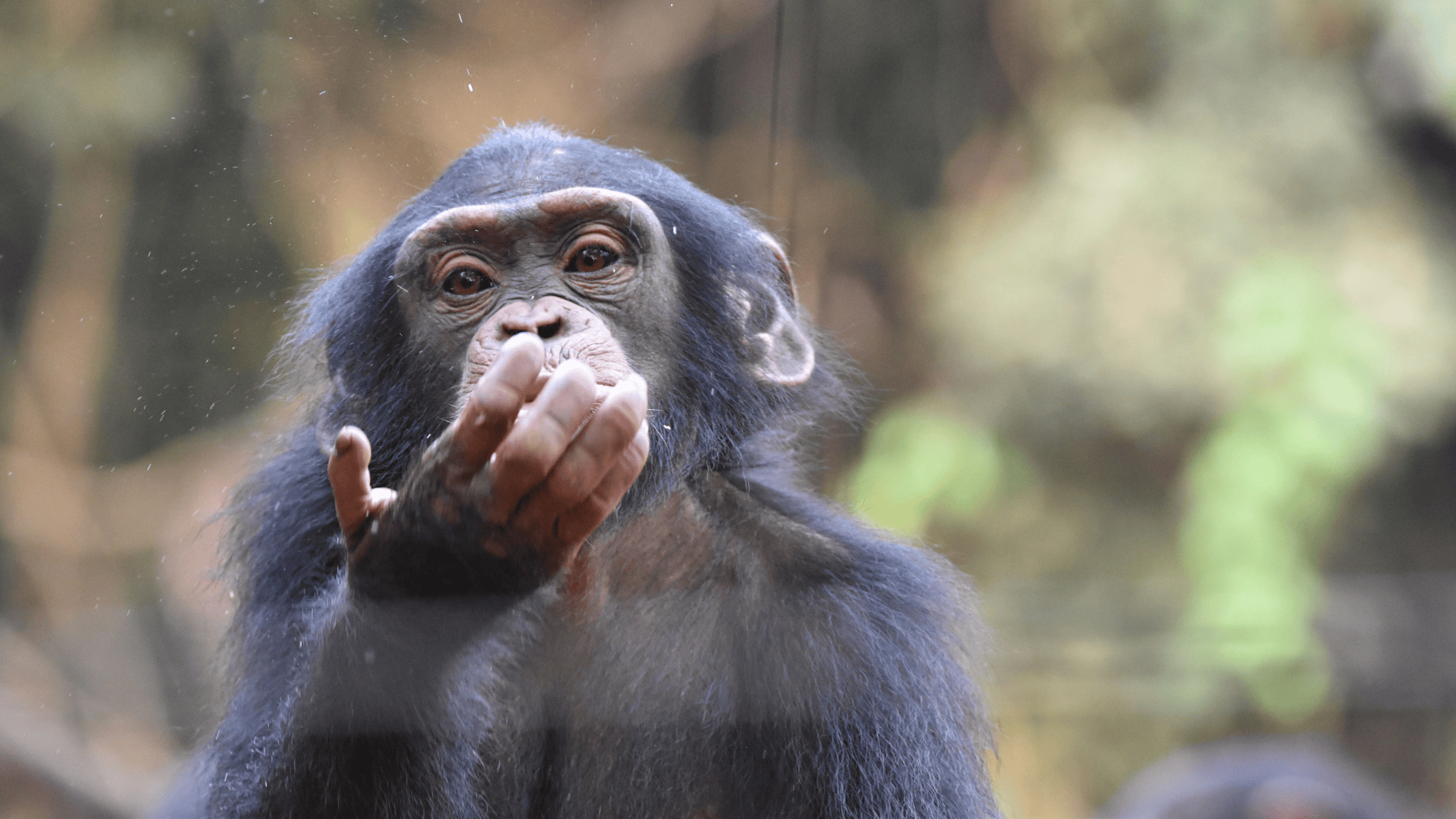
The focal point of the new study is a distinctive, unvoiced vocalization colloquially termed the “raspberry.” To produce it, a chimpanzee presses its lips together and blows air through them, creating a sound remarkably similar to the gesture humans make to express derision or playfulness.
To investigate the origins and flexibility of this call, an international team of researchers—including cognitive scientists, philosophers of mind, and behavioral ecologists—conducted a comprehensive observational study involving 91 chimpanzees ranging from newborns to 55 years old. The subjects belonged to two distinct environmental backgrounds: wild chimpanzees spanning four established communities in Taï National Park, Ivory Coast, and a cohort of young, orphaned, and peer-raised chimpanzees housed at the Tacugama Chimpanzee Sanctuary in Sierra Leone.
By analyzing the usage patterns of the raspberry across these disparate groups, the research team uncovered striking behavioral divergences that could not be explained by genetics or biology alone.
Divergent Uses Across Communities
In the wild populations of Taï National Park, the application of the raspberry call was remarkably uniform and specialized. Across all four communities, adult and adolescent chimpanzees used the raspberry almost exclusively during social grooming sessions. For these wild primates, the sound functioned as a clear, context-specific tool tied directly to the meticulous process of mutual grooming.
In stark contrast, the juvenile and adolescent chimpanzees residing at the Tacugama Chimpanzee Sanctuary exhibited a much more erratic and flexible use of the vocalization. Deprived of stable, multi-generational family structures in their early lives, these orphaned primates deployed the raspberry across a wide and disorganized array of social situations, ranging from play and feeding conflicts to general agitation.
If the raspberry call were entirely instinctual—hardwired into the chimpanzee brain at birth—both the wild-raised and sanctuary-raised cohorts should have exhibited identical usage patterns regardless of their geographic location or upbringing. The distinct variance in how the sound was utilized pointed clearly toward social learning. Chimpanzees, the data suggested, do not automatically know the appropriate social context for a given sound; they must acquire this knowledge by observing experienced members of their community.
The Role of Adult Mentorship and Social Conventions
To test the hypothesis that social transmission dictates call usage, the researchers observed what happened when a new adult chimpanzee—functioning as a role model—was introduced to one of the groups at the Tacugama sanctuary.
Over time, as the young, unstructured chimpanzees interacted with the newly introduced adult, their communicative behavior shifted. Gradually, the juveniles began to align their vocal habits with those of the newcomer, using the raspberry more consistently and restricting its deployment to match the structured patterns observed in wild populations.
This behavioral convergence demonstrates the formation of a "signal convention"—an unwritten, socially agreed-upon rule regarding how a specific signal should be used within a group. Richard Moore, a philosopher of mind, language, and psychology at the University of Warwick and a co-author of the study, emphasized the profound philosophical and evolutionary implications of this discovery.
“In everyday communication, we use the words that we do only because our peers do too,” Moore noted in a statement. “It’s communal practice that fixes their meaning, rather than features of the words themselves. The discovery that this is true not just for natural languages but also some chimpanzee calls means there’s more continuity between chimpanzees’ vocal learning and our own than we previously suspected.”
Broader Implications for Evolutionary Linguistics
The study represents a major methodological and conceptual shift in primatology. While previous research has demonstrated that chimpanzees can occasionally learn new behavioral traditions—such as tool-use techniques or nut-cracking methods—evidence of vocal learning regarding the meaning and context of sounds has remained exceptionally rare.
Biologists have long known that chimpanzees possess a limited capacity to invent entirely new vocal sounds. Their genetic vocal repertoire is relatively constrained compared to human capabilities. However, this new research indicates that while they may struggle to invent novel sounds, chimpanzees possess a robust cognitive flexibility that allows them to reconfigure and negotiate the pragmatic application of sounds they already know how to make. They can learn the social value and proper deployment of a vocalization through cultural transmission.
Antoine Valet, a cognitive scientist at the Institute of Cognitive Sciences (CNRS) in France and a co-author of the study, noted that these findings fundamentally alter our understanding of animal communication repertoires.

“Even aspects of chimpanzee vocal communication that seemed fixed and unlearned may be shaped by learning,” Valet said, “suggesting that there is still much to discover about their vocal repertoire.”
Hypotheses on the Evolutionary Origins of the Raspberry
While the study confirms that the usage of the raspberry is a socially learned convention, researchers are still investigating why this specific vocalization became tied to grooming in the first place.
Catherine Crockford, a behavioral ecologist at the Max Planck Institute for Evolutionary Anthropology and the CNRS, offered a functional hypothesis regarding its physical origins. During grooming bouts, chimpanzees frequently use their lips and teeth to extract parasites, dirt, and dead skin from another individual’s fur. Crockford suggests that the physical mechanics of using the lips for grooming may naturally predispose the animal to produce a labial vocalization.
“Whilst grooming, as chimpanzees use their lips to extract parasites from another’s fur, it may be easier to generate a vocalisation that uses similar lip movements, a call that is known to prolong grooming bouts,” Crockford explained.
She added that while different communities may have independently discovered the utility of pairing the raspberry sound with grooming, the mechanism by which the call becomes an established standard within a group remains fundamentally social. “Communities may have found this useful independently, but that wouldn’t change the fact that the call is a convention. We need more research to test it.”
Future Directions and Scientific Impact
The publication of this research opens new avenues for exploring animal cognition, culture, and linguistics. As primatologists continue to study both wild and sanctuary-housed populations, the focus is likely to shift toward identifying other potential vocal conventions that may be culturally transmitted across generations.
By dismantling the absolute dichotomy between instinctive animal noise and learned human speech, the PNAS study forces a reevaluation of how culture operates in the animal kingdom. It suggests that the roots of human linguistic conventions—our shared agreements on what words mean and when it is appropriate to use them—extend deep into our evolutionary past, shared with our closest living primate relatives.
Related posts: