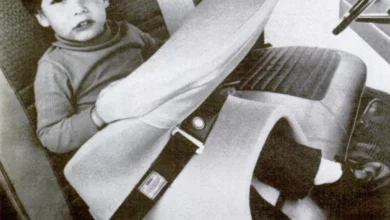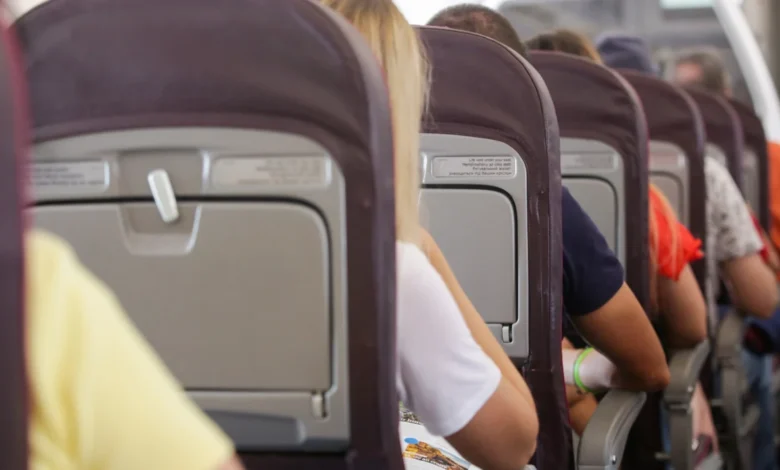
It’s a familiar and increasingly uncomfortable reality for many air travelers: the shrinking expanse of airplane seats. The sensation of being packed into an ever-diminishing space, with knees pressed against the seat in front and elbows vying for precious armrest territory, is no longer a figment of imagination. This widespread discomfort has a specific origin point, a pivotal legislative act nearly half a century ago that fundamentally reshaped the airline industry and, consequently, the passenger experience.
The journey from the relatively spacious cabins of aviation’s past to today’s tightly configured seating arrangements is a complex narrative driven by deregulation, economic pressures, and evolving passenger demographics. This transformation, while leading to more accessible air travel for a broader population, has come at the direct expense of personal space and comfort for many.
The Airline Deregulation Act of 1978 marked a watershed moment. Prior to this legislation, the U.S. airline industry was a heavily regulated sector. Government bodies dictated not only which airlines could operate on specific routes but also set the fares passengers would pay. In this era, flying was often perceived as a luxury, characterized by higher ticket prices but a commensurate level of service that included more generous seating, complimentary meals, and included checked baggage. The prevailing philosophy viewed air travel as a public utility, prioritizing passenger experience alongside operational efficiency.
However, the intent behind the Airline Deregulation Act was to foster competition, spur innovation, and ultimately lower ticket prices. The theory was that by removing government oversight on routes and pricing, new airlines would emerge, driving down costs through market forces. In the immediate aftermath, this objective was largely met. Air travel became more affordable and accessible to a wider segment of the population, transforming it from an exclusive mode of transport to a more commonplace option for vacationers and business travelers alike.
This increased accessibility, however, set the stage for a gradual, yet significant, recalibration of airline economics. As more people could afford to fly, airlines faced the challenge of accommodating a larger volume of passengers without necessarily increasing the number of aircraft in their fleets. The most straightforward solution to maximizing revenue per flight became apparent: fitting more seats into the existing cabin space.
The Shrinking Footprint: A Statistical Overview
The evidence of this shift is quantifiable and stark. According to William McGee, a senior fellow for the American Economic Liberties Project who has extensively studied airline seating trends, major U.S. carriers like American, Delta, Southwest, and United have seen a significant reduction in both legroom and seat width over the past several decades. McGee’s research indicates a loss of approximately two to five inches of legroom since the 1980s. Simultaneously, seat width has also decreased, by an average of about two inches.
Today, the average legroom on these major U.S. airlines hovers around 31 inches. This figure stands in contrast to the late 1990s, when passengers could expect closer to 35 inches of legroom – a difference comparable to, or even exceeding, the legroom offered in some premium economy sections today. The situation is often more acute on budget airlines, where legroom can be as little as 28 inches, pushing the boundaries of passenger comfort and personal space.
A Double Whammy: Shrinking Seats and Growing Passengers
Compounding the issue of reduced seating dimensions is the concurrent trend of increasing passenger size. Data from the Centers for Disease Control and Prevention (CDC) reveals that the average weight of an adult in the United States has increased by approximately 15 pounds over the last three decades. While average height increases have plateaued more recently, the overall growth in passenger dimensions means that the shrinking seats are being occupied by larger individuals, exacerbating the feeling of cramped conditions. This convergence of shrinking personal space and growing passenger volume creates a particularly challenging environment for air travel.
Paul Hudson, president of the passenger advocacy group Flyers Rights, has noted that this trend is unusual when compared to other public seating environments. He observes that seats in movie theaters, cars, and other public venues have generally either maintained or increased in size over time to accommodate evolving user needs. Airplane seats, however, have moved in the opposite direction, prioritizing density over individual comfort.
Regulatory Gaps and Safety Concerns
Perhaps one of the most surprising aspects of this issue is the current regulatory landscape. The Federal Aviation Administration (FAA) does not currently mandate minimum seat dimensions or spacing requirements for commercial aircraft. While the FAA possesses the authority to establish such regulations if it determines that smaller seats pose a safety risk, the agency has thus far concluded that no new rules are necessary from a passenger safety perspective.
This lack of federal regulation has drawn criticism from passenger advocates who argue that the diminished space is not merely an issue of comfort but could have significant implications for passenger health and safety, particularly during emergency situations.
Health Implications in Constrained Spaces
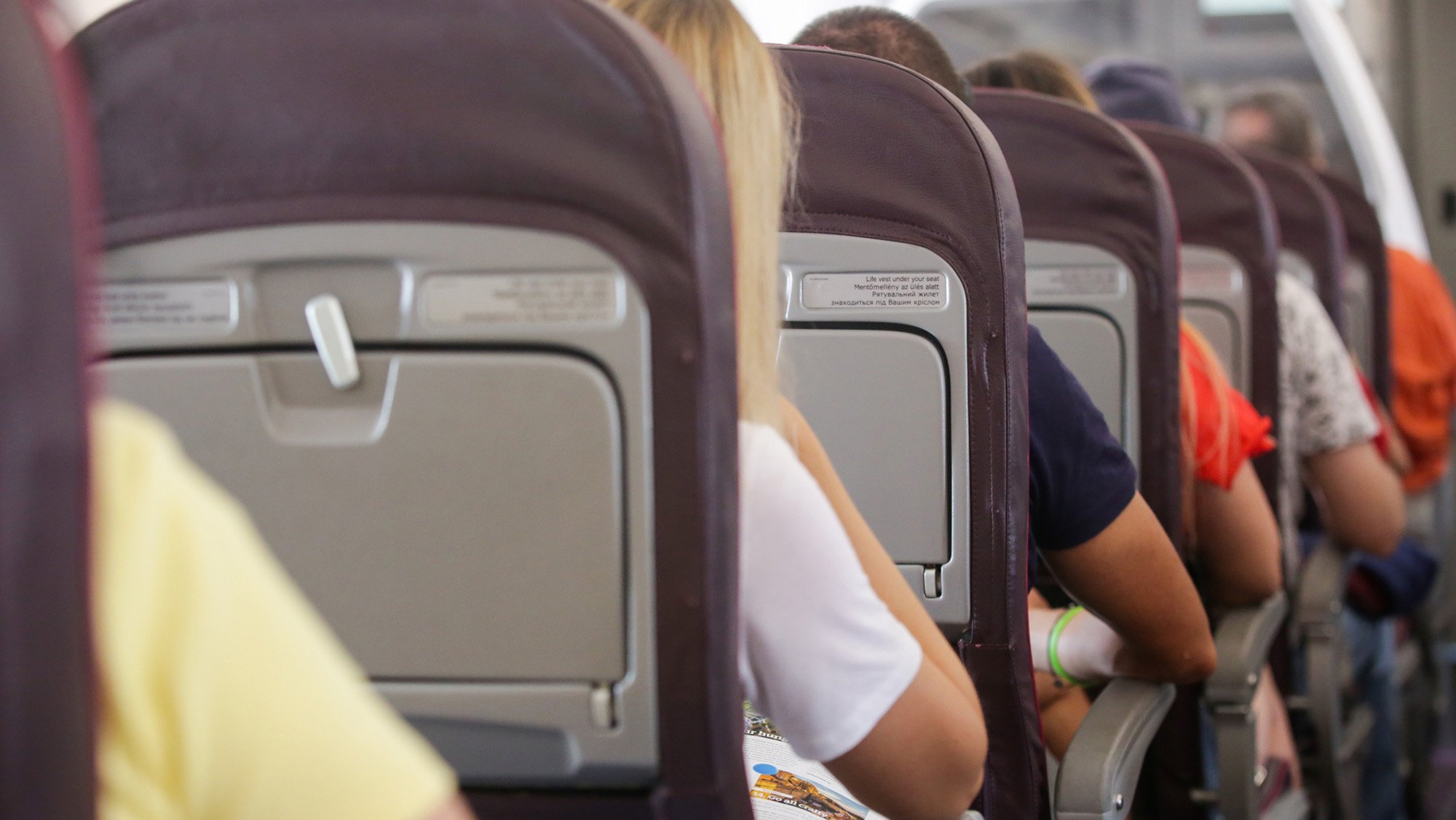
One prominent health concern relates to the increased risk of deep vein thrombosis (DVT), or blood clots, on long flights. Prolonged immobility in cramped seating conditions can impede circulation, especially for passengers with pre-existing risk factors. The CDC routinely recommends that passengers move around the cabin every couple of hours on longer journeys to mitigate this risk. However, the practicality of adhering to this advice can be challenging in modern economy cabins, where the tight seating configuration and the frequent presence of the seatbelt sign due to turbulence can limit opportunities for movement. The dilemma of being a window seat passenger, trapped between sleeping neighbors, further complicates the ability to get up and stretch.
The 90-Second Evacuation Standard
A more critical safety concern revolves around emergency evacuations. FAA regulations stipulate that a commercial aircraft must be capable of being fully evacuated within 90 seconds. This stringent requirement is designed to ensure the safety of all passengers and crew in the event of an emergency landing or evacuation. However, critics, including Paul Hudson of Flyers Rights, question whether current seat sizes and configurations adequately support this rapid egress.
Hudson has pointed out that FAA evacuation testing, while conducted, may not fully replicate the complexities of real-world emergencies. He has observed that simulations often do not include a diverse passenger demographic, such as young children, elderly individuals, or passengers with disabilities, all of whom might require different evacuation times and approaches. Furthermore, some tests have been conducted outside of actual aircraft cabins, in simulated environments that may not accurately reflect the conditions and spatial constraints of a real airplane during an emergency.
Despite these criticisms, the FAA has maintained that its evacuation testing has concluded that seat size and spacing have not negatively impacted the ability to achieve the 90-second evacuation standard. This conclusion remains a point of contention for passenger advocacy groups.
The Historical Context of the "Airplane Mode" Mandate
Beyond the physical constraints of seating, another ubiquitous aspect of modern air travel – the requirement to switch electronic devices to "airplane mode" – also has historical roots. While the immediate concern of phones interfering with aircraft navigation systems is now considered extremely low on modern aircraft, the practice persists, largely due to historical context and a pragmatic consideration for passenger experience.
The initial concern about electronic devices interfering with aircraft systems dates back to the 1960s and 1970s, when portable electronic devices, primarily small FM radios, were common. These devices operated on frequencies that could potentially interfere with sensitive aircraft communication and navigation equipment. Today’s smartphones utilize different, and generally less intrusive, radio frequency (RF) energy for communication. The RF energy emitted by a phone is significantly less powerful than other forms of radiation and is highly unlikely to disrupt sophisticated modern aviation electronics.
However, the "airplane mode" rule also serves a significant, albeit less technical, purpose: maintaining a semblance of peace and quiet in the cabin. Imagine a scenario where passengers are permitted to make and receive calls throughout a flight. The cacophony of multiple conversations echoing through the cabin, especially in the already confined spaces, would likely be highly disruptive and detract significantly from the passenger experience. Therefore, while the direct risk of a dropped call bringing down a plane is virtually non-existent, the mandate for airplane mode continues to be enforced, at least in part, to preserve a more tranquil flying environment.
The Path Forward: Limited Options for Passengers
Given the current economic and regulatory landscape, significant improvements in standard economy seating appear unlikely in the immediate future. Airlines, driven by the imperative to maximize revenue, are likely to continue optimizing cabin density.
For passengers seeking greater comfort, options are limited. Investing in premium economy or business class seats, where more legroom and wider seating are typically provided, remains the most direct, albeit costly, solution. For those flying in standard economy, proactive strategies can help mitigate the discomfort. Moving around the cabin whenever feasible, even if just for a brief stretch, is advisable on longer flights. Some advocates suggest adopting a strategy of getting up to walk the aisle whenever another passenger in one’s row does, acknowledging that opportunities to move may be infrequent.
Ultimately, the story of shrinking airplane seats is a compelling illustration of how legislative decisions, economic incentives, and societal changes can collectively reshape even the most routine aspects of daily life. The promise of accessible air travel, a direct consequence of the 1978 deregulation, has been undeniably realized for millions. However, the trade-off has been a gradual erosion of personal space and comfort, transforming the once-glamorous experience of flight into a test of endurance for many. As passenger advocacy groups continue to push for regulatory changes and increased attention to passenger well-being, the debate over the ideal balance between airline profitability and passenger comfort is set to continue.
Related posts: