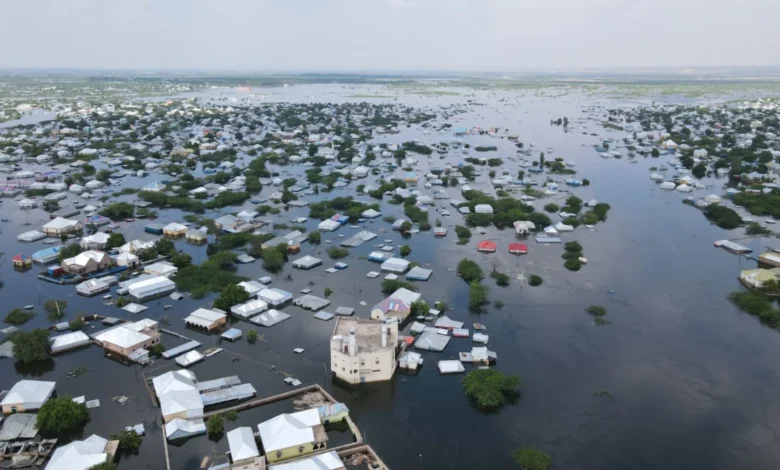
As the Juba River basin in southern Somalia faces the encroaching threat of a severe El Niño-driven rainy season, a growing chorus of local residents, aid workers, and regional analysts have leveled a grave accusation against the United States military: that the ongoing, high-intensity aerial campaign against al-Shabaab is effectively weaponizing the environment. In the de facto militant stronghold of Jilib and its surrounding villages, civilians report being trapped between the relentless drone warfare overhead and the rapidly rising, flood-prone waters of the Juba River.
This volatile convergence of climate instability and counterterrorism operations has created a humanitarian crisis of unprecedented scale. Residents describe a landscape where the constant presence of drones forces the population toward the riverbanks—the very areas now deemed most dangerous due to the impending flood risk. As the international community watches with growing alarm, the intersection of military strategy and extreme weather has sparked a fierce debate over accountability, ethics, and the long-term impact of foreign intervention in East Africa.
The Geography of a Dual Crisis
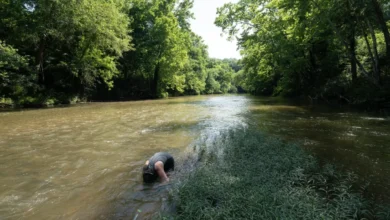
The Juba River, which flows through the heart of Jubaland, is the lifeblood of southern Somalia. However, in the context of a "super" El Niño—a recurring weather pattern characterized by above-average sea surface temperatures in the central and eastern Pacific—it becomes a lethal threat. The 2023 El Niño served as a grim precursor, triggering the worst flooding in a century and displacing over 1.2 million people.
Current meteorological data and early-warning reports from the UN-backed IPC (Integrated Food Security Phase Classification) suggest that the 2026 season could exceed those record-breaking levels. For the residents of Jilib, a city of roughly 100,000 people, the geographic reality is unforgiving. Low-lying and chronically vulnerable, the city’s urban infrastructure—which lacks significant flood defenses—is ill-equipped to handle the volume of water expected as the seasonal rains intensify.
"The water was rising rapidly, and there was nowhere to go," says Cayni Ali, a 27-year-old mother of six from Jilib. Her testimony reflects the terror felt by many. With airstrikes occurring with what residents describe as "constant" frequency, the mobility of the population is severely restricted. When civilians are forced to choose between the immediate danger of an overhead drone strike and the creeping inundation of the river, many find themselves paralyzed, unable to reach higher, safer ground.

Chronology of Conflict and Climate
The escalation of this crisis can be mapped across the last 18 months, characterized by a tightening of the military campaign and a withdrawal of international support.
- Early 2025: Following the abrupt cessation of USAID programs in Somalia—a move linked to broader shifts in US foreign policy under the current administration—the humanitarian safety net in regions like Kismayo began to collapse.
- March 2026: A series of drone strikes, including an incident near Jamame, underscored the kinetic nature of the conflict. Residents reported near-misses with debris and persistent, psychological trauma from the constant surveillance.
- August–September 2026: Official US Africa Command (Africom) records confirm 11 airstrikes in the region. However, local witnesses and human rights observers suggest this number significantly underreports the reality on the ground, fueling speculation regarding the use of covert or partner-nation drone assets.
- October 2026: As the El Niño rains intensified, reports of "weaponization" surfaced. Humanitarian observers noted that strike patterns appeared to coincide with areas where populations were already being pushed toward the floodplain.
The Ethics of "Collateral" Consequences
The central point of contention is the alleged utilization of humanitarian mapping data for military purposes. Aid organizations historically use satellite imagery and topographic mapping to identify flood-prone areas to coordinate relief and preposition supplies. Critics now argue that this same data is being leveraged by military planners to predict where al-Shabaab fighters—and by extension, the civilians they embed themselves within—are likely to relocate during natural disasters.
Jethro Norman, a senior researcher with the Danish Institute for International Studies, highlights the ethical reversal at play. "A weaponization of El Niño is a process of using humanitarian remote sensing to inflict casualties rather than to mitigate harm," Norman states. "You capture the cumulative impact of a sustained airstrike campaign in an El Niño flooding context, and you have the ingredients for a massive civilian catastrophe."
From the military perspective, however, the mission remains clear. Africom spokesperson reports maintain that the command does not target civilians, nor does it conduct operations to displace populations or utilize weather as a method of warfare. "Africom targets lawful military objectives and takes feasible measures to mitigate civilian harm," the statement read, emphasizing that the presence of al-Shabaab within civilian centers complicates, but does not dictate, the nature of their operational strategy.
Data and Humanitarian Toll
The human cost of this multi-front struggle is increasingly visible in the medical facilities surrounding the Juba Valley. According to the International Committee of the Red Cross (ICRC), there has been a 43 percent increase in "weapon-related" injuries treated in Kismayo this year. Simultaneously, child malnutrition rates have surged by 40 percent, a direct result of destroyed crops and the inability of displaced families to access food markets.
The funding vacuum has exacerbated these conditions. In 2023, the aid budget for Somalia reached $2.2 billion. By late 2026, that figure had plummeted to approximately $300,000. This drastic reduction has left local commissioners, such as Ali Adan Ali in Jubaland, struggling to provide basic necessities. "We identified 327 regions prone to flooding, but we only have the resources to warn half of them," Ali notes. "We are running out of time."

The lack of basic infrastructure, such as transport boats, means that thousands of families are currently trapped on the eastern side of the river. Without the ability to cross to the safety of Kismayo, they remain at the mercy of both the militants and the rising tide.
Broader Implications for East Africa
The situation in Somalia serves as a bellwether for the future of warfare in a climate-challenged world. As extreme weather events become more frequent, the "weaponization" of environmental vulnerability—whether intentional or as a byproduct of aggressive counter-insurgency—presents a new frontier for international law and humanitarian ethics.
David Sterman, an analyst at the New America think tank, points out that the opacity of current operations complicates the ability to hold any actor accountable. "The possibility that we are seeing covert US strikes always looms large when there are strikes without clear attribution," Sterman explains. With Turkey also operating drones in the region and refusing to divulge operational details, the lack of transparency is becoming the new standard.
Ultimately, the residents caught in the Juba Valley are paying the highest price. For people like Xaawo Nacdoor, who spent three days walking through floodwaters to get her malnourished infant to a hospital, the geopolitical nuances of the conflict are irrelevant. The reality is simple: they are caught in a pincer movement of war and nature. As the rains continue to fall and the military campaign shows no sign of abating, the prospect of a large-scale, preventable tragedy remains a looming reality for the millions of Somalis whose lives are being defined by this intersection of fire and flood.
Related posts: