AOC’s Evolution from Progressive Firebrand to National Powerhouse Highlighted in Strategy Memo

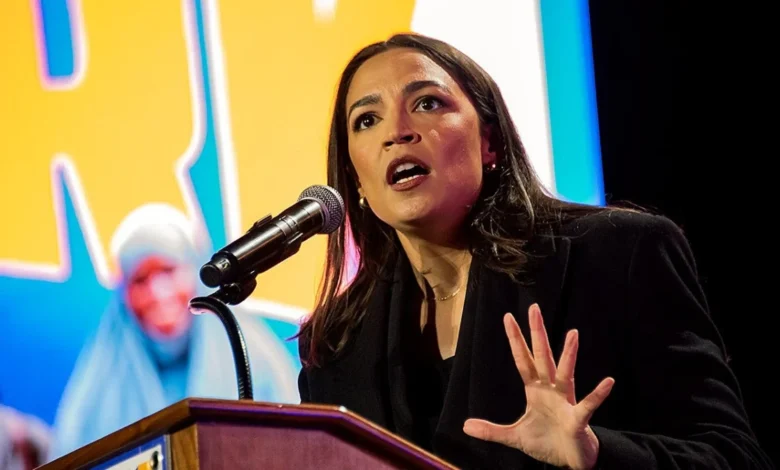
An internal strategy document recently distributed to key political allies by the campaign committee for Representative Alexandria Ocasio-Cortez outlines a significant transformation for the New York Democrat. Rather than outlining an exploratory path toward a high-profile Senate bid or a potential 2028 presidential campaign, the five-page memo makes a different case: that Ocasio-Cortez has successfully evolved from a divisive progressive firebrand into one of the Democratic Party’s most formidable national political forces and effective messengers for working-class voters.
The release of the memorandum arrives at a pivotal juncture for the Democratic Party as it continues to grapple with the political fallout of the 2024 general election. Following Donald Trump’s return to the White House, the document details how the congresswoman launched an aggressive, nationwide political operation centered heavily on economic populism. By focusing her platform on the grievances of working families, Ocasio-Cortez has sought to build a broad political movement capable of cutting across traditional partisan lines, addressing systemic wealth inequality, and redefining the modern progressive agenda.
Main Facts and Strategic Shift
At the core of the strategy memo is the argument that Ocasio-Cortez’s political influence now extends far beyond her deep-blue congressional district in New York. According to the document, the lawmaker has built a national brand that resonates not only with progressive bases in urban centers but also with politically independent and cross-partisan voters in rural and battleground districts.
The memo reveals that this strategic pivot was heavily influenced by post-2024 conversations with "Trump-AOC" split-ticket voters within her own New York constituency. These voters expressed profound, cross-partisan frustration with a political and economic establishment they perceive as consistently favoring corporate billionaires and special interests over ordinary citizens. Rather than retreating in the wake of the 2024 election cycle, Ocasio-Cortez leaned directly into these economic anxieties, framing her message around the necessity of confronting concentrated wealth, checking corporate power, and revitalizing American democratic institutions.

"As Democrats tried to understand why Trump had won again, Rep. Ocasio-Cortez argued that the path for the party to win back working class voters should be centered on economic populism, confronting concentrated wealth and power, and revitalizing American democracy," the memo notes.
Chronology and Key Turning Points
To understand how Ocasio-Cortez reached this juncture in her political career, observers must examine a timeline defined by both legislative setbacks and strategic expansion. The turning point for her broader national strategy can be traced back to a series of events in early 2025.
Following an unsuccessful bid for the position of ranking member on the House Oversight Committee, Ocasio-Cortez faced institutional limitations within the lower chamber of Congress. This friction was compounded in March 2025 during contentious federal budget shutdown negotiations, where Senate Democratic leadership ultimately accepted significant policy concessions. Disillusioned with legislative compromises that she and her allies viewed as detrimental to working families, Ocasio-Cortez shifted her focus outward, opting to take her economic message directly to the American public through a nationwide tour.
Throughout 2025 and 2026, the congresswoman traveled extensively, hosting large-scale rallies in a diverse array of political landscapes, ranging from safe blue strongholds to competitive purple districts and deep-red states like Idaho and Montana. During these events, she consistently hammered home her core populist thesis. Speaking at a rally in Idaho, she captured the sentiment of her national tour:
"I want us all to understand that this constant pressure we feel in our lives—of the water rising up to our throats, the impossibility to afford anything easily, the fear of speaking up or being who we are in public, the bitter divisions driven more by online algorithms than the truth, the crumbling of our rights and protections—understand that this, right now, is what it feels like to be governed by billionaires."

Supporting Data and Fundraising Prowess
The internal strategy memo backs its claims regarding Ocasio-Cortez’s national footprint with substantial financial and electoral metrics. Her campaign operation has demonstrated a fundraising capability that is virtually unmatched within the House of Representatives and rivals that of veteran progressive leaders like Senator Bernie Sanders of Vermont.
According to the data cited in the document, Ocasio-Cortez’s fundraising apparatus has amassed more than 2 million individual contributions totaling approximately $38 million. The average donation size sits at a modest $17.56, highlighting a heavy reliance on small-dollar donors rather than corporate Political Action Committees (PACs) or wealthy elites. Furthermore, the congresswoman has funneled more than $3 million of these funds to support other Democratic candidates, allied organizations, and state party committees nationwide.
This financial muscle has translated into high-impact electoral interventions. The memo highlights several race-altering endorsements across California, Michigan, Pennsylvania, and Montana. Notable examples include her support for Abdul El-Sayed’s Senate campaign in Michigan and Sam Forstag’s primary run for Congress in Montana. In the case of Forstag, local polling initially showed him trailing significantly behind opponents. However, following a high-profile joint appearance and endorsement by Ocasio-Cortez and Sanders at a "Fighting Oligarchy" rally in Missoula, Montana, Forstag successfully erased the deficit and secured the Democratic primary nomination.
Broader Impact and Political Implications
The release of this strategy memo carries significant implications for the internal power dynamics of the Democratic Party. For years, the centrist and progressive wings of the party have engaged in fierce ideological debates over the most effective formula for winning national elections. While party moderates have frequently argued that a moderate, pragmatic platform is essential to capturing suburban swing voters, Ocasio-Cortez’s strategy challenges that assumption by demonstrating that an unapologetic economic populist message can energize cross-partisan coalitions.

Political analysts note that the congresswoman’s ability to influence primary and general elections in conservative-leaning and rural areas fundamentally alters her standing within the party establishment. No longer viewed strictly as a localized legislative agitator, Ocasio-Cortez is increasingly recognized by colleagues and campaign strategists as a primary kingmaker who can move poll numbers and drive voter turnout in unexpected geographies.
At the same time, her evolving profile highlights a broader reckoning within the Democratic Party regarding economic policy. As veteran figures like Bernie Sanders continue to push the party to center its platform around income inequality and corporate accountability, Ocasio-Cortez’s data-driven approach provides a blueprint for how progressive ideals can be packaged and marketed to working-class Americans who feel abandoned by traditional political institutions.
Looking ahead, the strategy document suggests that Ocasio-Cortez intends to double down on this model. By prioritizing coalition-building, small-dollar fundraising infrastructure, and direct engagement with voters outside the Washington beltway, the New York lawmaker has solidified her position as a central architect of the future progressive movement—and an indispensable ally for Democrats seeking to rebuild their electoral coalition from the ground up.