Sharjah International Film Festival for Children and Youth Expands Pitching Platform to Foster Emerging Regional Talent

The 13th edition of the Sharjah International Film Festival for Children and Youth (SIFF) has marked a significant evolution in its commitment to the regional cinematic landscape by doubling the capacity of its prestigious pitching platform. By elevating the number of selected projects from three in its inaugural year to six for the current iteration, the festival is signaling a strategic pivot from merely exhibiting finished works to actively nurturing the development and financing of new narratives. This initiative, championed by festival director Sheikha Jawaher bint Abdullah Al Qasimi, serves as a vital bridge for filmmakers navigating the notoriously difficult transition from creative concept to commercial production.
Bridging the Gap: The Evolution of SIFF’s Industry Support
For over a decade, the Sharjah International Film Festival has served as a cornerstone for youth-oriented cinema in the Gulf Cooperation Council (GCC) region. However, organizers identified a persistent structural challenge within the industry: while regional filmmaking talent is abundant, the infrastructure required to secure funding, distribution, and international production partnerships often remains fragmented.
"Learning how to make a film is only part of the equation," Sheikha Jawaher bint Abdullah Al Qasimi noted in a briefing ahead of this year’s festival. "Getting that film produced and seen is a completely different challenge that requires a new set of professional networks."
The pitching platform functions as a curated marketplace. By connecting emerging directors with producers, distributors, and financiers from across the Arab world and the global diaspora, SIFF is fostering an ecosystem where independent shorts are treated with the same institutional rigor as feature-length productions. This shift reflects a broader trend in Middle Eastern film festivals—such as those in El Gouna, Red Sea, and Doha—to position themselves as year-round industry hubs rather than seasonal event organizers.
Profiles in Development: The 2024 Pitching Slate
This year’s selected projects represent a diverse cross-section of thematic interests, ranging from intimate psychological dramas to lighthearted cultural comedies.
The Black Hole (U.S.)
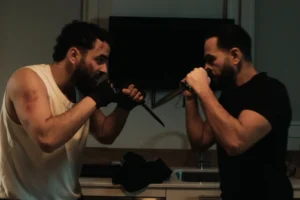
Directed by Mike Mo Elsherif and produced by JohnBen Lacy, this project is part of a broader trilogy exploring the Palestinian experience. The narrative follows a Gazan refugee residing in the United States who begins to suffer from a mysterious, somatic illness that mirrors the trauma of his homeland. Currently in the financing stage, the project has already garnered pedigree through The Front Porch Lab and The New Harmony Project. With a scheduled shoot in Louisville, Kentucky, for winter 2027, the film is a poignant example of how diaspora filmmakers are utilizing international platforms to contextualize the current geopolitical climate through a psychological, rather than purely political, lens.
Kot Kot Kot (UAE)
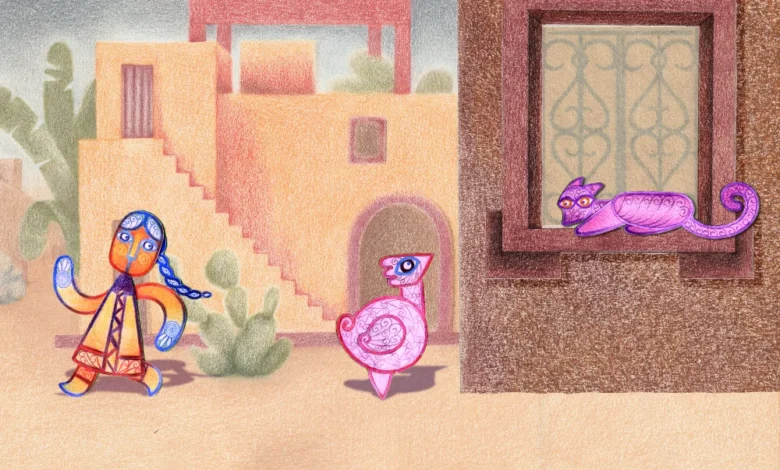
Boubaker Boukhari’s project offers a deeply personal exploration of childhood grief. Centered on a girl who finds solace in a chick gifted by her father, the film navigates themes of attachment and sudden loss. Notably, the project has integrated international expertise, with Tunisian co-producer Alaeddin Abou Taleb and illustrator Nadia Zilanova—a contributor to The New York Times—joining the production. The film is currently in the late stages of development, with a specific focus on securing funding for post-production sound design and final composition.
The Last Call (UAE)
Saleh Mohammed, a figure well-known in the local theater scene and a participant in this year’s festival opening film, The Mangrove House, brings a minimalist approach to his directorial effort, The Last Call. The screenplay centers on the weight of unspoken words and the suddenness of loss. Currently in pre-production, the project is utilizing the SIFF platform to conduct location scouting and establish the logistical foundations for a 2026/2027 production window.
Lucky Shot (Oman)
A collaborative effort between director Salah Al Hadhrami and screenwriter Dalila Al-Dar’iya, Lucky Shot highlights the tension between working-class reality and personal ambition. By focusing on a young football enthusiast facing a moral crossroads, the film aims to address universal human themes. The project is currently in the development phase, with the team actively seeking partners to solidify a 2027 production schedule.
My Uncle Saman (UAE)
Aljouri Abdelaziz Alzarooni’s comedy project offers a refreshing take on contemporary Emirati family dynamics. By focusing on the misadventures surrounding a wedding, the project aims to capture the humor inherent in local social structures. The film is currently seeking production houses and technical collaborators in cinematography and post-production, having already generated significant interest among industry delegates at the festival for its authentic approach to local narrative tropes.
Tomato Merchant (UAE)
Directed by Thoraya Farzaneh and produced by Sayed Mousavi, Tomato Merchant is perhaps the most advanced of the slate. The film, which explores themes of patience and persistence through the life of an elderly vendor, has secured initial backing from the RAK Art Fund and the Al Qasimi Foundation. With a shoot slated for November and completion targeted for January, the project serves as a model for how state-supported regional funds can effectively shepherd independent films from script to screen.
Chronology and Industry Context
The expansion of the SIFF pitching platform aligns with the broader maturation of the UAE’s film industry. Historically, the region relied on international co-productions; however, the past five years have seen a surge in domestic production capacity.
- 2010s: Initial focus on exhibition and educational workshops for youth.
- 2020-2022: Increased emphasis on script-to-screen training and networking.
- 2023: Launch of the inaugural pitching platform with three selected projects.
- 2024: Expansion to six projects with an emphasis on international co-production and post-production support.
The significance of this growth cannot be understated. According to industry data, the Middle East and North Africa (MENA) film sector has seen a marked increase in interest from international streaming platforms seeking localized content. By formalizing the pitching process, festivals like SIFF are effectively "de-risking" these projects for potential investors by ensuring they have been vetted by a panel of industry experts and provided with a clear creative roadmap.
Strategic Implications and Future Outlook
The decision to expand the pitching platform suggests a deliberate effort by the Sharjah Media Discovery Platform (FANN) to cultivate a sustainable local industry. By focusing on short films, the festival addresses the "incubation stage" of filmmaking—where most talent is lost due to a lack of resources or guidance.
From an economic perspective, the strategy is multifaceted. First, it encourages local spending on production services, sound design, and post-production, which keeps capital within the regional creative economy. Second, it serves as a talent pipeline; directors who prove themselves through these supported short films are better positioned to secure larger grants and production budgets for feature-length narratives in the future.
Furthermore, the participation of diaspora filmmakers, such as Mike Mo Elsherif, alongside local Emirati directors, fosters a unique cross-pollination of storytelling techniques. The "Sharjah model" is increasingly defined by its willingness to look beyond its borders to bring global expertise to regional projects, while simultaneously ensuring that local stories remain the primary focus.
As the festival concludes its 13th edition, the success of these six projects will be viewed as a key indicator of the platform’s efficacy. If the current trend continues, the SIFF pitching sessions are poised to become a permanent fixture in the Middle Eastern film industry calendar, providing a necessary, stable foundation for the next generation of Arab filmmakers. The shift from a passive festival environment to an active industry-development ecosystem reflects the growing confidence of the UAE’s cultural sector and its readiness to contribute significantly to the global cinematic discourse.