Green Banks Navigate Federal Funding Freeze Through Private Sector Partnerships and Financial Innovation

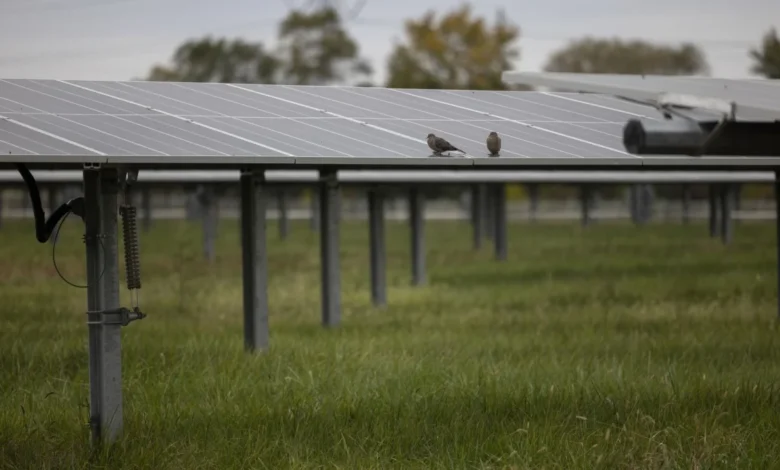
The landscape of American clean energy finance is undergoing a significant transformation as state-level green banks, faced with the sudden withdrawal of federal support, pivot toward private capital and collaborative lending models to maintain their momentum. Despite the Trump administration’s decision to claw back billions of dollars in climate-related grants, a network of 56 organizations known as the U.S. Green Bank 50 has managed to sustain operations by leveraging public-private partnerships, thereby ensuring that essential renewable energy and infrastructure projects continue to reach underserved communities.
The Anatomy of the Federal Funding Crisis
The current instability originates from the 2022 Inflation Reduction Act (IRA), which established the Greenhouse Gas Reduction Fund. This legislative milestone was designed to deploy $20 billion in grants to green banks and an additional $7 billion for the "Solar for All" initiative. These funds were intended to act as a catalyst for low-interest lending in sectors that traditional commercial banks historically deem too high-risk, such as affordable housing retrofits and community-based solar arrays in marginalized neighborhoods.
Following a change in executive administration, the White House initiated a series of clawbacks, effectively freezing these disbursements. This move has created a precarious environment for regional green banks, many of which had already staffed up, designed project pipelines, and entered into preliminary agreements with developers based on the expectation of federal capital. The impact has been profound, forcing organizations to downsize their ambitions and recalibrate their financial models to account for the sudden absence of low-cost government liquidity.
Chronology of Conflict and Legal Challenges
The confrontation between climate finance advocates and the current administration has played out in both the executive branch and the federal courts:
- August 2024: A federal judge issued a landmark ruling declaring the administration’s freeze of the $20 billion Greenhouse Gas Reduction Fund to be unlawful.
- September 2024: The U.S. Green Bank 50 published its inaugural impact report, documenting $1.4 billion in direct investment and $11 billion in private capital mobilization over the preceding 24 months.
- October 2024: Two additional federal judges ruled that the termination of the "Solar for All" program violated statutory mandates.
- Late 2024–Present: Despite these legal victories for proponents of the programs, the executive branch has maintained the freeze, signaling an intention to appeal the cases to the U.S. Supreme Court, leaving billions of dollars in climate funding in legal limbo.
Financial Resilience and the "Virtue of Necessity"
In the face of these challenges, the U.S. Green Bank 50 has adopted a strategy of "making a virtue out of a necessity," according to Executive Director Dan Adler. By shifting away from reliance on government grants, these institutions are increasingly serving as risk-mitigation layers that allow private commercial banks, credit unions, and philanthropic entities to enter the clean energy market with greater confidence.
This approach is best illustrated by recent, highly localized projects. In New Orleans, for example, a $10 million community solar array—situated on land held by the Sisters of the Holy Family—serves as a model for this new, lean financing. The project, which provides lower utility rates for 350 low-income households, was financed not through federal grants, but through a coalition comprising the nonprofit Inclusive Prosperity Capital, the United Church of Christ Cornerstone Fund, and the Pelican Community Capital lender. By bundling these diverse funding sources, the project developers were able to diffuse the financial risk, making the endeavor viable for private investors who might otherwise have walked away.
Data-Driven Impact: The 2024–2025 Performance Review
The inaugural impact report released by the U.S. Green Bank 50 provides a clear picture of the scale of these efforts. Data from 48 surveyed green banks indicate that even with the looming threat of funding cuts, these organizations have been instrumental in advancing over 40,000 clean energy projects.
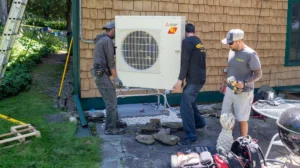
The $11 billion in private capital mobilized during this period represents a multiplier effect of nearly 8 to 1 for every dollar of green bank capital deployed. This ratio is critical to the long-term sustainability of the green bank model. If green banks can effectively "de-risk" a category of projects—such as residential heat pump installation or storm-hardening infrastructure—the private sector is eventually willing to provide capital at scale, effectively graduating these projects from "experimental" to "bankable."
Operational Innovations and Resource Sharing
One of the most effective methods for lowering costs in an era of capital scarcity is the sharing of technical infrastructure. The Solar and Energy Loan Fund (SELF), based in Florida, has pioneered a "plug-and-play" platform that standardizes the underwriting and loan-processing operations for green energy projects. By centralizing the back-office functions, SELF allows 13 other partner organizations across the country to bypass the massive overhead costs typically associated with developing proprietary lending software.
Similarly, in Maryland, the Montgomery County Green Bank has utilized financial technology (fintech) to lower the barrier to entry for homeowners. By launching a $4 million initiative in early 2026, the organization has enabled local residents to secure solar and heat pump loans at a subsidized 2.99 percent interest rate for the first 15 years. This form of "layered financing"—where public funds provide a temporary interest rate buydown—makes the transition to clean energy economically rational for families who would otherwise be priced out by rising energy costs.
The Persistent Gap: Implications for Climate Equity
Despite these successes, the lack of a robust federal safety net creates a ceiling on what green banks can achieve. Many of the organizations involved in the U.S. Green Bank 50 operate with annual budgets of less than $2 million. Without the "zero-interest" capital that the EPA-managed funds were intended to provide, these banks must prioritize projects that offer quicker, more certain returns.
This creates a "missing middle" problem in the green energy transition. Projects that are slightly higher in risk, or that cater to communities with the least access to traditional capital, remain the most difficult to finance. As Adler noted, the current environment necessitates "tight discipline." While this ensures the survival of the green bank institutions, it also risks slowing the decarbonization of the most vulnerable sectors of the American economy.
Looking Ahead: The Role of the Supreme Court
The eventual resolution of the legal appeals currently winding their way through the judiciary will be a defining moment for American climate policy. If the Supreme Court upholds the lower court rulings, the immediate release of the $27 billion in frozen funds could trigger an unprecedented wave of investment in infrastructure. If, however, the court sides with the administration’s interpretation of executive authority, the green bank movement will be forced to operate as a purely private-market entity, potentially abandoning the most ambitious climate justice goals in favor of safer, more conventional investments.
For now, the green banks remain in a holding pattern, balancing the urgent demand for climate-resilient infrastructure with the reality of a restricted capital environment. Their ability to continue operating at all—despite significant political headwinds—suggests that the institutional framework for green lending in the United States is more robust than it was a decade ago, even as the path forward remains fraught with political and financial uncertainty.